
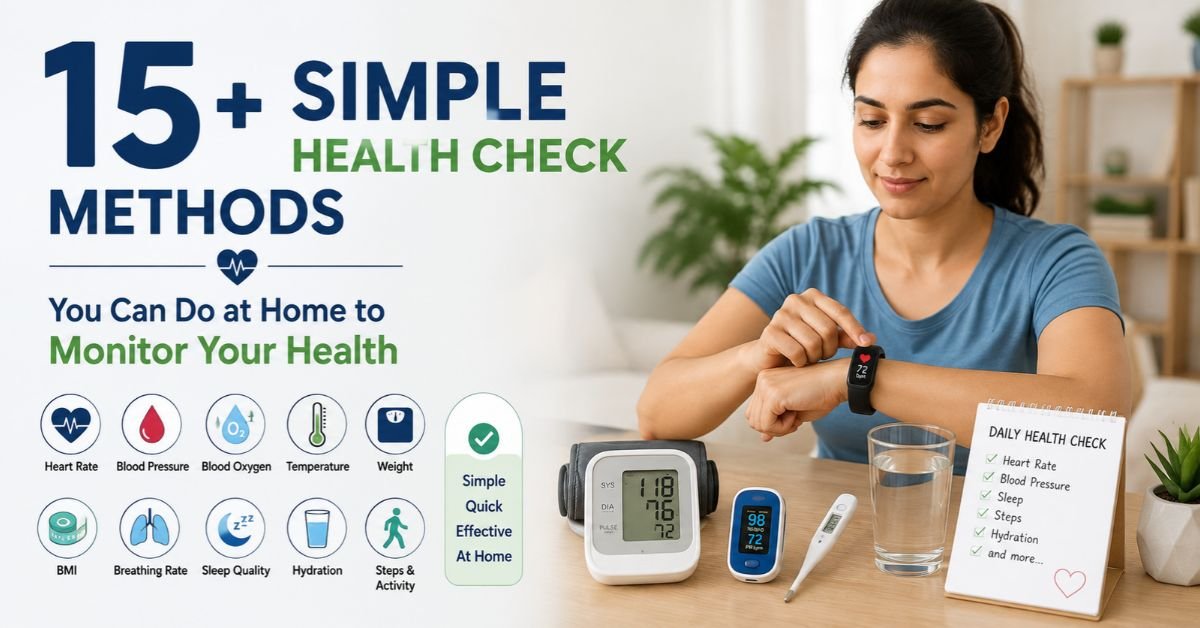
15+ Easy Simple Health Check Methods to Monitor Your Health at Home
Your body talks to you every single day. Most of us just don’t listen. A slow morning, a restless night, or an odd stomach feeling can all carry a message. The good news is that simple health check methods need no lab coat and no big budget. You need a few minutes, a notebook, and some patience.
This guide shows you easy ways to check your health at home. You will learn 12 daily checks, 7 common screening tests, and a simple routine you can keep. That adds up to 19 useful tools in one place. Please note that this article is for education only. It is not medical advice and it never replaces a doctor.
Why Simple Health Check Methods Matter for Everyday Health
Health problems rarely arrive overnight. They creep in slowly. You feel a little more tired. Your sleep turns lighter. Your stomach acts up for no clear reason. Think of your body like a car dashboard. A small warning light is easy to ignore until the engine fails. Simple health check methods act like a quick glance at that dashboard each morning. They turn vague feelings into clear notes you can act on.
The benefits of regular health monitoring are easy to see. You spot early warning signs of illness sooner. You track progress when you change your diet or start exercising. You also avoid needless panic because you know what is normal for you.
Global health bodies agree that prevention saves lives. The World Health Organization explains that many long-term diseases are linked to habits we can change. Preventive healthcare begins with small steps like these. A strong home health assessment gives you facts to share with your doctor. That makes every visit more useful.
Understanding Your Personal Health Baseline
Your baseline is your personal “normal.” It is the starting point for all personal health monitoring. Every body is different. One person has a calm pulse of 58 while another sits at 80. Both can be healthy. So you must learn your own numbers first. A good baseline includes your resting heart rate, energy levels, sleep duration, usual digestion, and typical weight range. Together these form a general health assessment you can build at home.
Here is how to establish a personal health baseline. Track the same items for 7 to 14 days. Do not change your habits during this time. Eat and sleep as you usually do. Say your morning energy sits near 6 out of 10 most days. That number is your baseline. If it suddenly falls to 3 for a week, your body is asking for attention. This is the heart of tracking health changes over time.
How to Track Your Normal Health Measurements
Pick one notebook or one mobile app and stick with it. Measure at the same time each day because your body changes through the hours. Write down your resting heart rate, body temperature, blood pressure, sleep duration, energy levels, and mood.
Add a short note about stress, food, or exercise. After two weeks, find the average of each number. The table below shows a sample baseline. Use it as a model for your own routine health measurements. Your numbers will differ and that is perfectly fine.
| Measurement | Example Baseline | How to Record |
| Resting heart rate | 72 beats per minute | Morning, before coffee |
| Body temperature | 36.6°C (97.9°F) | Same time daily |
| Blood pressure | 118/76 mmHg | Seated, after 5 minutes of rest |
| Sleep duration | 7 hours 30 minutes | Log each morning |
| Energy levels | 6 out of 10 | Rate at breakfast |
| Mood | 7 out of 10 | Rate each evening |
Why Changes Over Time Matter More Than a Single Reading
One reading is like one cloudy day. It tells you little about the climate. A single high blood pressure number can come from a rushed walk or a cup of coffee. A trend tells the real story. If your numbers stay higher for two weeks, something has shifted.
Long-term health tracking helps you tell a bad day from a real change. It also protects you from over-reacting. Many people panic over one odd number. Calm, steady records bring peace of mind and give your doctor clear data.
12 Simple Health Checks You Can Do at Home
Many people ask, “What are the simplest health checks to do at home?” The answer is these twelve. Each one is quick. Most need no tools at all. Together they form your daily wellness checks and a handy home health assessment. Vital signs monitoring forms the first part of the list. Lifestyle and body signals follow. You can learn how to monitor vital signs without visiting a clinic in just a few days.
Do not try everything at once. Start with two or three checks. Add more as the habit grows. The table below gives a quick view of each check. It also shows what you need and what a healthy result may look like.
| Check | Tool Needed | How Often | Healthy Sign |
| Resting heart rate | Fingers and a clock | Daily | 60 to 100 beats per minute |
| Respiratory rate | Clock | Weekly | 12 to 20 breaths per minute |
| Body temperature | Digital thermometer | Daily or when unwell | 36.1°C to 37.2°C (97°F to 99°F) |
| Blood pressure | Blood pressure monitor | Weekly | Below 120/80 mmHg |
| Body weight | Scale | Weekly average | Stable within your usual range |
| Hydration status | Your eyes | Daily | Light yellow urine |
| Sleep | Notebook or tracker | Daily | 7 to 9 hours, rested on waking |
| Digestion | Notebook | Daily | Regular, comfortable bowel movements |
| Energy levels | Notebook | Daily | Steady, no sharp crashes |
| Skin, hair, nails | Mirror | Weekly | No sudden changes |
| Mood | Notebook | Daily | Stable, with normal ups and downs |
| Unusual symptoms | Awareness | Daily | None that last |
Check Your Resting Heart Rate
A resting heart rate check is the easiest of all simple health check methods. A normal adult resting heart rate sits between 60 and 100 beats per minute. Athletes often fall below 60 because their hearts work more efficiently. To check yours, sit quietly for five minutes. Place two fingers on your wrist just below the thumb.
Count the beats for 30 seconds and multiply by two. Avoid pressing hard on your neck. That can slow the heart and make you dizzy. Check at the same time each morning. Say your usual rate is 72 and it jumps to 92 for several days. Stress, poor sleep, dehydration, or an early infection may be the cause. This is one of the best ways to monitor heart health naturally.
Monitor Your Breathing Rate
Your respiratory rate shows how many breaths you take each minute. At rest, a healthy adult takes about 12 to 20. Sit still and relax. Watch your chest rise and fall. Count the rises for a full 60 seconds. Try not to think about it too much because that changes the count. Fast or shallow breathing may point to stress, fever, or fatigue.
If you own a pulse oximeter, check your blood oxygen saturation (SpO2) as well. A typical reading is 95% to 100%. A reading below 92% needs prompt medical attention. Cold fingers, nail polish, and darker skin tones can make these devices less accurate. Treat the number as a guide and not as a verdict.
Measure Your Body Temperature
Body temperature monitoring is simple with a digital thermometer. Normal body temperature averages 36.1°C to 37.2°C (97°F to 99°F). It rises a little in the afternoon and falls at night. That is why you should measure at the same time each day. A slight rise can signal an early infection. A fever usually starts at 38°C (100.4°F).
A low-grade fever that lingers for days may point to inflammation. Wait 30 minutes after a hot drink or exercise before you measure. Clean the tip after every use. Write the result in your notebook so you can share the pattern with your doctor.
Monitor Your Blood Pressure
Blood pressure monitoring at home is one of the best habits for your heart. Blood pressure is the force of blood pushing on artery walls. A reading below 120/80 mmHg is considered normal by the American Heart Association. Readings of 130/80 or higher on several days call for a medical consultation.
Here is how to check blood pressure correctly at home. Sit calmly for five minutes. Keep your back supported and feet flat. Rest your arm at heart level. Skip caffeine and exercise for 30 minutes before. Take two readings one minute apart. A good blood pressure monitor with a correct cuff size makes all the difference.
How often should I check my blood pressure at home? Weekly is fine for most healthy adults. Your doctor may ask for daily readings if you have a concern. Read more in the WHO hypertension fact sheet.
Track Your Body Weight and Measurements
Your weight shifts daily with water, food, and hormones. That is normal. So skip daily worry and focus on weekly averages. Body weight tracking works best when you weigh yourself at the same time each week. Use the same scale and wear similar clothing. Your body mass index (BMI) gives a rough guide.
A BMI of 18.5 to 24.9 is often considered healthy. However, BMI ignores muscle and body shape. That is why waist size matters too. A waist above 102 cm (40 inches) in men or 88 cm (35 inches) in women raises health risk. Many experts suggest lower cutoffs for South Asian adults. These are about 90 cm (35.5 inches) for men and 80 cm (31.5 inches) for women.
| Type of Check | What It Shows |
| Daily weight | Short-term water and food swings |
| Weekly average | Real progress |
| Monthly trend | Long-term health pattern |
| Waist size | Fat stored around the middle |
Check Hydration Levels and Urine Color
A quick hydration level assessment needs only your eyes. Your urine color is a handy clue to your hydration status. Use the urine color chart below. Light yellow means you are doing well. Dark yellow means you need more fluids. Water needs vary with body size, climate, and activity.
Many adults do well with about 2 to 3 liters of fluid each day from all drinks and foods. Learn to recognize dehydration symptoms early. These include thirst, dry mouth, headaches, dark urine, and feeling dizzy. Some vitamins and foods like beets can change urine color. Some medicines do too. Do not panic over a one-time change.
| Urine Color | What It May Mean |
| Pale or light yellow | Well hydrated |
| Dark yellow or amber | Dehydrated, drink water |
| Clear all day | You may be drinking too much |
| Red, brown, or cloudy | Seek medical advice if it lasts |
Monitor Sleep Quality and Sleep Patterns
Sleep quality tracking is about more than hours. It is about depth and recovery. Adults need 7 to 9 hours of sleep duration each night. The CDC sleep guidance supports this range. Note how long you take to fall asleep. Note how often you wake at night. Record how alert you feel in the morning. Your sleep patterns matter as much as the total. Say you sleep eight hours yet wake up exhausted.
Your sleep quality is probably poor. Snoring, stress, late screens, and caffeine are common culprits. This shows how sleep affects overall health. Poor sleep weakens immunity, raises appetite, and clouds focus. A smartwatch can help, but a simple morning rating works well too.
Observe Digestive Health and Bowel Changes
Digestive health monitoring is easy and very revealing. Your gut often shows trouble before other parts do. Healthy bowel movements happen once a day or every other day. They should be easy to pass. You should not have lasting bloating or pain. Your appetite should stay steady.
The Bristol Stool Chart is a handy guide. Types 3 and 4 are generally seen as healthy. This is the best way to start tracking digestive health and bowel habits. Watch for ongoing constipation, diarrhea, blood in stool, or sudden changes. Any of these deserve a doctor’s visit, especially when they last more than two weeks.
Track Energy Levels and Daily Stamina
Your energy levels are among the clearest signs of overall health. Rate your energy from 1 to 10 each morning and afternoon. Ask yourself a few things. Do you feel steady or do you crash after lunch? Do you recover quickly after a walk or a workout? Constant tiredness can come from poor sleep, stress, low iron, or an underlying condition.
Many people find that healthy lifestyle habits such as regular meals, movement, and enough rest lift their energy within weeks. If fatigue lasts longer than two weeks despite good habits, book a visit. Share your notes. They help your doctor see the pattern.
Look for Changes in Skin, Hair, and Nails
Your appearance often reflects what happens inside. Look closely once a week. Skin changes such as dryness, new moles, or unusual rashes deserve notice. Hair and nail health can shift with diet, stress, and hormones. Thinning hair may link to low iron or thyroid trouble. Brittle nails may link to nutrient gaps.
Pale skin may hint at anemia. These signs alone do not prove disease. Still, they act as gentle clues. Take clear photos once a month to compare changes. Show your doctor any mole that grows, bleeds, or changes color. Early checks matter most for the skin.
Monitor Mental Health and Emotional Well-Being
Mind and body work as a team. Emotional well-being shapes your sleep, appetite, and heart health. A mental health self-assessment takes only a minute. Each evening, rate your mood from 1 to 10. Note your focus, motivation, and stress. Patterns show up fast. This is how to monitor emotional and mental well-being without any fancy tools.
Signs of stress include constant worry, irritability, and poor concentration. Talk with someone you trust when you feel stuck. If low mood lasts two weeks or more, seek help from a health professional. If you ever think about harming yourself, contact local emergency services or a crisis line right away.
Pay Attention to Unusual Changes in Your Body
Some warnings come without a label. Frequent headaches, muscle tension, dizziness, and sudden appetite shifts all count. So do unexplained weight loss and new aches. These are early symptoms that may indicate health problems. For example, repeated afternoon headaches may come from dehydration or long screen time.
Drinking water and taking short breaks may solve it. If a symptom repeats or grows worse, do not guess. Write down when it starts, how long it lasts, and what makes it better. These notes turn a vague worry into useful facts. Learning the signs of good physical health helps too. These include steady energy, restful sleep, regular digestion, and a calm mood.
Basic Health Checkup Tests and Preventive Screening
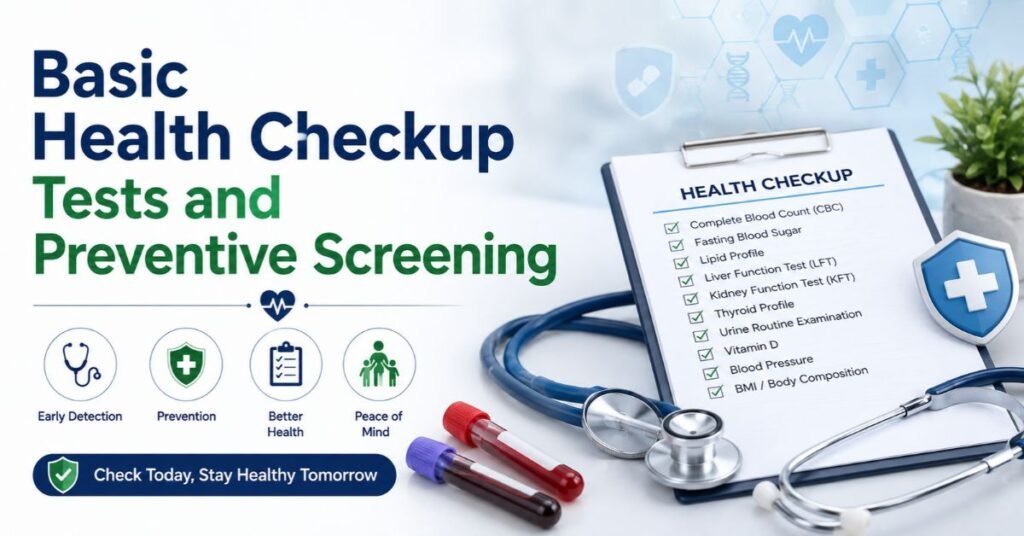
Home checks are powerful. But they cannot see inside your blood or organs. That is where basic health screening helps. Lab tests measure what your senses cannot. Together, home checks and lab work give a fuller picture. These are preventive screening tests for adults. A doctor decides which ones you need.
You should never order or read them alone. Treat this section as a guide for questions to ask.
Recommended screenings vary by age, sex, family history, and country. A 25-year-old with no risk factors needs less than a 55-year-old with diabetes in the family. Local health guidelines set the schedule. So ask your doctor what fits you. This is preventive health screening at its best. It finds problems early when treatment works best. Which medical tests are included in a basic health checkup? The seven groups below cover the usual ones.
Complete Blood Count (CBC) Test
The complete blood count (CBC) measures red cells, white cells, and platelets. Red cells carry oxygen. White cells fight germs. Platelets help blood clot. A CBC can flag anemia, infection, and some blood disorders.
It is one of the most common tests in any basic health checkup. The test needs a small blood sample and takes only minutes. Results come back within a day or two. Low red cells may explain constant tiredness. High white cells may point to infection or inflammation. Your doctor reads the numbers alongside your symptoms.
Cholesterol and Lipid Profile Test
A lipid profile checks fats in your blood. It reports total cholesterol, LDL, HDL, and triglycerides. LDL is often called “bad” cholesterol. HDL is the “good” kind. High LDL can build up inside arteries over the years. This raises the risk of heart attack and stroke. A total cholesterol under 200 mg/dL (5.2 mmol/L) is generally desirable.
Your doctor will set personal targets. Many labs ask you to fast for 9 to 12 hours first. Healthy food, exercise, and not smoking all improve the numbers. This test supports ways to monitor heart health naturally and medically.
Blood Sugar and Diabetes Screening
Blood glucose levels show how well your body handles sugar. Two common tests are fasting glucose and HbA1c. A fasting level under 100 mg/dL (5.6 mmol/L) is typically normal. An HbA1c under 5.7% is also normal. Values of 126 mg/dL (7.0 mmol/L) or an HbA1c of 6.5% or more suggest diabetes.
Many people have no early symptoms. That is why screening matters. Thirst, frequent urination, and blurred vision can appear later. Adults with extra weight, family history, or high blood pressure should ask about screening sooner.
Thyroid Function Tests
Thyroid function tests check how well your thyroid gland works. The main test measures TSH. The thyroid is a small gland in your neck. It controls metabolism, heat, and energy. An underactive thyroid can cause tiredness, weight gain, dry skin, and feeling cold.
An overactive thyroid can cause weight loss, fast heartbeat, and anxiety. Your doctor may order this test if you notice these signs. Hair thinning and unusual energy levels can be clues too. Treatment is often simple and works very well.
Liver Function and Electrolyte Tests
Liver function tests measure enzymes and proteins that show how your liver works. They help find damage from alcohol, certain medicines, or viral infection. Kidney tests often come with them. Electrolyte levels include sodium, potassium, and chloride. These minerals balance fluids and keep your heart and muscles working. Dehydration, vomiting, and some medicines can disturb them. Severe imbalances can cause weakness, cramps, or irregular heartbeat. These tests are part of many routine panels. They give a good window into your organ health.
Vitamin and Nutrient Testing
Vitamin D, vitamin B12, and iron are the most common nutrient tests. Low vitamin D can weaken bones. Low B12 can cause tiredness and tingling in the hands and feet. Low iron can lead to anemia, brittle nails, and hair loss.
Test when you have symptoms or risk factors. People on strict plant-based diets may need B12 checks. People with heavy periods may need iron checks. Do not take large doses of supplements without advice. More is not always better. A simple blood test tells you what you truly need.
Bone Health and Recommended Cancer Screenings
Bone density tests look for thinning bones, known as osteoporosis. They are often advised for women after menopause and older adults. Cancer screenings include cervical, breast, colorectal, prostate, and lung checks.
Which ones you need depends on your age, sex, and risk. National guidelines differ by country. So follow your local advice and your doctor’s plan. Screening finds many cancers early. Early detection often means simpler treatment and better results. Do not skip these tests because you feel fine. Silence is common in early disease.
Basic Health Tests vs. Comprehensive Health Checkups
A basic test is a small set of targeted checks. It may include blood pressure, weight, a CBC, and blood sugar. A comprehensive health checkup goes much further. It adds a full physical exam, more blood and urine tests, and often imaging. It paints the full picture of your general health assessment. Many people ask about home health checks versus medical checkups. Home checks watch trends daily. Medical checkups look beneath the surface. You need both.
Choosing between them depends on age, risk, and budget. A healthy adult in their twenties may only need a basic panel each year or two. Someone over 40 may benefit from a fuller review. The table below compares the two options. Always talk with your doctor before you book. They can tailor the tests so you do not pay for what you do not need.
| Feature | Basic Health Tests | Comprehensive Health Checkup |
| Scope | A few targeted tests | Full panel plus physical exam |
| Time needed | 15 to 30 minutes | Half a day |
| Cost level | Lower | Higher |
| Best for | Young, healthy adults | Older adults, higher-risk people |
What a Comprehensive Health Checkup May Include
A full checkup often starts with a talk about your history. Your doctor asks about symptoms, habits, and family illness. Next comes a physical exam. This covers your heart, lungs, abdomen, skin, and reflexes.
Then come blood and urine tests such as the CBC, lipid profile, glucose, liver, kidney, and thyroid panels. A lifestyle review looks at diet, activity, sleep, stress, alcohol, and smoking. The visit ends with a plan. Good doctors explain results in plain words. Ask questions until you understand every number.
ECG, Imaging Tests, and Other Medical Assessments
An ECG records the electrical activity of your heart. It takes about five minutes and is painless. X-rays look at the chest and bones. Ultrasound uses sound waves to view organs like the liver and kidneys.
Some people also need stress tests or bone scans. These are usually ordered only when needed. Extra tests are not always better. They can cause worry over harmless findings. Your doctor weighs your age, symptoms, and risks before ordering them.
Who Should Consider a Comprehensive Health Checkup?
Adults over 40 gain the most from a full review. So do people with a family history of heart disease, diabetes, or cancer. Anyone with a chronic condition should have one regularly. People with new or lasting symptoms should not wait either.
A busy lifestyle with high stress, poor sleep, or little exercise is another reason. Younger adults can also book one as a baseline. Think of it as a yearly service for your body. A comprehensive health checkup gives you data to compare against for years.
How to Build a Simple Daily Health Monitoring Routine
Consistency beats complexity. A short routine you keep is better than a perfect plan you drop. The full routine below takes under ten minutes a day. This is how you start building a daily wellness monitoring routine. It turns scattered checks into steady personal health monitoring. How can I monitor my health naturally every day? Link each check to something you already do.
Habit stacking makes it easy. Check your pulse while the kettle boils. Rate your mood while you brush your teeth. Log your sleep over breakfast. Within a month, the routine feels automatic. These healthy lifestyle habits build quietly. The table below shows a sample day. Adjust the times to fit your life.
| Time of Day | Action | Minutes |
| Morning | Check pulse, drink water, rate energy | 3 |
| Midday | Notice fatigue, hydrate, stretch | 3 |
| Evening | Review digestion, rate mood, plan sleep | 4 |
Morning Health Checks
Start your day with a resting heart rate check before getting out of bed or having coffee. Drink a glass of water to restart your hydration status. Look at your urine color against the chart. Rate your energy levels and note how you slept.
Write the numbers down. Once a week, add your weight and blood pressure at the same hour. These few minutes set the tone for the day. They also give you the cleanest data because your body is at rest.
Midday Health Checks
By noon, your body has shown how it handles the morning. Check in with your energy levels. Do you feel steady or sluggish? Drink water if you feel thirsty or tired. Stand up and stretch for a minute or two.
Look away from screens to rest your eyes. Notice any tension in your neck and shoulders. Eat a balanced lunch with vegetables and protein. A short walk helps your mood and digestion. These tiny pauses prevent the afternoon slump.
Evening Health Checks
Evenings are for reflection. Think about your digestion today. Did you have normal bowel movements? Was your stomach comfortable Rate your mood from 1 to 10. Do a quick mental health self-assessment by asking what stressed you and what helped.
Then prepare for sleep. Dim the lights and put phones away an hour early. Keep your room cool and quiet. Good evening habits protect your sleep patterns. They set you up for a better tomorrow.
How Often Should You Monitor Your Health?
Daily checks suit basic signals such as pulse, energy levels, mood, and hydration. Weekly checks suit blood pressure, weight, skin, and nails. Yearly visits suit professional tests and screenings. If you have a health condition, your doctor may change this plan. Avoid over-checking.
Measuring too often can raise stress and give false alarms. Calm, regular tracking works better than constant worry. Remember the old saying often credited to Benjamin Franklin: “An ounce of prevention is worth a pound of cure.”
Helpful Tools for Monitoring Your Health at Home
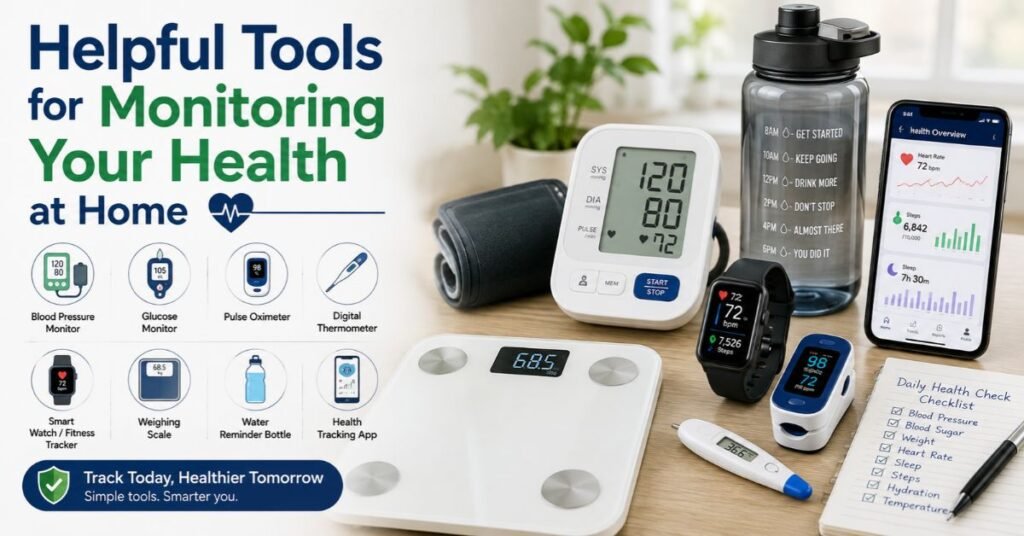
You do not need a home full of gadgets. A few reliable home medical monitoring devices do the job. A digital thermometer, a blood pressure monitor, a pulse oximeter, a scale, and a notebook cover most needs.
These tools make vital signs monitoring easy. Looking for the best devices for monitoring health at home? Pick well-reviewed models. The table below answers what tools do I need for a home health check.
| Tool | Purpose | What to Look For |
| Digital thermometer | Detect fever | Fast reading, easy to clean |
| Blood pressure monitor | Heart health | Validated model, correct cuff size |
| Pulse oximeter | Oxygen tracking | Clear display, steady reading |
| Smart scale | Weight trends | Consistent results |
| Notebook or app | Spot patterns | Simple and easy to use daily |
Choose validated devices and keep them clean. Replace batteries often. Check accuracy now and then by comparing your blood pressure monitor with the one at your doctor’s clinic. Store devices in a dry place. Read the instructions once, carefully. A well-kept device gives you trustworthy routine health measurements for years.
Digital Thermometers and Blood Pressure Monitors
A digital thermometer is cheap and fast. Oral, ear, and forehead types all exist. Follow the instructions for the type you own. For blood pressure monitoring at home, upper-arm cuffs are usually more reliable than wrist cuffs. Measure your upper arm and buy the right cuff size. A cuff that is too small gives falsely high readings. Sit with your arm supported at heart level. Take readings at the same time daily for a week and share them with your doctor. Bring the device to a visit so they can check it.
Fitness Trackers and Smartwatches
A fitness tracker or smartwatch can log steps, heart rate, and sleep. It is great for trends. You can see how a hard week affects your resting heart rate. You can see how late nights change your sleep patterns.
Still, these devices give estimates and not exact medical data. Wrist sensors can be thrown off by movement, tattoos, or a loose strap. Use the trends and not the single numbers. If a watch warns you of something unusual, repeat the check manually. Then talk with your doctor if it persists.
Health Journals and Mobile Health Apps
A plain notebook is a powerful tool. Write the date, your numbers, and a quick note. Apps do the same with charts and reminders. They make long-term health tracking easy to review. Choose an app with a clear design and a good privacy policy.
Health data is sensitive. Read what the app does with your information. Back up your records. Before a doctor’s visit, print or share your log. A month of tidy notes saves time and gives your doctor useful facts.
Common Home Health Monitoring Mistakes to Avoid
Health tracking should lower your stress. It should never raise it. Yet many people slip into habits that do the opposite. They panic over one number. They check too often. They compare themselves with friends. A healthy mindset matters as much as a healthy device. Remember the purpose. You track to understand your body and not to judge it.
Three mistakes stand out. People misread normal changes. They trust gadgets too much. They also ignore signals that need attention. Each one can lead to worry or to missed care. Understanding the limitations of self-health assessments helps you avoid them. The next three sections show how.
Misinterpreting Normal Changes in Your Body
Your body changes all day long. Weight can swing by a kilogram or two (2 to 4 pounds) from water alone. Heart rate climbs after a walk, a meal, or a stressful email. Body temperature shifts with time of day and in some women with the menstrual cycle.
Blood pressure rises when you talk or feel anxious. None of this signals disease. Measure at rest and at the same time daily. Look at the average and the trend. This keeps you calm and gives you honest data.
Read More: Droven Io Cloud Computing Guide Features Benefits, Setup, and Security 2026
Relying Too Much on Wearables and Home Devices
Devices can be wrong. A smartwatch may miss an irregular rhythm or invent a false alarm. A pulse oximeter may read low because of cold fingers. A normal reading can falsely reassure you while you feel unwell. Always trust symptoms over a single number. If you feel sick but your device says you are fine, see a doctor. Wearables help you notice trends. They do not replace clinical tests or professional judgment.
Ignoring Persistent Symptoms or Abnormal Readings
Some people wait and hope a symptom fades. Waiting is fine for a mild cold. It is risky for ongoing chest tightness, weight loss, or blood in stool. If an abnormal reading repeats on different days, act.
If a symptom lasts more than two weeks, book a visit. Bring your notes. Doctors love clear records. Early action often means simpler treatment. Delay can turn a small problem into a bigger one. When abnormal health readings require medical attention, speak up quickly.
When Are Home Health Checks Not Enough?
Home checks are a first alert system. They tell you something has changed. They do not tell you why. Your doctor can run tests, examine you, and find the cause. A home health assessment offers clues and not conclusions. So think of your notebook as a bridge between you and your doctor. Use it to start the conversation sooner.
How do you tell “watch and track” from “call a doctor”? Mild and short-lived changes can usually be watched. Strong, repeated, or worsening changes need a call. If you are unsure, ask. A short phone call to a clinic or nurse line costs little. Trust your instincts. You know your body better than anyone.
Warning Signs That Require Medical Attention
Book a medical consultation soon if you notice ongoing fatigue, unexplained weight loss, or lasting digestive changes. Repeated high blood pressure readings, a resting heart rate that stays high, and a fever that returns also count. So do night sweats, new lumps, and mood changes that last two weeks or more.
These are early warning signs of illness that deserve attention. Do not self-diagnose from the internet. A professional can sort harmless causes from serious ones. Bring your records so the visit is faster and more useful.
Read More: Why Does Ozdikenosis Kill You The Truth About This Viral Disease Claim Guide 2026
When to Seek Emergency Medical Help
Some symptoms are emergencies. Chest pain or pressure needs urgent care. So does severe shortness of breath, sudden confusion, fainting, or sudden weakness on one side of the body. A very high fever is serious too.
Seek help for a fever above 39.4°C (103°F) or one that lasts more than three days. Any fever in a young baby also needs a doctor right away. Call your local emergency number at once. Do not drive yourself if you feel faint. The NHS fever guide explains more about adult fevers.
Can Home Health Checks Replace Doctor Visits?
No, they cannot. Home checks are helpful but limited. They cannot read blood tests, scan organs, or diagnose illness. Doctors do all of this and also notice things you may miss. Think of home checks and doctor visits as teammates. You watch the daily story. Your doctor reads the deeper chapters. Together they protect your health better than either alone. Can home health monitoring replace regular doctor visits? The honest answer is never.
Limitations of Simple Health Check Methods
Simple home tracking shows patterns. It does not show causes. A rising resting heart rate might come from stress, a thyroid issue, or an infection. Only a professional can tell which one. Home devices also have error margins.
A few points of difference may mean nothing. Hold your numbers loosely and look at the bigger picture. That is the wise way to use simple health check methods.
Some conditions stay silent for years. High blood glucose levels, high cholesterol, and early cancers often cause no symptoms. You may feel perfectly well while a problem grows. This is why preventive healthcare includes lab tests and screenings. A calm daily routine plus regular checkups gives the best protection. Neither works alone.
Why Home Monitoring Cannot Diagnose Every Condition
Hidden conditions need lab work and imaging. No thermometer detects diabetes. No scale reveals a thyroid problem. No watch can confirm heart disease. Even a perfect routine cannot see inside your arteries or organs.
Home checks also cannot measure things like electrolyte levels, liver function tests, or a complete blood count (CBC). Use them to spot change and then confirm with testing. Think of them as a smoke alarm. They warn you early. They do not put out the fire.
When Professional Testing and Medical Advice Are Necessary
Seek advice when symptoms persist, readings stay abnormal, or you belong to a high-risk group. High-risk groups include older adults, people with chronic illness, and those with a strong family history. Ask a doctor before changing or stopping any medicine. Ask before starting a new supplement or diet. Pregnant people and children need special guidance. A trained professional looks at the whole picture. They protect you from both missed problems and needless worry.
Read More: Selena Green Vargas Biography, Viral Mystery and What We Know in 2026
Why Preventive Healthcare Matters for Long Term Well-Being

Preventive healthcare is about small habits, regular screenings, and early action. It costs less than treating advanced illness. It also protects your quality of life. Eating well, moving daily, sleeping enough, and managing stress all lower your risk. The World Health Organization notes that healthy choices help prevent many long-term diseases. Healthy lifestyle habits are your first and best medicine.
Return to your baseline. When you know your normal, you catch drift early. Picture Maria, a 45-year-old teacher. In this example, she logged her blood pressure each week. She noticed the numbers creeping up over a month. She saw her doctor early. Small changes in food and exercise brought her numbers back. Her story shows the power of long-term health tracking paired with timely care. Small steps taken today protect your tomorrow.
Frequently Asked Questions
What Are the Easiest Health Checks to Do at Home?
The easiest checks are resting heart rate, hydration, sleep, and energy levels. They need no tools or very simple ones. Check your pulse each morning. Look at your urine color. Note how long you slept. Rate how energetic you feel. These daily wellness checks take only a few minutes and reveal a lot.
What Are the Early Warning Signs of Poor Health?
Common signs include lasting fatigue, sleep changes, and digestive trouble. Sudden mood shifts, unexplained weight changes, and frequent headaches also count. These are early warning signs of illness. One day of them is rarely a concern. If they last more than two weeks or keep returning, book a medical consultation.
Can Home Health Checks Replace a Doctor’s Visit?
No. Home checks support awareness but they cannot diagnose illness. They cannot replace blood tests, scans, or a physical exam. Use them to notice changes and prepare better questions. Then let a doctor confirm what is happening. The two work best together as a team.
How Often Should I Monitor My Health?
Check basic signals daily, such as pulse, mood, hydration, and energy levels. Check blood pressure, weight, and skin weekly. See a doctor for screenings each year or as advised. If you have a condition, follow your doctor’s plan. Avoid over-checking because it can increase worry.
What Are the 5 Main Tests for a Full Body Checkup?
The five common tests are a complete blood count (CBC), a lipid profile, and blood glucose levels. Liver and kidney panels and thyroid function tests complete the list. A comprehensive health checkup may add more. Your doctor picks the right ones based on your age, symptoms, and risks.
What Are the 10 Health Indicators?
Ten useful indicators are resting heart rate, blood pressure, body temperature, and respiratory rate. Add body weight, waist size, blood glucose levels, cholesterol, sleep duration, and emotional well-being. Together they give a strong general health assessment. Track them over time to see your trends.
How Can I Check If My Body Is Healthy?
Combine home checks, routine tests, and a doctor’s review. Track your vital signs, sleep patterns, digestion, and mood. Look for signs of good physical health like steady energy and regular bowel movements. Then add yearly screenings. This mix answers the question “how do I know if my body is healthy?” far better than any one number.
What Are the 5 Key Health Indicators?
The five key indicators are resting heart rate, blood pressure, body temperature, respiratory rate, and body weight. They form the core of vital signs monitoring. Many clinics measure them at every visit. Learn your normal numbers and notice when they change.
Final Thoughts
Your health does not need to be complicated. It needs attention. With simple health check methods, you notice patterns early and respond faster. A few minutes each day can reveal how you sleep, eat, move, and feel. Add regular screenings and a good doctor. You then have a strong preventive health screening plan that works quietly in the background.
Start small this week. Pick two checks, perhaps your pulse and your mood. Write them down each day. Add more as the habit grows. Whenever something feels wrong or stays wrong, see a doctor. Your notebook will make that visit easier. Your body has been talking all along. Now you know how to listen.