

Hearthstats Net News Latest Updates, Features, History & Best Alternatives
You type “Hearthstats net news” into a search bar. You expect headlines. Instead, you find talk about win rates, decks and old trackers. That mix-up is common.
Hearthstats net news points to the story of a well-known Hearthstats Net News. It was never a normal news site. It was a tool that turned raw games into useful numbers. This guide covers its history, features, current standing and the best modern replacements.
What Is Hearthstats Net News?
What is Hearthstats Net News? It’s the phrase people use when they want updates about the Hearthstats.net website. They want to know what the tool did and where it stands now. Some also hope for fresh Hearthstone gaming updates. The phrase mixes “news” with a stats platform. That’s why results can feel confusing.
The easiest way to think about it is this. Hearthstats belonged to the world of Hearthstone analytics. It didn’t report on patches or tournaments. It helped you study your own games. So a search for “news hearthstats net” usually means “tell me about this tool.”
Quick Overview of Hearthstats.net
The Hearthstats.net website was a third-party tool for Blizzard’s digital card game. Players logged their games and watched their numbers grow. The site gave you Hearthstone match history, deck results and class matchups in one place. Think of it as a personal logbook with charts. It never changed the game itself. It only recorded what you did and showed you the patterns. That simple idea made Hearthstone performance tracking feel easy for ordinary players.
Why Hearthstone Players Search for Hearthstats Net News
Players search for several reasons. Some wonder about the Hearthstats platform status. Others miss the old interface. Many want Hearthstats alternatives that still work today. A few simply stumble on the name in old forum posts and want context. Each group types a slightly different phrase. You’ll see “news hearthstats .net” and “hearthstats interesting news” in search logs. All of them point to the same curiosity about a tool that shaped Hearthstone competitive gaming.
The History and Origins of Hearthstats.net
Hearthstone reached the public in 2014 and grew fast. Millions of people started climbing the ladder. Yet the game showed you very little about your own results. You saw your rank and not much else. That gap opened the door for fan-made tools.
Hearthstats stepped into that gap. It joined a young ecosystem of community projects. Some built deck databases. Others built replays and overlays. Hearthstats focused on results and records. That focus gave it a loyal audience.
What Problems Did Hearthstats Solve?
The game offered no deep Hearthstone statistics at the time. You couldn’t see how a deck performed over a hundred games. You couldn’t see which class beat you most. Hearthstats filled those blanks. It gave players a clear record and a simple way to review it. The table below shows the main gaps and the fixes.
| Problem Players Faced | How Hearthstats Helped |
| No detailed match records | Logged each game in one list |
| No deck-level results | Showed Hearthstone deck statistics per deck |
| No matchup data | Tracked results by opponent class |
| Hard to review progress | Offered history and reports |
| No sense of the wider meta | Used shared data for rough trends |
How Hearthstats Became a Popular Hearthstone Tool
Word of mouth did most of the work. Streamers, forum users and friends shared screenshots of their stats. Curious players wanted the same view. The tool was free to start and simple to learn. That combination matters in gaming communities. When a tool saves effort and makes you feel smarter, people tell others. Over time, it became one of the early Hearthstone gaming tools that serious ladder players knew by name.
Its Role in Competitive Hearthstone Gaming
Competitive players need proof and not guesses. Before a tournament, they test decks and study matchups. Records from tools like Hearthstats supported that prep. A player could see that a deck beat one class but struggled against another. That insight shaped lineup choices. The tool didn’t win games for anyone. Still, it helped players practice with purpose. That’s why it earned a place in Hearthstone competitive gaming history.
Key Features of Hearthstats and Its Analytics System
How does Hearthstats work? In short, it collected your results and turned them into charts and tables. You played. The tool recorded. Later, you reviewed the numbers and adjusted your plan. That loop is the heart of every Hearthstone card game analytics product.
The feature set stayed practical. Nothing flashy got in the way. Each part answered a real question that ladder players ask. Let’s walk through the main pieces one by one.
Automated Match Tracking
Writing results by hand gets old fast. Automation fixed that. Automated Hearthstone match analysis starts with automatic recording. The tool captures the outcome while you focus on the game. That cuts errors and saves time. It also builds a bigger sample, since you never skip a game out of laziness. Better data leads to better advice. Modern Hearthstone match tracking software works the same way, and it owes a lot to early tools like this one.
Win Rate and Game Statistics
Your Hearthstone win rate is the share of games you win. The formula is simple. Divide wins by total games and multiply by 100. Imagine you win 60 and lose 40. Your rate is 60 percent. A basic Hearthstone win rate calculator does that math for you. Hearthstats showed it overall and per deck. These Hearthstone gaming statistics gave a quick health check on your ladder run. A single number can’t tell the whole story, though. You also need context and enough games.
Deck Performance Analysis
Decks change over time. You swap a card or two. You try a new list. Hearthstone deck performance analysis tells you whether the change helped. The tool compared versions of a deck across many games. You could see which build won more. That’s a real edge when you tune an archetype for a new season. Good deck optimization relies on evidence. Without a record, you may keep a weak card simply because it feels strong.
Opponent Class Tracking
Opponent tracking shows what you face most. It also shows how you fare against each class. Here’s a made-up example to show the idea. These numbers are illustrations only and not real data.
| Opponent Class (Example) | Games Played | Wins | Win Rate |
| Class A | 40 | 26 | 65% |
| Class B | 35 | 17 | 49% |
| Class C | 25 | 10 | 40% |
Here, Class C is a problem. You might add a tech card or change your mulligan plan. This kind of opponent class distribution insight is gold for ladder climbers.
Data Visualization and Performance Reports
Numbers in long lists tire the eyes. Charts speak faster. Hearthstone data visualization tools turn rows into lines, bars and pie slices. Hearthstats offered graphs and reports so you could spot trends at a glance. A rising line feels good. A sudden dip warns you to review recent games. Today’s performance dashboards go much further. Still, the core idea stayed the same. Show the pattern, and the player learns faster.
How Hearthstats Helped Players Improve Their Hearthstone Strategy
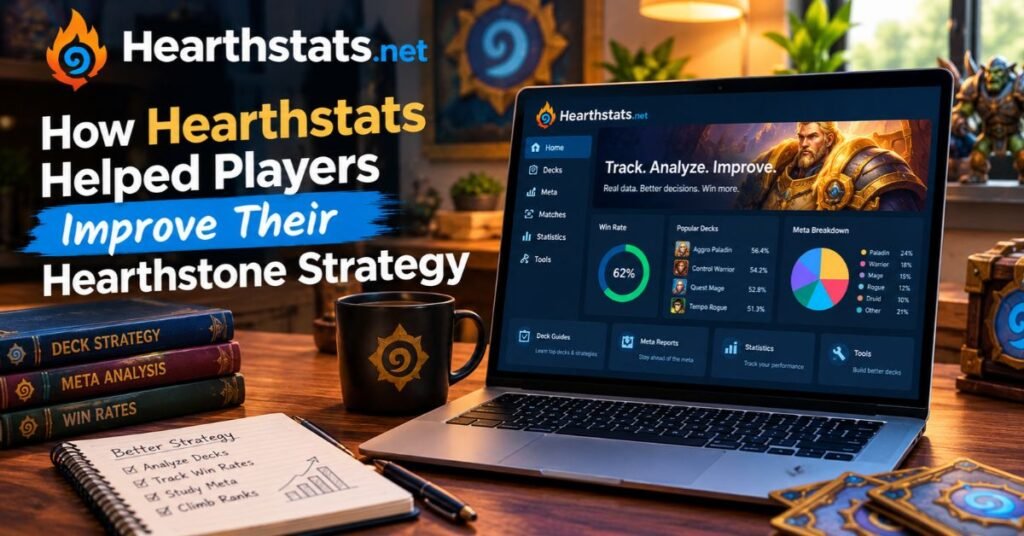
Data turns hunches into decisions. Many players “feel” they lose to one class. A tracker confirms it or proves it wrong. That’s the real value here. It supports Hearthstone gameplay improvement with facts.
A good Hearthstone strategy guide always says the same thing. Review your games. Find patterns. Fix one thing at a time. Hearthstats made that review process simple. It also nudged players to treat the ladder like a lab and not a lottery.
Understanding Strengths and Weaknesses
Every player has a style. Some love fast aggro. Others prefer slow control. Your records reveal where you shine and where you stumble. Maybe you win most games with a tempo deck. Maybe you lose a lot in mirror matches. That insight guides practice time. You can study the weak spot instead of replaying the same strong games. This is match analysis at a personal level, and it works at any rank.
Using Match Data for Better Decisions
Good choices need good inputs. Before you queue up, ask what the data says. Which deck has the best recent results? Which matchup should you avoid? These Hearthstone deck selection strategies save you from tilt. They also help you pick a list that suits the current ladder. Gameplay decision-making improves too, because you start to see why plays work. Even a small tweak, like swapping a two-drop, can shift your results over time.
Gaining a Competitive Advantage
Picture two players. One trusts memory. The other tracks 1,000 games. The second player finds leaks faster. Memory favors recent and dramatic games. Records stay fair and complete. An old saying, often credited to Peter Drucker though the source is debated, captures it well:
That idea sits at the center of Hearthstone player performance metrics. Measure your play, and you’ll see where to grow.
Hearthstats Net News: Current Platform Status and Latest Updates
Let’s address the biggest question head-on. People want a clear answer about the current state of the tool. Public information is thin and mixed. Many guides describe Hearthstats as a legacy tool. Few offer solid proof of its exact present state.
That uncertainty is worth stating plainly. Always check the live domain yourself. Use the Internet Archive’s Wayback Machine to see old snapshots. If the site no longer serves your needs, move on to a modern option. The rest of this guide shows you how.
Is Hearthstats.net Still Active?
Is Hearthstats.net still active? A clear public confirmation is hard to find. Questions like “Is Hearthstats.net still available in 2026?” appear often for that reason. Treat any claim without a source with caution. Open the domain in your browser and test it. Check whether login, uploads and recent data still work. If pages load but data looks old, assume the tool is a historical record. For daily Hearthstone performance tracking, a maintained tracker is the safer pick.
What Happened to Hearthstats?
What happened to Hearthstats? No official, widely cited announcement explains it. Several forces likely played a part. Competitors grew larger and offered richer data. Players moved to tools with overlays and replays. Running a stats service also costs time and money. Still, these points are reasoned explanations and not confirmed facts. The wider pattern is easy to see. Many small community projects faded when bigger platforms arrived. One Hearthstone deck site owner even shut down his project because HSReplay covered the same ground.
Where Can Players Find Current Hearthstone Updates?
For real Hearthstone gaming updates, go to the source. Blizzard posts patch notes and announcements on the official Hearthstone news page. Community hubs and subreddits add discussion and early reactions. For stats and competitive meta reports, turn to HSReplay and similar sites. Read game patch notes first whenever a patch lands. Then check fresh data a few days later. That order protects you from acting on stale numbers.
How Hearthstone Analytics Tools Work
Every tracker follows the same basic path. The game writes events to a log file. The tracker reads that file and understands what happened. Then it stores or uploads the results. Finally, a website turns the pile of results into charts.
Here’s a simple picture of that flow:
Game log file → Tracker app → Server → Charts and reports
Knowing this helps you trust the tools more wisely. You’ll also spot their limits sooner. Let’s break down each step.
How Match Data Is Collected
Most trackers read the game’s log files and nothing more. The HSReplay team says its tracker only reads publicly available log files and never modifies the client. That’s automated data collection in action. You play as usual. The app notes your deck, your opponent’s class, the turn count and the result. Then it saves your Hearthstone match history tracking record. If you opt in, it can also share anonymous data with the wider database. Always read the privacy settings before you agree.
Understanding Win Rates and Sample Sizes
How many games are needed for a reliable win rate? More than most people think. A small sample can mislead you badly. Luck swings short runs. The table below shows the rough margin of error at a 95 percent confidence level for a 50 percent win rate.
| Games Played | Approximate Margin of Error |
| 50 | ±14 points |
| 100 | ±10 points |
| 200 | ±7 points |
| 400 | ±5 points |
| 1,000 | ±3 points |
So a 55 percent record over 50 games proves little. Strong sample size accuracy needs hundreds of games.
How Deck Statistics Help Identify Winning Strategies
Hearthstone deck statistics show which lists succeed. Large datasets reveal deck archetypes that thrive and ones that fade. They also expose matchup statistics, which show favored and unfavored pairings. Use these facts to pick a list for the ladder. If a deck beats the most common classes, it makes a smart choice. This is meta deck selection in practice. Still, remember your own comfort matters. A slightly weaker deck you pilot well often beats a stronger one you barely know.
The Importance of Accurate Gaming Data
Bad data leads to bad advice. Missing games, wrong labels and tiny samples all warp results. Tracker-only data can also be skewed. One community explanation on a Blizzard forum thread notes that tracker users are a self-selected group, and that mobile players are missing from tracker-side samples. That’s a community claim, so treat it as a helpful clue and not a final verdict. The lesson stays practical. Read statistics with care. Ask who the data covers and how many games stand behind each number.
Hearthstats vs Modern Hearthstone Analytics Platforms
Hearthstats opened the road. Newer platforms paved it. Today’s best Hearthstone analytics platforms offer overlays, replays, huge datasets and live updates. The old tool can’t match that scale.
The table below gives a cautious overview. Feature details can change, so verify on each official site before you commit.
| Feature | Hearthstats (Legacy) | HSReplay | Firestone | Hearthstone Deck Tracker |
| Match tracking | Yes | Yes (through the tracker) | Yes | Yes |
| Deck statistics | Yes | Yes | Yes | Yes |
| In-game overlay | Unclear | Through the companion app | Yes | Yes |
| Replays | Basic or unclear | Yes | Varies | Through HSReplay |
| Meta reports and tier lists | Limited | Yes | Yes | Limited |
| Maintenance status | Unclear | Active | Active | Active |
Hearthstats vs HSReplay
HSReplay is a site built by the HearthSim team. It pulls data from players who use Hearthstone Deck Tracker. It shares replays, deck stats, matchup tables and tier-style rankings. PC Gamer notes that much of its functionality is free, and Blizzard login is the main barrier. Hearthstats served a smaller audience with a simpler focus. HSReplay wins on data size and polish. If you want Hearthstone competitive meta reports, it’s an obvious first stop.
Hearthstats vs Firestone
The Firestone app leans toward convenience. It offers an overlay, collection tools and support for modes like Battlegrounds and Arena. It lets you keep your game data and study current trends. People often ask about HSReplay vs Firestone, and the honest answer depends on taste. HSReplay shines for stats and replays. Firestone shines for features around the game. Compared with Hearthstats, Firestone feels more active and more connected to the modern client.
Hearthstats vs Hearthstone Deck Tracker
Hearthstone Deck Tracker is a free, widely used tool. Its core Hearthstone Deck Tracker features include card counts left in your deck and draw odds. It also tracks your hand and deck sizes, and it works with HSReplay for uploads. Where Hearthstats focused on records, this tool adds live help during the game. It’s still a tracker at heart. That makes it a close cousin of the old platform, only more up to date and better maintained.
Which Hearthstone Analytics Tool Is Best?
No single winner fits everyone. Match the tool to your goal. Want replays and broad meta data? Choose HSReplay. Want overlays and extras? Try Firestone. Want a clean, simple tracker? Pick Hearthstone Deck Tracker. Many players run two together. That’s fine as long as the tools don’t clash. If you’re still hunting for Hearthstone analytics platform alternatives to the old site, start with these three. Then test each for a week and keep the one that feels natural.
Why Hearthstone Analytics Matter for Players
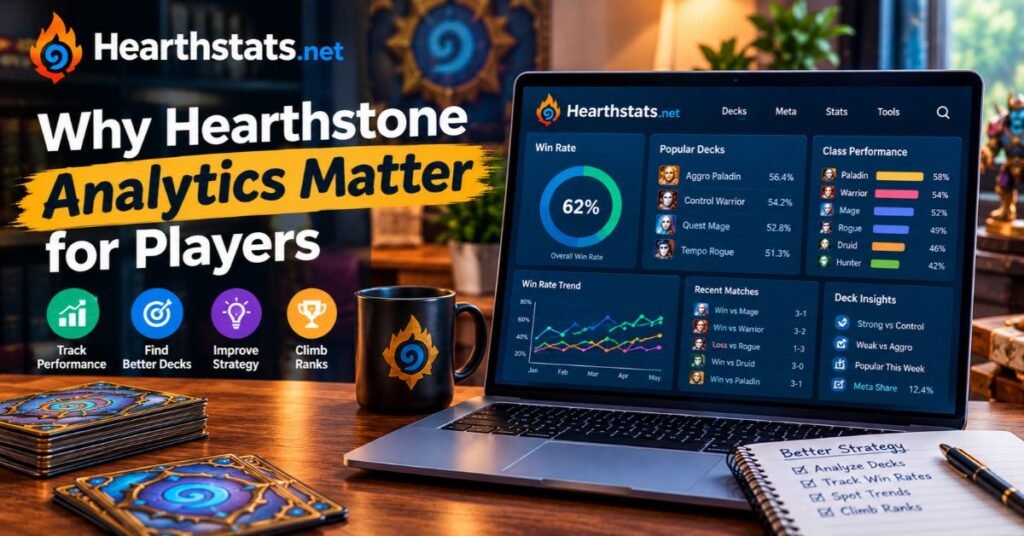
Hearthstone is a game of choices. You pick a deck. You pick a mulligan. You pick a target. Each choice carries risk. Analytics lower that risk by showing what usually works. They don’t remove luck. They just stack the odds in your favor.
The benefits grow with time. A casual player gets clarity. A grinder gets a plan. A competitor gets an edge. Let’s look at three big wins.
Tracking Long-Term Performance
Short memory fools us. You remember last night’s bad streak. You forget the good weeks. Records fix that. How to track Hearthstone statistics is simple. Install a tracker. Play normally. Review your numbers weekly. Over months, you’ll see trends in your player statistics. You can also track wins and losses in Hearthstone by season, by deck or by class. That long view keeps you calm during rough patches and honest during hot ones.
Read More: Befitnatic Website Review Features, Safety, Legitimacy & Complete Guide 2026
Understanding the Current Meta
The meta is the set of decks people play most. It shifts with every expansion and patch. Hearthstone meta analysis shows which decks rise and which fall. It also reveals what you’ll likely face. Meta knowledge lets you prepare answers before the queue starts. Many competitive ladder strategies begin with a simple step. Check the most played decks. Then pick a list that beats them. This habit alone can lift your results a lot.
Improving Deck Selection and Gameplay
How to improve Hearthstone win rates comes down to steady habits. Choose decks backed by data. Learn their matchups. Review lost games for mistakes. Card synergy also matters, so study why certain cards work together. Then tweak your list with care. A tracker helps you analyze Hearthstone gameplay data after each session. The best advice for how to improve Hearthstone gameplay using statistics is to change one thing at a time. That way, you know what caused the shift.
How Balance Patches and Meta Changes Affect Hearthstone Analytics
Blizzard updates the game often. New expansions arrive. Cards get adjusted. Rules change. Each update shakes the ladder. Analytics must catch up fast.
This is where fresh data matters most. Old numbers can mislead after a big change. The smart move is to pause, read the notes and wait for new samples. Let’s see how that works.
The Impact of Card Nerfs and Buffs
A nerf weakens a card. A buff strengthens it. Even one small change can reshape a whole deck. Hearthstone balance patch updates can push an archetype from top tier to unplayable overnight. Card balance changes also create new favorites. Analytics sites track these swings in Hearthstone meta shifts. If you want to know how balance patches affect Hearthstone deck statistics, watch win rates before and after the patch. Big jumps point to the cause.
Adapting Deck Strategies After Updates
After a patch, don’t rush. Read the patch notes closely. Identify which of your cards changed. Then test replacements in casual games. Watch early data from trackers with care, since small samples swing wildly. Within days, reliable trends appear. Adapt your list based on those. This patient approach protects your rank. It also keeps your Hearthstone deck performance steady while others scramble.
Why Historical Statistics Can Become Outdated
Old stats describe an old game. After a major patch, they lose value. A deck with a 55 percent win rate last month may sit at 45 percent now. That’s why historical match records work best for personal review and not for current picks. Use old data to learn how you play. Use new data to choose what to play. Mixing the two causes confusion. Always check the date range on any chart you read.
The Role of Community Data in Hearthstone Analytics
Large platforms thrive on shared data. Each player adds a few games. Together, they build a giant picture. That picture is far richer than any single player could create.
This is the power of Hearthstone community data. It creates better Hearthstone community statistics for everyone. Yet crowd data has flaws. Smart readers know both the strengths and the limits.
How Player Contributions Improve Statistics
More games mean tighter estimates. When thousands of players upload results, small quirks wash out. Rare matchups finally get enough samples. Trends show up sooner after patches. This is community-driven statistics at its best. Each upload acts like a vote of evidence. You can support the system by enabling data sharing in your tracker. Just review the privacy terms first. Most tools share data anonymously.
Read More: BitClassic Applewhite Explained Features, Risks & Honest Review 2026
Community Meta Reports and Deck Sharing
Communities also share knowledge outside raw numbers. Players post deck lists, guides and matchup tips. Analysts publish meta reports that explain what is strong and why. Deck sharing lets you copy a proven list in minutes. Then your own tracker tests it against your real games. That blend of community wisdom and personal data is powerful. It helps beginners learn faster and helps veterans stay sharp.
Data Reliability and Common Limitations
No dataset is perfect. Tracker users form a self-selected group, so they may not match the full player base. Rank mix, platform and playstyle can all skew results. Some samples are small. Others lag behind patches. Treat any single site as one lens and not the whole truth. Compare two or three sources when a pick matters. If they agree, your confidence should rise. If they clash, dig deeper before you decide.
Challenges Faced by Hearthstone Analytics Platforms
Running an analytics service looks easy from the outside. It isn’t. The work never stops. Data pours in. Patches change everything. Costs add up.
These problems hit small community projects hardest. They help explain why fewer independent tools survive today. Let’s review the four biggest hurdles.
Data Accuracy and Tracking Limitations
Trackers read logs, and logs have limits. A crash can lose a game. A client change can break parsing. Some modes expose less information than others. After patches, trackers sometimes stop working until updated. A Blizzard forum thread shows players reporting broken trackers after an update. Such gaps leave holes in the data. Good platforms fix them fast and flag known problems clearly.
Game API Restrictions
Third-party developers can’t just reach into the game. They depend on what the client exposes. Blizzard has not shipped an official deck tracker for every region. A PC Gamer piece shows the community still leans on outside tools. That reliance carries risk. If the game changes its logs, tools must adapt. Strict limits also cap what features developers can safely offer. This is a core reason small teams struggle to keep pace.
Rapidly Changing Competitive Meta
Decks rise and fall in days. Big expansions reset the board. Analytics must refresh quickly to stay useful. A report that takes a week to update may already be stale. Fast meta cycles also reward platforms with huge user bases. They gather enough games to publish solid numbers early. Smaller tools can’t always do that. So they lag behind, and players drift toward the faster sources.
Platform Maintenance and Infrastructure Costs
Servers cost money. Databases grow large. Support takes time. Millions of matches need storage and processing power. Many fan projects start as hobbies and later become heavy chores. Without steady funding or help, the work becomes hard to sustain. Premium plans, ads and donations all try to fix this. Still, upkeep remains a big reason older community tools slow down or stop.
What New Hearthstone Players Can Learn From Hearthstats
You don’t need a decade of experience to benefit. The lessons from Hearthstats suit beginners well. They teach habits that last through every season and every patch.
The key idea is simple. Treat each game as a chance to learn. Records make that easy. Here’s how to start without feeling overwhelmed.
Building Better Gaming Habits
Start with one small habit. Install a tracker and let it record your games. After each session, glance at your results. Once a week, spend ten minutes on a review. Note which deck you played most and how it did. Over time, these small checks grow into strong routines. Good habits beat bursts of effort. They also protect you from tilt, because you judge yourself by trends and not single games.
Learning From Wins and Losses
Wins feel nice. Losses teach more. When you lose, ask what went wrong. Was it a bad draw or a weak play? Did you misread the matchup? Here’s a short hypothetical case study. A player named Maya tracks 200 games with one deck. She sees a 48 percent win rate overall. Digging deeper, she finds she loses most against fast decks. She swaps in two cheaper cards. Her next 200 games land near 55 percent. The data pointed the way. She only had to act on it.
Using Statistics Without Overcomplicating Gameplay
Numbers should help you. They shouldn’t paralyze you. Don’t chase perfect data before every match. Pick two or three player performance metrics that matter most to you. Win rate and matchup results are a great start. Ignore the rest until you feel ready. Remember that fun matters too. Hearthstone is a game first. Use stats as a gentle guide and keep your play creative and enjoyable.
Read More: TheLifestyleEdge com Review 2026: Is This Lifestyle Blog Worth Your Time
The Future of Hearthstone Analytics
Gaming analytics keep moving forward fast. What felt advanced a few years ago now feels basic. Expect more automation, more prediction and more personal advice. These are trends and not promises.
Developers across the industry already test smarter tools. Gaming analytics software will likely learn from your habits. Let’s look at four directions worth watching.
Artificial Intelligence in Gaming Analytics
AI can scan huge datasets in seconds. It can spot patterns that humans miss. AI-powered gaming tools may soon explain why a deck loses and not just that it loses. They could also flag odd results that hint at tracking errors. For players, that means clearer answers and less guesswork. The tools still need good data underneath. AI can’t fix a weak or tiny sample. It simply reads patterns faster than we can.
Predictive Meta Analysis
Predictive game analytics aim to forecast the future. Imagine a tool that guesses which deck will rise next week. It would study card changes, player trends and past patch effects. Such forecasts give you a head start before the crowd shifts. They won’t be perfect. The meta involves human choices and surprises. Even so, rough predictions could help players prepare earlier and pick smarter lists for tournaments.
Personalized Deck Recommendations
Today, most advice is generic. Tomorrow’s tools may tailor advice to you. Personalized deck recommendations could consider your play style, your collection and your history. If you love aggressive plays, the tool might suggest a fitting archetype. If you own few cards, it might recommend budget options. That personal touch could make the ladder friendlier, especially for new players who feel lost in a crowded card pool.
Real-Time Gameplay Insights
Real-time help already exists in basic form. Overlays show cards left in your deck. Future tools may suggest odds for key plays during the match. Real-time match tracking could also compare your choices with common winning lines. Fair play questions will matter here. Players and rule makers will need to agree on what counts as acceptable help. Tournament rules, in particular, may draw firm lines around such features.
Common Misconceptions About Hearthstats Net News
Myths spread easily when a name looks like a news brand. A few wrong ideas keep popping up. Clearing them saves you time and wrong turns.
The table below sums up the most common mix-ups. Details follow in the sections after it.
| Myth | Reality |
| Hearthstats was a news site | It was a stats and tracking platform |
| It still gives live match tracking | Its current activity is unclear, so use maintained tools |
| Its ideas are useless today | Its core ideas still shape modern tools |
| It equals today’s deck trackers | Modern trackers offer far more features |
Is Hearthstats a Dedicated News Website?
No. The name includes “net,” which fools many people. Hearthstats net news sounds like a headline page. In truth, the platform focused on Hearthstone player statistics and tracking. Real news lives elsewhere, such as Blizzard’s official site or community outlets. If you want patch coverage or tournament stories, look there. Use the stats tool for numbers and use news sites for announcements.
Does Hearthstats Still Offer Live Match Tracking?
Current live tracking from the old site can’t be confirmed from public sources. Don’t rely on it for your daily ladder grind. Choose a maintained Hearthstone match tracker instead. Those tools update after patches and support new modes. If you still have an old account, consider exporting any records you can. Then move them into a modern tool or a simple spreadsheet for safekeeping.
Can Players Still Use Its Analytics Concepts?
Yes, fully. The ideas inside Hearthstats never expire. Track results. Compare decks. Study matchups. Adjust with evidence. These steps work with any modern tool. You can even follow them with a notebook and a free spreadsheet. The method matters more than the brand. That’s a big reason the name lives on in search results today.
Is Hearthstats the Same as Modern Deck Trackers?
Not quite. Hearthstats leaned toward long-term records and reports. Modern trackers add live overlays, replay links and rich community data. They also update quickly after patches. Still, the two share roots. Both aim to help you learn from your games. Think of Hearthstats as an early ancestor. Today’s tools are the grown-up descendants with more muscle.
The Lasting Legacy of Hearthstats in Hearthstone
Every craft has pioneers. Hearthstats belongs to that group in the Hearthstone world. It helped make data feel normal for card-game players. Many features we take for granted began as small experiments in tools like it.
That legacy lives on in every tracker you install today. When you open a win-rate chart, you’re using an idea that early community tools helped popularize. The next two sections show how.
Its Influence on Gaming Analytics
Before such tools, most players trusted gut feeling. After them, charts and records became routine. Hearthstone analytics tools now power guides, tier lists and tournament prep. They also inspired similar services for other card games. The habit of tracking, comparing and adjusting spread across the community. That shift changed how people talk about decks and how they teach new players.
Lessons for Modern Hearthstone Tools
Modern developers can still learn from the old platform. Keep tools simple. Respect player privacy. Update quickly after patches. Explain numbers in plain words. Hearthstats also shows the cost of weak upkeep. A great idea needs steady support to last. Players, in turn, can learn to back the tools they love. Share data, give feedback and support developers where possible.
Frequently Asked Questions
What Is Hearthstats Net News?
Hearthstats net news refers to updates, history and discussion about the Hearthstats analytics platform. It does not describe a traditional news outlet. People use the phrase to learn what the tool did, what became of it and which modern options replace it.
Is Hearthstats.net Still Available?
Public sources don’t clearly confirm its current state. Open the domain and test it yourself. Check the Wayback Machine for older snapshots. If the site feels outdated or broken, switch to an actively maintained tracker for reliable Hearthstone performance tracking.
Why Was Hearthstats Important for Hearthstone Players?
It gave players easy access to their own numbers early on. You could review match history, deck results and class matchups. That helped people make smarter choices. It also helped normalize data-driven play in the community.
What Are the Best Alternatives to Hearthstats?
Top choices include HSReplay, the Firestone app and Hearthstone Deck Tracker. Each has strengths. HSReplay offers large datasets and replays. Firestone adds overlays and extras. Hearthstone Deck Tracker keeps things simple and reliable. These are the leading Hearthstats alternatives for most players.
How Do Hearthstone Analytics Tools Work?
They read game log files, record results and send them to servers if you allow it. Then websites turn the data into charts and tables. You see win rates, deck stats and matchup trends. The process runs mostly in the background while you play.
Are Deck Trackers Allowed in Hearthstone?
Widely used trackers are generally accepted. Reports say Blizzard allows them under a “pen and paper” idea, since you could note the same information by hand. HearthSim’s help page says its tracker complies with the official tournament handbook. Still, some tournament organizers ban outside software, so always read the current rules before you play in an event.
Which Hearthstone Analytics Platform Is Best?
It depends on your needs. HSReplay suits data lovers. Firestone suits players who want extras. Hearthstone Deck Tracker suits those who prefer simplicity. Test two options and keep the one that fits your routine. The best tool is the one you will actually use.
Why Do People Still Search for Hearthstats?
Nostalgia plays a part. So does curiosity about its fate. New players also meet the name in old guides and ask what it was. Others want alternatives. The mix of history, mystery and practical need keeps the search alive.
Conclusion
The story behind Hearthstats net news is bigger than one tool. It shows how players moved from guesswork to evidence. Hearthstats helped start that change. It gave people a mirror for their own games. That mirror made improvement feel possible.
Today, stronger platforms carry the torch. HSReplay, Firestone and Hearthstone Deck Tracker offer more data and faster updates. Pick one, track your games and review them often. Keep sample sizes in mind. Read patch notes before big decisions. Do that, and you’ll turn Hearthstone statistics into steady gameplay improvement on every ladder run.