Connectivity HSSGamepad: 10 Proven Fixes for Annoying Connection Issues
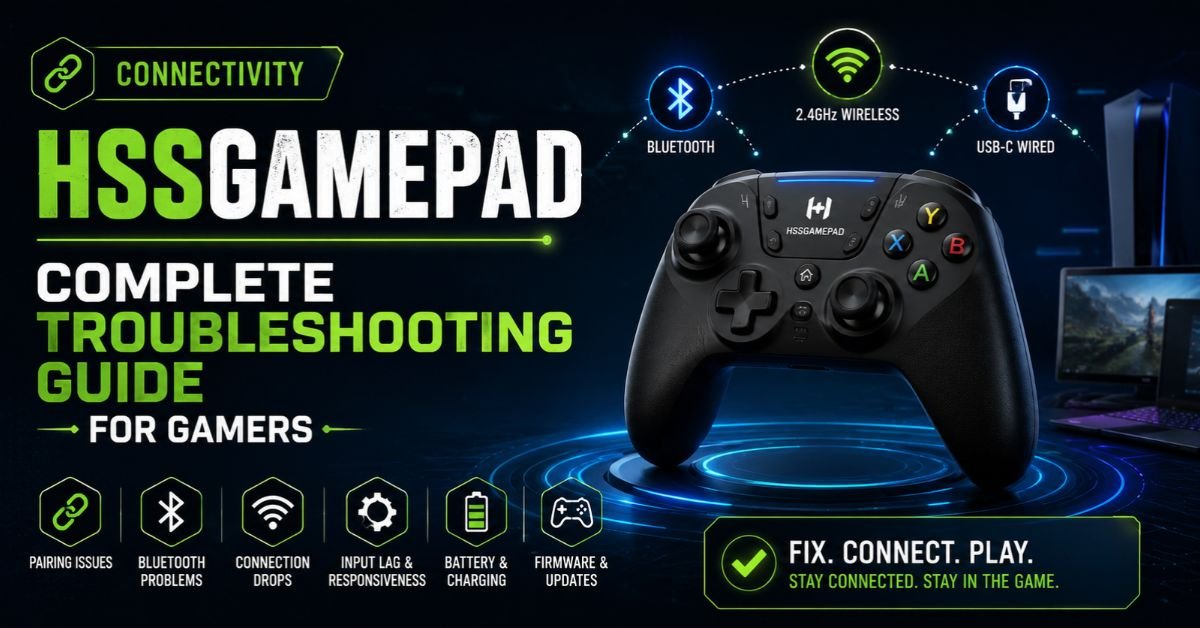
Picture this. You line up the perfect shot, and your controller freezes for half a second. The match slips away. Sound familiar? Most players blame the game or the controller itself. However, the real culprit is often connectivity HSSGamepad trouble that you can fix at home. This HSSGamepad troubleshooting guide shows you how. You will learn why problems happen and how to fix HSSGamepad connectivity issues step by step. You will also learn how to keep a stable gamepad connection for the long run, so you can enjoy lag-free gaming performance every time you play.
What Is Connectivity HSSGamepad and How Does It Work?
Connectivity HSSGamepad describes how your controller talks to your console, PC, or phone. Think of it as a highway. Your button press is the car. The controller chip is the engine. The signal is the road. Your game device is the destination. If the road has a pothole, the car slows down. That is why a fancy controller can still feel sluggish when the link is weak.
Every press travels through a short chain of steps. The controller reads the press and encodes it. Then it sends the data over a cable or through the air. Your device decodes it and the game reacts. Each step adds a tiny delay. When all steps run well, you feel nothing. When one step fails, you notice HSSGamepad connectivity issues right away.
Understanding HSSGamepad Connectivity
HSSGamepad connectivity works in three layers. First, the controller processes your input inside its own chip. Second, it sends that input through a cable, a Bluetooth radio, or a 2.4GHz dongle. Third, your device receives the signal and turns it into game action. Experts call this device synchronization, because both sides must agree on timing. If any layer slips, you see HSSGamepad connection problems such as delays, skipped presses, or a controller that stops talking altogether.
How Wired and Wireless Controller Connections Work
A cable carries your input as electrical signals straight to the device. That is the HSSGamepad USB connection, and it is simple and fast. A HSSGamepad wireless connection works differently. The controller turns your input into radio waves. Bluetooth uses a built-in radio. A 2.4GHz dongle uses a small receiver that plugs into your device. Both wireless paths share the air with other gadgets. The path looks like this: button, controller chip, cable or radio, receiver, game. A wired controller connection skips the radio step, which explains its steady feel. Always check which modes your model supports before you start.
Why Stable HSSGamepad Connectivity Matters for Gaming
Good HSSGamepad connection stability shapes how every game feels. In a shooter, one late press can cost you the round. In a racing game, a delayed turn sends you into the wall. In a fighting game, a missed combo window ends the fight. You might think your skills slipped. In truth, your signal may have wobbled.
Stability matters most when the pressure rises. Competitive gaming rewards players who repeat the same move at the same speed. A shaky link breaks that rhythm. Gameplay interruptions also drain your focus and your fun. Fixing the connection often improves your results more than buying new gear.
How Connection Stability Affects Input Lag and Response Time
Every stage between your thumb and the screen adds time. Experts call this input latency. Your controller response time is the total of all those small delays. A steady link keeps the total low and predictable. An unstable link makes it jump around. That jumping feels worse than a steady delay, because you cannot adjust to it. HSSGamepad input delay often shows up as a late jump or a slow camera turn. Players also describe real-time input response that feels “behind their hands.” Better stability brings that response back in line.
Wired vs. Wireless Connectivity for Gaming
Is a wired gamepad better than a wireless gamepad? For pure speed and steadiness, yes. A cable avoids radio interference and battery limits. Wireless wins on comfort and freedom. The numbers below are typical ranges. Real results vary by device and setup, so treat them as a guide rather than a promise.
| Connection Type | Typical Latency | Stability | Best Use |
| Wired USB | Very low, often a few milliseconds | Very high | Competitive play |
| 2.4GHz dongle | Low, often under 10 milliseconds | High | Everyday gaming |
| Bluetooth | Higher, often 10 to 40 milliseconds or more | Medium | Casual play and mobile |
Many players pick HSSGamepad wired mode for ranked matches and wireless for relaxed sessions.
Common HSSGamepad Connectivity Problems
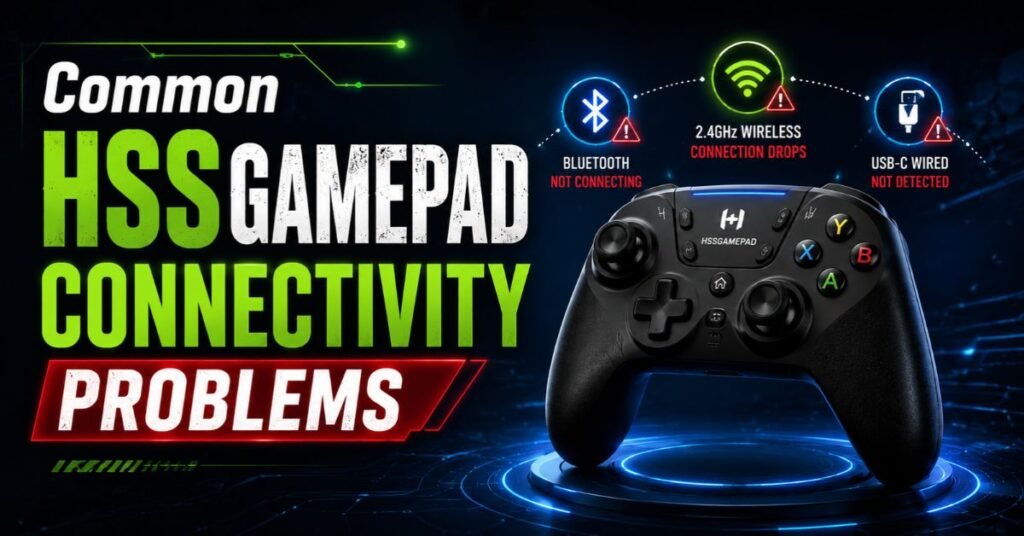
Most HSSGamepad connectivity issues fall into five groups. You may face one or several at once. Each group has its own clues. Learning those clues saves you hours of guessing.
Start by noticing when the trouble appears. Does it happen at the start of a session or after an hour? Does it happen only in one room? Does it happen on one device but not another? These small notes act like connection diagnostics. They point you toward the right fix quickly.
Input Lag and Controller Delay
Why does my game controller have input delay? Usually the signal takes too long to travel or the device handles it slowly. HSSGamepad controller lag feels like sluggish movement, late shots, and a slow camera. A simple test helps. Open a game with a visible button prompt and tap fast. If the screen reacts late, you have lag. Then plug in a cable and test again. If the lag vanishes, the wireless link is your problem.
Random Disconnections and Connection Drops
Why does my HSSGamepad keep disconnecting? The cause is often power or interference. HSSGamepad random disconnections show up as a frozen character, a short beep, or a pause while the controller reconnects. These drops usually hit at the worst moment. Notice the pattern. If drops happen when the battery runs low, power is the issue. If they happen near the router, interference is the likely cause.
Bluetooth Pairing and Compatibility Issues
HSSGamepad pairing issues are common after updates or device changes. You might see “device not found,” a pairing light that never stops blinking, or a controller that connects to the wrong device. HSSGamepad compatibility issues can also block a link. Some older devices lack the right Bluetooth support. Others need a driver. Knowing how to fix HSSGamepad pairing problems starts with a clean reset, which the fix section covers in detail.
Wireless Signal Interference
HSSGamepad wireless interference comes from crowded airwaves. Routers, phones, wireless headsets, and smart TVs all share the same 2.4GHz band. Experts call this wireless frequency interference. It weakens wireless signal strength and causes lag or drops. You may wonder, how to fix wireless controller interference? Start by moving other gadgets away and shortening the gap between controller and receiver.
Controller Stuttering and Frozen Inputs
Stuttering feels like short bursts of lag. Movement pauses for a moment, then catches up. Sometimes the HSSGamepad controller not responding problem lasts longer, and buttons do nothing at all. Why is my HSSGamepad not responding? Common reasons include low battery, a dropped link, a busy USB port, or a software glitch. Restarting the controller and the device clears many of these cases in seconds.
What Causes HSSGamepad Connectivity Issues?
Here is the good news. Most problems come from the setup, not from a broken controller. Your room, your battery, and your software matter a great deal. Knowing the cause lets you fix it once instead of guessing again and again.
Causes also stack on top of each other. A low battery plus a nearby router can double the trouble. That is why one fix sometimes helps only a little. Work through the causes below and you will often find more than one.
Wireless Interference from Nearby Devices
The 2.4GHz band is crowded. Wi-Fi networks, Bluetooth gadgets, and wireless mice all use it. Your controller must compete for space. Does Wi-Fi affect Bluetooth controller performance? It can, especially when the router sits close to your gaming spot. The overlap raises delay and causes dropped inputs. Even a microwave oven can add noise in the same band. Moving the router or switching its channel often helps. A router that also offers a 5GHz band can pull your other devices off the crowded channel.
Low Battery and Power Management Problems
A weak battery can cause sudden dropouts. When voltage dips, the radio and the chip may reset for a moment. That looks like a random disconnect. Battery health also fades with age, so an old controller may fail even at 50 percent charge. Power-saving modes on your device add to the trouble. Some systems switch off Bluetooth or USB ports to save energy. Check your power management settings if drops keep happening on a full charge.
Excessive Distance and Physical Obstacles
Wireless signals weaken with distance and walls. Bluetooth often reaches around 10 meters in open space. Indoors that range shrinks fast. Thick walls, metal shelves, and even your own body can block the signal. A gamer who sits behind a TV cabinet may lose input often. Good signal range depends on a clear path. Keep the receiver in sight and close to your seat for the best results.
Outdated Firmware, Drivers, or System Software
Old software creates mismatches between the controller and the device. Firmware compatibility matters because a new system update may expect a newer controller version. Old device drivers on a PC can cause pairing failures and lag spikes. Not every controller gets frequent updates. Still, a HSSGamepad firmware update can fix hidden bugs when one exists. Check the maker’s support page when problems start, and install pending software updates on your device too.
USB Cable, Port, and Hardware Problems
Cables wear out. A bent plug or frayed wire can cut the signal in and out. Some cables only charge and carry no data at all. Dust inside a port can also block the contact. How to fix USB controller connection problems? Try another cable first. Then try another port. Do a bit of USB port troubleshooting by plugging the controller into a different spot, ideally one directly on the device rather than a hub.
Background Devices and System Resource Conflicts
Too many connected devices can clog the link. A headset, a keyboard, a mouse, a phone, and a controller all compete for attention. Your Bluetooth adapter has limits on how many devices it handles well. Busy USB controllers on a PC can also slow things down. Background apps that use heavy network or Bluetooth traffic add to the load. Close what you do not need and watch whether the lag fades.
How to Fix Connectivity HSSGamepad Problems Step by Step
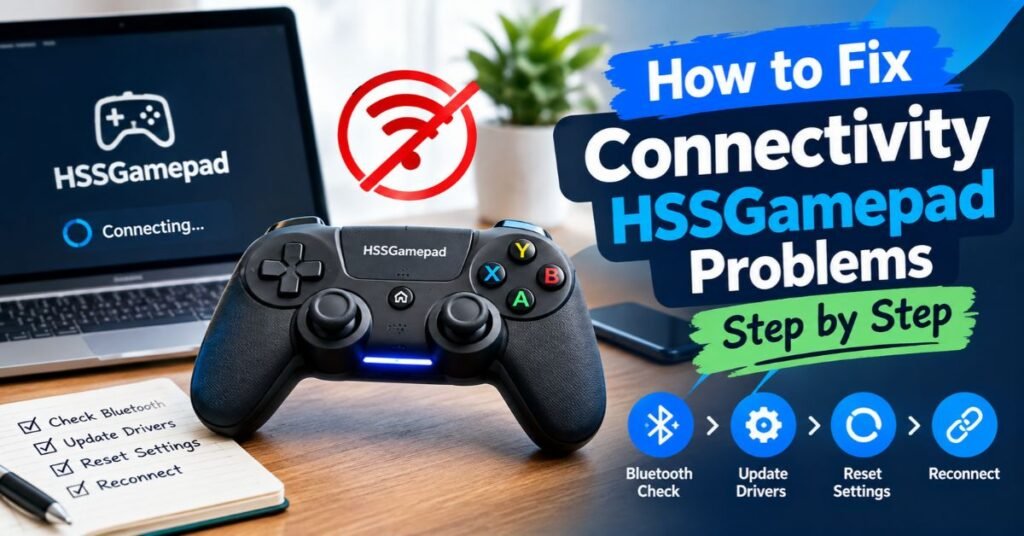
Now for the part you came for. These HSSGamepad connection fixes run from easiest to hardest. Test after each step. That way you learn exactly which change solved the problem.
Take your time and stay calm. Most fixes take only a few minutes. If you ask how to troubleshoot a game controller connection, the answer is simple: change one thing, test it, and then move on.
See Also: Xendit Gamification Summit at Work Complete Guide 2026
Charge Your Controller and Check Battery Health
Start with power, because it solves more problems than people expect. Charge the controller fully and test again. Avoid playing below 20 percent. If the controller drops out even at a high charge, the battery health may be poor. A battery that drains very fast is a warning sign. In that case, try a wired session to confirm the battery is the issue, and then look for a replacement or repair option.
Restart and Re-Pair Your HSSGamepad
A clean pairing fixes many problems. Here is how to connect HSSGamepad via Bluetooth after a reset. First, remove the controller from your device’s Bluetooth settings. Second, turn the controller off and on. Third, hold the pairing button until the light blinks fast. Fourth, search for the controller on your device and select it. Fifth, wait for the light to turn steady. This process answers how to fix HSSGamepad pairing problems in most cases.
Check the USB Cable and Connection Port
Inspect the cable for bends, cuts, or loose ends. Swap in a different data cable and try again. Then change the port. A port on the back of a PC often works better than a front panel port. Clean any visible dust with a dry, soft tool. Avoid metal objects. Keep the HSSGamepad USB connection direct, without hubs, while you test. If the problem disappears, the old cable or port was the cause.
Update Controller Firmware and Device Drivers
How to update HSSGamepad firmware? Visit the official support page for your model and look for a firmware tool or update guide. Follow the steps exactly, and keep the controller connected by cable during the update. Do not unplug it midway. Next, update your system. Windows users can check Microsoft support for driver help. Console owners can run the system update from the settings menu. Fresh software improves firmware compatibility and reduces odd glitches.
Reduce Bluetooth and Wireless Interference
How to reduce HSSGamepad input lag often comes down to cleaning up the airwaves. Move your router a few meters from your gaming spot. Turn off Bluetooth gadgets you do not use. Place your receiver close to the controller. If your dongle sits behind the PC, use a short USB extension cable to bring it forward. These steps improve wireless signal strength and cut HSSGamepad wireless interference without any cost.
Switch Between Wired and Wireless Modes
Switching modes helps you find the cause. Plug in the cable and play for a few minutes. If everything runs smoothly, the wireless path is to blame. Then try the 2.4GHz dongle if your model has one. Finally, test Bluetooth. This simple comparison tells you where the trouble lives. It also gives you a backup mode for important matches, so a bad wireless day never ruins your session.
Restart Your Gaming Device and Check Compatibility
Restart your console, PC, or phone to clear temporary glitches. Then check how to check gamepad device compatibility. Look at the controller’s manual or product page and confirm that your platform is supported. Some devices need a certain Bluetooth version or a driver. Console makers such as Sony and Xbox list the accessories they support. Fixing hardware compatibility early saves you from chasing problems that cannot be solved.
Advanced Ways to Improve HSSGamepad Connection Stability
Basic fixes did not work? Do not worry. A few deeper steps remain. These tweaks suit players who still see HSSGamepad connection problems after the first round.
Change only one setting at a time. If you change five things together, you will never know which one helped. Write short notes if that helps you remember. Patience pays off here, and your reward is steady play.
Clear Old Bluetooth Pairing Records
Old pairing records confuse your device. Ghost entries and duplicates can block a fresh link. Open your device’s Bluetooth list and remove every old controller entry. Then restart both devices and pair again from scratch. This is a smart move for anyone who owns several controllers. It also answers how to improve HSSGamepad connection stability, because clean records lead to cleaner Bluetooth pairing.
Optimize Device Power and Bluetooth Settings
Power-saving tools can cut off your connection to save energy. On Windows, open the device manager and look at the power tab for your USB hubs and Bluetooth adapter. Turn off the option that lets the system switch them off. Also turn off USB selective suspend in the power plan. On a phone, disable battery optimization for Bluetooth. These power management settings keep HSSGamepad Bluetooth connectivity awake and steady during long sessions.
Check Bluetooth Version and Device Compatibility
Newer Bluetooth versions usually improve range and energy use. They do not always lower latency, so manage your hopes. Still, very old adapters can cause drops and pairing trouble. A quality Bluetooth adapter with modern support often helps PC players. Learn more about the standard at the Bluetooth ]SIG website. This is also a good time to review hardware compatibility between your adapter, your controller, and your operating system.
Optimize Controller Placement and Wireless Range
Your room layout matters. Keep a clear line of sight between the controller and the receiver. Avoid metal shelves and thick walls in between. Sit within a few meters of the device when you can. This is how to prevent gamepad connection drops without spending a cent. Good placement also protects your signal range, because radio waves lose strength with every obstacle. A small shift of the receiver often makes a big difference.
Use a Wired Connection for Competitive Gaming
When every millisecond counts, go wired. A cable removes radio noise and battery worries. It gives you low-latency gaming and consistent controller performance from the first round to the last. Many tournament players choose a wired controller connection for this reason. Pick a short, high-quality data cable and plug it directly into the device. Keep the cable tidy so it does not tug on the port during play.
See Also: Goralblue Com Review 2026 Features, Content, Travel & SEO Guide
HSSGamepad Connectivity Problems, Causes, and Solutions
Sometimes you just want a fast answer. This section gives you a map. It links each problem to its most likely cause and its best fix. Use it as a quick reference when trouble strikes.
You can also use it to learn your own patterns. Over time you will spot which problems return in your setup. That knowledge helps you prevent them. Print the table or save it on your phone for easy access.
Quick Troubleshooting Checklist
Run through this table from top to bottom. Each row matches a common HSSGamepad connectivity issue.
| Problem | Likely Cause | Best Fix |
| Input lag | Wireless delay or heavy interference | Switch to wired or a 2.4GHz dongle |
| Random disconnects | Low battery or distance | Recharge and move closer |
| Pairing issues | Old pairing records | Remove the device and pair again |
| Stuttering | Crowded wireless band | Turn off nearby devices |
| Controller not responding | Software glitch or port fault | Restart devices and try another cable |
| Wired mode fails | Charge-only cable or bad port | Use a data cable and change ports |
How to Identify the Root Cause of Connection Failures
Think like a detective. Ask simple questions and follow the answers. If wired mode works but wireless fails, the trouble lies in the radio path. If the controller works on another device, your first device is the problem. If it fails everywhere, suspect the battery, the cable, or the controller itself. These small tests form basic connection diagnostics. They narrow the field fast and stop you from replacing parts that work.
How Better HSSGamepad Connectivity Improves Gaming Performance
A strong link changes how a game feels. Your inputs land when you expect them. Your character moves the way you intend. You stop fighting the controller and start enjoying the game.
Better connection also builds trust. You know the controller will respond, so you play with more confidence. That confidence shows in your results. Fixing the link is one of the cheapest upgrades you can make.
Lower Input Latency and Faster Response Times
Lower input latency means your actions reach the screen sooner. How to improve controller response time? Use a cable, keep the battery high, and clear interference. These steps cut the total delay. You gain real-time input response and faster gaming responsiveness. Even small gains help in fast games, where a few milliseconds can separate a hit from a miss.
More Consistent Controls in Competitive Games
Consistency beats raw speed. A steady delay is easier to master than a random one. Reliable timing supports control accuracy in aiming, dodging, and combos. In competitive gaming, you want the same response every round. Here is a simple rule many players follow: a controller you can trust beats a controller that is sometimes faster. A stable link delivers that trust and keeps your muscle memory sharp.
Fewer Disconnections and Smoother Gameplay
Fewer drops mean fewer ruined moments. Without gameplay interruptions, you stay focused on the match. Smooth gameplay also keeps long sessions comfortable, since you never stop to re-pair. That is the heart of lag-free gaming performance. Combine a charged battery, a clear path, and updated software. Then you get a steady experience that lasts from the first minute to the last.
Common Mistakes Gamers Make When Troubleshooting Connectivity
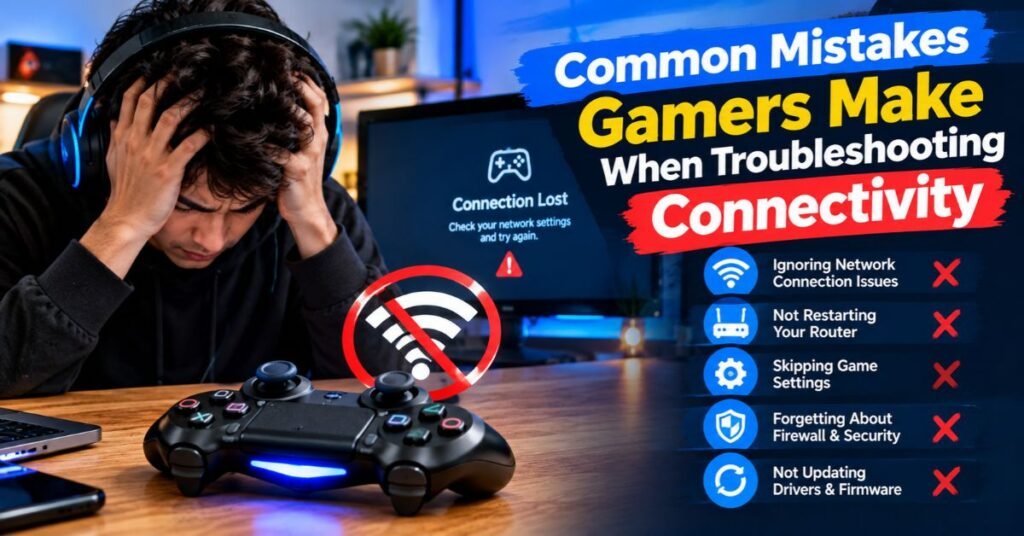
Many players lose time by guessing. They swap parts, change settings, and blame the game. Then the problem returns. A little structure avoids all that.
Think of troubleshooting as a short experiment. You test one idea and watch the result. Here are three mistakes that trip up even experienced gamers.
See Also: Best Wireless Earbuds of 2026 Top Picks for Sound, ANC & Comfort
Blaming the Controller Before Checking the Device
Many gamers assume the controller is broken. Yet the device often causes the problem. Test your controller on a second console, PC, or phone before you buy a new one. If it works there, your first device needs attention. Check its Bluetooth, drivers, and ports. This single test can save you money and stress.
Ignoring Battery Health and Firmware Updates
Battery and software issues hide in plain sight. Players skip them because they seem too simple. Yet battery health and old firmware compatibility cause a large share of drops and lag. Check both early. Charge fully, test, and then look for a HSSGamepad firmware update if one exists. These easy checks solve many cases before you try anything advanced.
Changing Multiple Settings Without Testing Each Fix
Changing many settings at once feels fast. In reality it hides the real fix. You may improve things and never know why. Worse, you may break something else. Change one item and test for a few minutes. Then move to the next. Keep a short note of each change. This habit makes your troubleshooting clear, repeatable, and much easier to share if you ask for help online.
How to Maintain Stable HSSGamepad Connectivity Long Term
Prevention beats repair. A few small habits keep your controller healthy for years. You do not need a strict schedule. You only need steady care and a quick check when something feels off.
Treat your controller like a tool you rely on. Clean it, store it well, and watch for early warning signs. These habits protect your HSSGamepad connection stability and save you from sudden surprises.
Regular Controller and Software Maintenance
How to maintain a stable gaming controller connection? Check for updates when problems appear, and keep your device software current. Wipe dust from ports and cables with a dry cloth. Replace any cable that looks worn. Review your controller configuration after major system updates, since settings sometimes reset. These small tasks take minutes and keep your connection stability strong.
Best Practices for Charging, Storage, and Wireless Use
Charge your controller before long sessions and avoid extreme heat. Heat shortens battery life. Store the controller away from routers and metal surfaces. Use a good data cable for HSSGamepad USB connection sessions. Remove unused Bluetooth devices from your list. Following these habits supports consistent controller performance and helps with how to prevent gamepad connection drops over the long haul.
Frequently Asked Questions
Why Does My HSSGamepad Lag Even When It Is New?
A new controller still depends on your room, your device, and your software. Heavy interference, an old Bluetooth adapter, or a busy system can all add delay. Why does my game controller have input delay? Often the wireless path is slow. Try HSSGamepad wired mode first. If the lag disappears, tidy your wireless setup and update your drivers.
Is a Wired HSSGamepad Connection Better Than Wireless?
For competitive play, yes. A cable gives lower input latency and no interference. Wireless is great for comfort and casual games. Is a wired gamepad better than a wireless gamepad? It depends on your goal. Use wired for ranked matches and wireless for relaxed evenings. Many players switch freely between both.
Can Wi-Fi Interference Affect HSSGamepad Connectivity?
Yes, it can. People often ask, Does Wi-Fi affect Bluetooth controller performance? When your router uses the 2.4GHz band nearby, it can crowd the same airwaves. This raises lag and drops. Move the router away, use the 5GHz band for other devices, and keep your controller close to its receiver.
How Do I Fix HSSGamepad Bluetooth Pairing Problems?
Remove the controller from your Bluetooth list and restart both devices. Put the controller in pairing mode and connect again. If that fails, clear old pairing records and check compatibility issues with your adapter. Updating drivers also helps. This is the core of how to fix HSSGamepad pairing problems without special tools.
How Often Should I Update My Controller Firmware?
There is no fixed schedule. Many controllers rarely receive updates. Check the official support page when you notice trouble or after a big system update. How to update HSSGamepad firmware is usually simple when you use the maker’s tool and a cable. Always keep the controller connected during the process.
Why Does My HSSGamepad Keep Disconnecting?
Low battery, distance, and interference top the list. Power-saving settings and old pairing records also play a part. Why does my HSSGamepad keep disconnecting? Charge it, move closer, remove nearby gadgets, and review your power settings. If drops continue, test with a cable to rule out a hardware fault.
Final Thoughts
Stable gaming starts with a stable link. You now know how connectivity HSSGamepad works and why it fails. You also know the fixes, from a quick charge to advanced power management settings. Work through them one by one. Test each change. You will usually find the cause faster than you expect.
Here is one last tip. Keep a wired option ready for big matches. Then enjoy your wireless freedom the rest of the time. Which fix worked best for you? Share your story and help other gamers reach lag-free gaming performance too. Happy gaming!