
Bvostfus Python Explained Features, Safety Risks, Issues & Alternatives 2026
You hear a new name and type it into a search bar. Then you land on a wall of confusing pages. That is the story of Bvostfus Python for many developers. Some pages call it a smart toolkit. Others call it a ghost.
This Bvostfus Python guide sorts fact from noise. You will see what the term means and whether the tool is real. You will also learn about Bvostfus Python features, Bvostfus Python installation risks, common Bvostfus Python issues, and safer Bvostfus Python alternatives. Grab a coffee and let’s dig in.
What Is Bvostfus Python?
So, what is Bvostfus Python? Online, the name usually appears as a helper for the Python programming language. Pages describe it as a tool for project setup, code formatting, debugging, and automation. Think of it as a Swiss Army knife for coders. The catch is simple. Nobody has shown the knife exists.
Most Bvostfus Python explained posts repeat the same ideas. They mention one tidy interface, fast setup, and a modular design. Few of them link to source code. Fewer still point to a release page. That gap matters because real Python programming tools leave a trail you can follow.
Overview and Purpose of Bvostfus Python
The claimed purpose is easy to grasp. It promises one Python development environment that handles setup, Python dependency management, and testing in a single place. Developers already do this with the Python interpreter, the venv module, and the pip package installer. A tool that bundles these jobs would save a few clicks. However, a promise is not a product. Until a trusted source shows the code, treat the purpose as a sales pitch and not a fact.
Why Is Bvostfus Python Gaining Attention?
Why is Bvostfus Python trending? Three forces push it. First, developers love shortcuts. A tool that promises fewer setup headaches draws clicks. Second, content sites chase odd keywords with little competition. Third, many posts copy each other. One article calls it new software. A hundred more echo the claim. Soon the name looks famous even though nobody can point to the tool. Curiosity then does the rest.
What People Are Claiming About It
The claims follow a pattern. Pages say you can install it with one command. They say it runs on modern Python versions and cleans up messy projects. The table below sums up the most common statements and their status.
| Claim Online | Typical Wording | Verified Status |
| Installs with pip | One simple command | Unverified |
| Works with Python 3.10 | Built for modern versions | Unverified |
| Isolated environments | Keeps projects separate | Unverified |
| Free to use | Open and free | Unverified |
| Runs on every system | Windows, macOS, Linux | Unverified |
Is Bvostfus Python an Official Python Project?
Is Bvostfus Python an official project? No public proof says yes. The Python Software Foundation does not list it. The main Python docs never mention it. Official tools such as pip and venv have clear homes and clear owners. Bvostfus has neither.
That doesn’t prove the tool is fake. It could be a private company tool or an early experiment. Still, is Bvostfus Python legitimate is a fair question. Right now the honest answer is unproven. Treat unproven software like a stranger’s USB stick. You wouldn’t plug it in just to see what happens.
Is It Available Through the Official Python Ecosystem?
The official Python package repository is the Python Package Index. Every well-known library has a page there with a version history and a named maintainer. At the time of writing, trusted sources show no clear matching project. One review of the topic also found no traceable GitHub repository, no PyPI listing, and no formal documentation site. So the Python ecosystem shows no sign of it. A blog may claim otherwise. A registry page beats a blog claim every time.
Understanding Its Online Mentions and Claims
Read a few pages and the cracks show. One post says the package targets Python 3.8 and above. Another stresses Python 3.10 and later. A third lists a 2 GB disk requirement. Real projects state one clear requirement. Conflicting details hint at copied or invented text. One storefront page even shows a price tag. That same page says the product is not for sale. Such mixed signals call for caution.
How to Verify Whether a Python Package Is Legitimate
How to verify Python packages comes down to a short routine. Start with the registry page. Then follow its links to the source code and the maintainer. Good package verification looks at several signals together. No single check settles the matter. The table below shows what to look for.
| Check | What Good Looks Like | Red Flag |
| Registry page | Clear description and release history | Empty or brand-new page |
| Source repository | Public code with real commits | No repo or a copied repo |
| Maintainer | Named person or company | Anonymous with no history |
| Download trend | Steady use over time | Sudden spike with no reviews |
| License | Clear open-source license | Missing or vague terms |
Use these steps to check package authenticity before you install anything. A few minutes of reading can save you a few days of cleanup.
How Does Bvostfus Python Supposedly Work?
How does Bvostfus Python work? Start with a warning. Every detail below is a claim. It describes how such a tool would behave if it existed. The ideas mirror real Python development workflow tools. That makes them easy to understand even if the tool itself stays unproven.
Learning the claims still pays off. You see what to look for in any new tool. You also notice that most promised tricks already exist in trusted form. Nothing here needs a mystery package.
Claimed Architecture and Development Workflow
Posts describe a layered Python development framework. The first layer creates an isolated workspace. The second layer reads project settings and installs what you need. The third layer runs checks such as formatting and tests. A final layer automates repeat chores. That design sounds neat. It also matches what teams build today with venv, pip, and a simple script. No special package is required.
Dependency Management and Virtual Environments
Good Python package management rests on a Python virtual environment. Each project gets its own folder of libraries. A file such as requirements.txt lists the package dependencies and their package versioning rules. Then dependency resolution picks versions that fit together. Tools like virtualenv and the built-in venv module have done this job for years. A claimed newcomer must beat that proven setup.
Version Control and Workflow Automation
Some pages say Bvostfus switches Python versions per project. They also say it links with Git and runs tasks on its own. Real Python automation tools already cover this ground. Pyenv handles version switching. Git hooks run checks before each commit. Task runners repeat chores on demand. These tools have docs and communities. That support matters when something breaks at midnight.
Compatibility With Existing Python Projects
Bvostfus Python compatibility is the weakest claim of all. Pages name Django, Flask, FastAPI, NumPy, and Pandas as happy partners. Yet nobody shows a test or a version matrix. Without proof, no one can promise that these Python libraries and Python modules will work. Compatibility needs documented tests. Wishful lists don’t count.
Key Features and Potential Benefits of Bvostfus Python
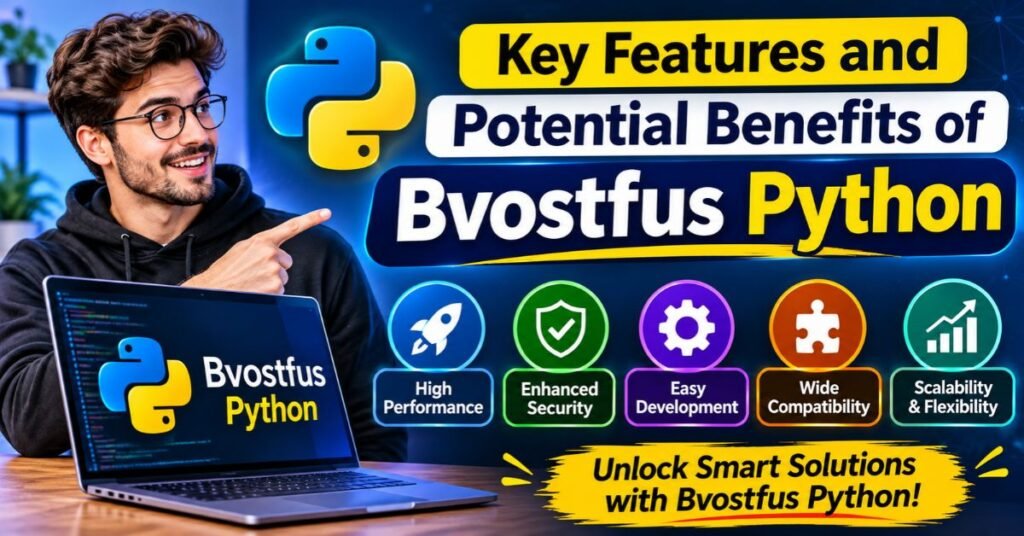
Here is where the Bvostfus Python review gets fair. Suppose the tool did exist. What would it offer? Most Bvostfus Python features sound handy. They target the daily pain of setup, version clashes, and slow onboarding.
These features, however, describe a category and not a product. Any team can get the same benefits today with trusted tools. The sections below show each feature and its real-world twin.
Isolated Development Environments
Isolation keeps one project from breaking another. Project A may need an old library. Project B may need the newest one. Separate environments let both live on one laptop. This single habit prevents a huge share of beginner pain. You get it free with the built-in venv module.
Automated Dependency Handling
Automation reads a settings file and installs the right packages in the right order. That saves time and keeps teams in sync. Managing Python dependencies by hand invites small mistakes. A locked list of versions fixes that. Poetry and pip-tools do this well and have clear documentation.
Debugging and Development Support
A tidy project is easier to debug. Clear folders and pinned versions shrink the list of suspects. Add debugging tools such as the built-in debugger or a good integrated development environment (IDE). Then bugs surface faster. The tool matters less than the habit of keeping setups clean and repeatable.
Workflow Automation Capabilities
Automation trims repeat work. Creating environments, installing packages, and running tests can happen with one command. This makes workflow automation feel like a small superpower. New teammates join faster. Old projects revive without a weekend of guesswork. Again, scripts and standard tools reach the same goal.
Potential Performance Benefits
Marketing pages love speed claims. Reality is calmer. Python code runs at the speed of the Python runtime no matter how you set it up. A better workflow saves your time and not the processor’s. The table below separates claims from proven options.
| Claimed Benefit | Honest Reading | Proven Option |
| Faster setup | Saves human time | venv plus a requirements file |
| Fewer conflicts | Comes from isolation | Virtual environments |
| Easy upgrades | Needs release notes | Poetry or pip with pinned versions |
| Cleaner projects | Comes from habits | Standard folder layout |
Bvostfus Python Installation: What You Should Know
Many people search how to install Bvostfus Python and expect a clean answer. Here it is. No verified method exists. Some blog posts show a quick command and a long checklist. Those steps have no official backing. Running unknown commands can put your machine at risk.
Safe Python package installation starts with checking the source. It then moves to a throwaway environment. Follow that order and you stay in control. The sections below walk through each step.
System Requirements and Python Compatibility
No official requirements exist for this name. General guidance still helps any Python project. The table below shows a sensible baseline.
| Item | Recommended Baseline |
| Python | 3.10 or newer, ideally a currently supported release |
| Operating system | Windows, macOS, or Linux |
| Memory | 8 GB or more |
| Free storage | At least 1 GB |
| Internet | Needed for package downloads |
Questions about Bvostfus Python Python 3.10 compatibility have no verified answer. Note also that Python 3.10 reaches its scheduled end of life in October 2026 under PEP 619. New projects should pick a newer supported version.
How to Check Whether the Package Exists
Can you install Bvostfus Python using pip? Only if a package with that name exists on the index. Search PyPI first. You can also run a read-only lookup from the terminal.
python -m pip index versions bvostfus
Even a hit proves little. Anyone can upload a package under a trending name. A page that appears after the hype may belong to a squatter. Check the maintainer, the code, and the history before you trust it.
Verify Package Sources Before Installation
Good software authenticity checks go beyond the name. Open the project links on the registry page. Read the source code and the release dates. Look at the author’s other work. A strong package reputation builds over time. It comes from steady releases and real users. Stick to trusted package repositories and skip random download links or zip files from blogs.
Safe Installation Practices
Safe Python package installation methods share one rule. Never install into your main system. Create a fresh environment first. This Python virtual environment setup takes less than a minute.
python -m venv venv
source venv/bin/activate # macOS and Linux
venv\Scripts\activate # Windows
python -m pip install –upgrade pip
Test unknown tools inside a disposable container or a spare machine. Read the setup files before you run them. Good installation safety feels slow at first. It pays off the day a bad package shows up.
How to Verify a Python Installation
After any install, confirm what landed on your system. Check the Python version and the package list. Then try a simple import.
python –version
python -m pip list
python -c “import requests; print(requests.__version__)”
Replace the last example with the package you installed. A clean import means the module loads. Unexpected packages in the list are a warning sign. Remove them and start over in a new environment.
Common Bvostfus Python Issues and Troubleshooting
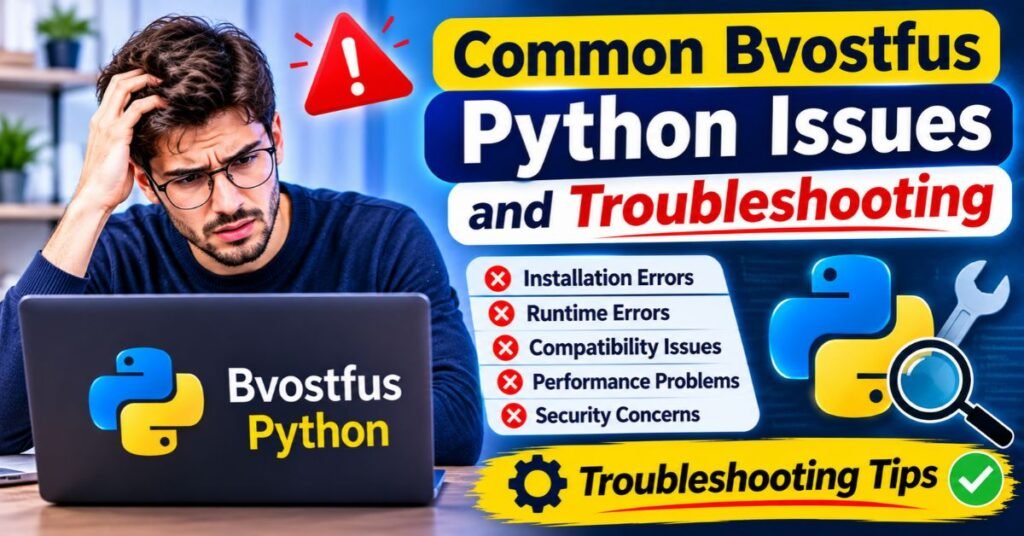
Most Bvostfus Python installation errors are not special. They are normal Python problems wearing a new name. Learn the pattern and you can fix almost any of them. This Python troubleshooting guide covers the usual suspects.
Good Bvostfus Python troubleshooting methods follow one order. Check the environment first. Check the Python version second. Read the full error message last and slowly. The answer often sits in the final line.
ModuleNotFoundError
Fixing ModuleNotFoundError in Python starts with one question. Which interpreter runs your script? The package may sit in a different environment. Run python -m pip install package-name so pip and Python match. A related ImportError can mean the module exists but a name inside it is missing. Check the spelling and the version.
See Also: Connections Forbes Best Daily Hints, Clues & NYT Puzzle Guide 2026
Dependency Conflicts
Bvostfus Python dependency conflicts look like any other clash. Two packages ask for different versions of the same library. Pip may warn you or fail. Run python -m pip check to list broken requirements. Then create a clean environment and install fewer packages. Pinning exact versions also keeps dependency vulnerabilities and surprises low.
Virtual Environment Activation Problems
Activation trouble often comes from a wrong path or a shell rule. On Windows PowerShell the script policy may block activation. You can allow it for the current window only with Set-ExecutionPolicy -Scope Process -ExecutionPolicy RemoteSigned. Check your Python PATH configuration and environment variables if the wrong Python opens. When all else fails, delete the folder and rebuild the environment.
Python Version Compatibility Errors
Resolving Python version mismatch means matching the package to the interpreter. Some libraries need a newer Python. Others break on the newest release. Read the package page for supported versions. Then confirm yours with python –version. Version tags in the install error often point right at the problem. Good Python version compatibility checks save hours.
Installation and Configuration Problems
Permission errors, proxy rules, and weak networks cause many failures. Careful Python environment configuration prevents most of them. Avoid sudo pip and use a virtual environment instead. The table below gives quick fixes.
| Error | Likely Cause | Quick Fix |
| ModuleNotFoundError | Wrong environment | Activate the right venv and reinstall |
| Permission denied | System-wide install | Use a virtual environment |
| Version mismatch | Unsupported Python | Install a supported Python version |
| SSL or timeout error | Network or proxy | Check proxy settings and retry |
| Command not found | PATH not set | Fix PATH or run via python -m |
Security Risks of Using Unknown Python Packages
Python software security is not just for large companies. One bad package can leak passwords or steal files. That makes Python package security risks a daily concern. So is Bvostfus Python safe to use? Nobody can say. Without a verified source the safest answer is to avoid it.
Public registries welcome millions of uploads. Most are harmless. A small number are not. Attackers know that developers install quickly and trust names. Tight digital security habits close that door.
See Also: Tubehalote Explained Complete Guide to Features, Safety, Content & How It Works
Malicious Packages and Supply Chain Attacks
Python package supply chain attacks target the tools you trust. An attacker uploads a package with a name that mimics a popular one. A single typo then installs the trap. In 2017 reports flagged several lookalike uploads on PyPI with names close to well-known libraries. Such malicious Python packages show why software supply chain security matters. Hype-driven names like Bvostfus are perfect bait.
Risks of Installing Unverified Dependencies
Picture a realistic scenario. A junior developer reads a blog and runs a one-line install. The setup script quietly reads environment variables. It sends cloud keys to a remote server. No error appears. The damage shows up weeks later. Poor code integrity checks make this possible. Install scripts can run code the moment you press enter. That is why unverified package dependencies deserve suspicion.
How to Check Package Safety Before Installation
Safety checks are quick. Scan your requirements with pip-audit. Search the OSV database for known flaws. Read the code of small packages yourself.
python -m pip install pip-audit
pip-audit -r requirements.txt
The Zen of Python offers wise advice here.
“In the face of ambiguity, refuse the temptation to guess.”
— Tim Peters, The Zen of Python (PEP 20)
Unknown packages are exactly that kind of ambiguity.
Bvostfus Python Use Cases and Real-World Applications
Python shines in many fields. That is why clean tooling matters so much. The claims about Bvostfus tie into these areas. The areas themselves are real and thriving. A reliable setup helps in each one.
Below are five common uses. Each one benefits from a tidy Python development workflow. None of them needs an unverified tool. Trusted options already cover every case.
Web Development
Web application development with Django, Flask, or FastAPI needs repeatable environments. Backend development teams ship code to servers that must match their laptops. Pinned versions make that match possible. API integration also depends on stable libraries. A clean setup keeps small web apps and large platforms running smoothly.
Machine Learning and Artificial Intelligence
Machine learning and artificial intelligence projects lean on heavy libraries like NumPy, PyTorch, and TensorFlow. These libraries often clash on versions. A Conda environment or a locked virtual environment prevents painful surprises. Reproducible setups also let researchers repeat results. That is a core rule of good science.
Task Automation and Scripting
Python scripting turns boring chores into a single command. It renames files, sends reports, and gathers web data. Small scripts still need care. A tiny virtual environment and a short requirements file keep them alive for years. Automation works best when the setup is simple.
Data Engineering
Data engineering moves and cleans large piles of data. Pipelines run on schedules and fail at odd hours. Stable dependency resolution keeps them calm. Teams pin versions and test upgrades before release. Related data science work follows the same rules for the same reasons.
SaaS Application Development
SaaS development mixes web code, background jobs, and cloud services. Many people work on the same code. A shared, documented setup lets new hires start fast. Open-source development tools make this easy and transparent. Transparency is exactly what unproven software lacks.
Bvostfus Python vs Traditional Python Development
Put the claimed tool next to the standard approach and the gap is clear. Traditional tools have docs, history, and users. The claimed tool has blog posts. The comparison below stays fair. It does not call the tool bad. It simply weighs what can be checked.
Trust follows evidence. A tool with open code and public releases earns trust over time. A tool with only marketing pages does not. That difference decides most real projects.
See Also: 66+ MagzyMinutes Com Explained Features, Content Categories, Benefits & Honest Review
Features and Functionality Comparison
Both approaches promise isolation, dependency handling, and automation. Only one has proof. The table makes the contrast plain.
| Area | Traditional Python Workflow | Bvostfus Python |
| Documentation | Official and detailed | Not publicly verified |
| Community support | Large and active | Unknown |
| Package registry listing | Available on PyPI | Not confirmed |
| Update notes | Published release notes | None found |
| Production use | Widely adopted | Not verified |
Installation and Dependency Management
Standard tools install in well-known ways. You run pip inside a venv and list needs in a file. Every step has public docs. For Bvostfus no verified path exists. Posts offer different commands and different numbers. Reliable Python package management needs one clear source of truth. Today that source does not exist for this name.
Reliability, Security, and Compatibility
Reliability comes from many users finding and fixing bugs. Security comes from open review. Compatibility comes from tests across versions. Traditional tools have all three. Unverified software has none that you can inspect. For work that matters, pick the option you can audit.
Best Python Alternatives to Bvostfus Python
Good news awaits. You don’t need a mystery tool to get what it promises. Alternatives to Bvostfus Python are free and mature. They cover environments, installs, and locking. Most developers mix two or three of them.
Pick by need. Small scripts want something light. Data science wants something broader. Large apps want strict version control. The four tools below cover nearly every case.
Python Virtual Environments (venv)
The built-in venv creates isolated environments with one command. It ships with Python and needs no extra install. For most beginners this is the best first step. It handles the core job of keeping projects apart. Pair it with pip and a requirements file for a simple and sturdy setup.
Conda for Package and Environment Management
Conda manages both packages and environments. It also installs non-Python parts such as compiled math libraries. That makes it a favorite in data science. A Conda environment keeps heavy stacks tidy. It uses more disk space than venv. The trade is worth it for complex projects.
Poetry for Dependency Management
The Poetry dependency manager tracks dependencies in a single project file. It creates a lock file so every machine installs the same versions. It also helps you build and publish packages. Teams like it for its clear workflow. It takes a little time to learn but rewards you with calm releases.
Pip for Python Package Installation
Pip is the standard installer. It pulls libraries from PyPI and resolves their needs. Used inside a virtual environment it is simple and safe. The table below compares all four options.
| Tool | Best For | Learning Curve |
| venv | Isolation for any project | Easy |
| Pip | Installing packages | Easy |
| Conda | Data science and mixed stacks | Medium |
| Poetry | Locked versions and publishing | Medium |
Beginner Tips for Working With Python Safely
Start with strong habits. Python development best practices begin with one virtual environment per project. Install only what you need. Pin your versions and keep a clean requirements file. Read a package page before you install it. Use Git for every project so you can undo mistakes. Small routines like these prevent big messes.
Stay skeptical of hype. Claims about Bvostfus Python updates show up on blogs with no release notes. Real updates come with change logs and version numbers on the Python package repository. Update one package at a time and test after each change. Ask a simple question before every install. Can I trace this tool to a real source? If not, skip it.
Frequently Asked Questions
What Exactly Is Bvostfus Python?
Bvostfus Python is a name that appears online for a supposed Python development helper. Pages claim it manages environments, dependencies, and workflows. No official documentation or trusted package listing confirms it. Right now it is best seen as an unverified term.
Can You Install Bvostfus Python Using pip?
Some blogs say you can run a simple pip command. No trusted source confirms a legitimate package. Even if a page exists on PyPI it might belong to someone else. Check the maintainer and code first. Never install it on your main system.
Is Bvostfus Python an Official Python Project?
No public evidence says it is. The Python Software Foundation and the official docs do not mention it. Official tools have clear homes and owners. This name has neither.
Is Bvostfus Python Useful for Machine Learning?
Its claimed features could help machine learning in theory. Reproducible environments matter a lot in that field. However, the tool itself is unverified. Conda and Poetry already offer proven support for the same need.
Does Bvostfus Python Support Python 3.10?
Different pages give different answers. Some say 3.8 and above. Others say 3.10 and later. Without official docs nobody can confirm support. For any project pick a currently supported Python version and test your own setup.
Why Are People Searching for Bvostfus Python?
Curiosity drives most searches. The name appears on many content sites with big promises. Some people mistype another package name. Others simply want a simpler setup. Repeated articles keep the buzz alive.
Is Bvostfus Python Safe to Use?
Safety cannot be confirmed. Unknown packages may hide malicious code. Without a verified source the careful choice is to avoid it. Use trusted tools and test anything new in an isolated environment.
What Are the Best Alternatives to Bvostfus Python?
Venv, pip, Conda, and Poetry cover the same needs. Venv and pip suit beginners. Conda fits data science. Poetry fits projects that need locked versions. All four are well documented and widely used.
Final Thought
Bvostfus Python is a puzzle with a simple lesson. A name can go viral without any proof behind it. No official project, no trusted listing, and no verified guide support it today. The features people describe are real needs. Trusted tools already meet them.
So keep your setup clean and your curiosity healthy. Verify before you install. Lean on the Python ecosystem tools that earn trust in public. If solid documentation for Bvostfus ever appears, give it a careful look. Until then, happy coding and safe installing.