

Why Does Cleaning Care Matter for Homes With High Traffic Entry Areas Benefits, Tips & Best Practices
Picture this. You walk in after a rainy day. Your shoes leave wet prints. Mud creeps across the floor. Why Does Cleaning Care Matter for Homes With High Traffic Entry AreasWithin minutes, the cleanest part of your home looks worn out. Sound familiar?
That’s exactly why cleaning care matters for homes with high traffic entry areas. Your entrance takes the first hit from the outside world. Sand, pollen, moisture, and germs all arrive there first. This guide shows you how high-traffic area cleaning protects your floors, your health, and your first impression. You’ll also get practical home cleanliness tips, a simple schedule, and cost guidance that works anywhere in the world.
Why Deep Cleaning Matters in High-Traffic Areas
Sweeping only skims the surface. Deep cleaning high-traffic areas reaches the layers where trouble hides. Ground-in dirt sinks into carpet fibers and grout lines. Fine grit settles into floor textures. Daily wiping can’t lift it out. A proper deep clean removes what routine tidying misses and resets the space.
Think of grit as tiny sandpaper. Every step grinds it against your flooring. That speeds up flooring deterioration and dulls finishes. The US Environmental Protection Agency points out that people spend most of their time indoors. Why Does Cleaning Care Matter for Homes With High Traffic Entry Areas It also notes that indoor air can carry more pollutants than outdoor air. So dust accumulation at your door isn’t just a looks problem.
It touches your health too. Here’s an illustrative example. Imagine a family of four with two dogs and a muddy back entrance. They mopped once a week and nothing more. After six months, the grout turned gray and the mat area smelled damp. One deep clean and a new mat routine fixed both problems in a weekend.
| Feature | Surface Cleaning | Deep Cleaning |
| What it removes | Visible crumbs and loose dust | Embedded soil, bacteria, and allergens |
| Typical tools | Broom and damp mop | Extraction machines, steam units, and agitation brushes |
| How often | Daily or weekly | Every few months or yearly |
| Result | A quick tidy look | Long-lasting cleaning results |
Where Dirt and Wear Begin in Busy Spaces
Dirt follows movement. Every trip in and out carries soil from sidewalks, driveways, and yards. Household foot traffic then spreads it from room to room. The path you walk most becomes the path that wears first. Spotting these paths helps you aim your effort where it counts.
Wear starts small. A scuff here. A dull patch there. Then it grows. Each zone faces its own problems. The four areas below show where to look first when cleaning busy household spaces.
Entryways and Doorways
Your entry takes the first hit. Shoes bring in mud, sand, pollen, and wet leaves. Moisture lingers on thresholds and can stain wood or loosen grout. Smart entryway cleaning techniques start outside the door. Scrape shoes on a coarse mat. Then wipe them on an inner mat. Sweep or vacuum daily and follow with a damp mop. Don’t forget door handles and switches. Those high-touch surfaces collect germs fast. In snowy regions, road salt leaves white marks. Wipe it off with warm water on sealed floors. Skip vinegar on natural stone.
Hallways and Corridors
Hallways funnel everyone along one narrow path. That concentrates wear. Dark lines form down the middle and along the walls. Scuffs gather on baseboards and corners. Hallway floor cleaning should begin with a vacuum or dry mop. Then use a damp mop that suits the floor type. Give staircases and landings the same care. Dust settles on stair edges and in the corners where steps meet walls. Wipe walls at hand height where fingers leave marks. Keep runners flat so you can clean underneath them.
Living Rooms and Common Areas
Living rooms host the longest stays. Crumbs, pet hair, and skin flakes sink into carpets and rugs. Upholstered furniture traps odors and dust. Carpet and upholstery cleaning every few months keeps both fresh. Vacuum slowly with overlapping passes. Move furniture to reach the edges. Wash throws and cushion covers on a regular schedule. Remote controls and light switches deserve a wipe too. These small habits support disinfecting common areas without much fuss.
Kitchens and Shared Spaces
Kitchens mix heat, grease, and moisture. Spills hit the kitchen floors daily. Grease turns dust into a sticky film. Damp corners raise mold and mildew prevention concerns. Mop with a degreasing cleaner. Scrub tile and grout cleaning lines with a soft brush. Wipe fridge handles, cabinet pulls, and countertops after cooking. Dry wet spots fast. Shared bathrooms and utility rooms need the same attention.
Why Regular Cleaning and Maintenance Are Essential

Small habits beat big rescues. Home cleaning and maintenance works best when it stays steady. A two-minute sweep stops grit from grinding into the floor. A quick wipe stops a spill from becoming a stain. Your deep clean then turns lighter and faster. It’s the cleaning version of an old saying.
Steady habits also keep household hygiene practices consistent. Routine home sanitation lowers the number of germs that settle near the door. Good floor and carpet maintenance protects your investment too. Hardwood keeps its finish. Carpet keeps its bounce. Regular care also supports preventive maintenance. You catch loose grout, worn mats, and small leaks early. That saves money later. Match your cleaning frequency to your lifestyle. A busy house with pets needs more attention than a quiet one.
Key Benefits of Deep Cleaning High-Traffic Areas
Deep cleaning pays off in several ways. The gains reach your health, your wallet, and your mood. Each one grows over time. The table below gives you a quick view.
Notice how the benefits connect. Cleaner air supports easier breathing. Fewer germs support healthier habits. Protected floors cut repair bills. Together they raise your home hygiene standards with little extra effort.
| Benefit | What Changes | Why It Matters |
| Better air | Fewer trapped particles | Easier breathing indoors |
| Fewer germs | Lower bacteria and allergen load | Healthier family and guests |
| Longer floor life | Less grit and moisture damage | Lower replacement costs |
| Calmer home | Tidy, fresh entry | Better comfort and first impressions |
Improved Indoor Air Quality
Dust, pollen, and fine particles hide inside carpets and mats. Every step kicks them back into the air. Thorough dirt and dust removal with a HEPA-filter vacuum captures them instead. The EPA’s guide to indoor air quality explains how pollutants can build up in closed spaces. Better indoor air quality helps everyone breathe more comfortably. It matters most for children, older adults, and people with asthma.
Reduced Germs, Bacteria, and Allergens
Shoes carry more than dirt. They can bring in bacteria, pet residue, and pollen. These spread as people cross the house. Bacteria and germ removal takes two steps. First you clean. Then you disinfect. Cleaning lifts the soil. Surface disinfection handles the germs left behind. Targeting allergens and pollutants at the entrance stops them before they travel. Pay extra care to high-touch surfaces like handles and stair rails.
Extended Flooring and Surface Lifespan
Floors cost a lot to replace. Grit and moisture shorten their life. Regular care slows flooring deterioration. Carpet fiber protection matters just as much. Clean fibers stand tall and resist matting. Hardwood flooring stays glossy. Tile grout stays tight. That’s long-term flooring protection that pays for itself. Some carpet warranties even expect regular professional cleaning. Check your paperwork.
A Healthier and More Comfortable Living Environment
A clean entrance feels calm. You come home to order instead of chaos. Guests notice it right away. Fresh air, clear floors, and tidy corners ease stress. Strong residential sanitation standards also give parents peace of mind. Kids can play on the floor safely. Pets roam without tracking in grime. That comfort is hard to price but easy to feel.
Common Cleaning Challenges in High-Traffic Areas
Busy zones fight back. Surfaces get used all day. There’s little downtime between messes. Mixed materials need different care. Many people grab one product for everything. That often backfires.
Four problems show up again and again. Each one has a fix. Knowing them early helps you plan. The sections below explain them in plain terms. The solutions section that follows answers each one.
Stubborn Dirt and Ground-In Stains
Mud, oil, coffee, and wine bond with fibers. The longer they sit the harder they cling. Removing stubborn dirt and stains takes the right method. Blot fresh spills. Never rub. For old marks, pre-treat and then use hot water extraction. Stubborn floor stains on grout need a soft brush and a gentle cleaner. Harsh scrubbing scratches surfaces. Always test a product on a hidden spot first.
Excessive Dust and Debris
Fine dust returns within hours. It rides in on clothes, pets, and open windows. Sand and leaf bits scratch floors. Dust also lands on baseboards, door frames, and vents. Use microfiber cleaning cloths. They trap particles instead of pushing them around. Dust from high to low. Vacuum last so fallen dust gets collected.
Frequent Foot Traffic and Surface Damage
Heavy traffic leaves visible marks. Carpet pile flattens along walkways. Hardwood gets dull patches. Vinyl scuffs. Tile edges chip. Furniture legs add dents. Felt pads and area rugs help a lot. Rotate rugs to even out wear. Fix damage early. A small chip can grow into a big repair.
Hidden Germs in Hard-to-Reach Places
Germs love overlooked corners. Skirting boards, door frames, vents, and grout lines hold grime. Dust rolls gather under sofas and beds. Light switches and stair rails get touched all day. A flashlight reveals the mess. Use a crevice tool and a damp cloth. Add these spots to your monthly list.
Effective Deep Cleaning Solutions for Long Lasting Results
Good results come from matching the method to the surface. One cleaner won’t suit every floor. Floor cleaning methods differ for wood, tile, carpet, and vinyl. The wrong choice can cause damage. The right one delivers long-lasting cleaning results.
Technique matters as much as product. Work from dry to wet. Clean from top to bottom. Let each solution sit for the time on the label. Then rinse and dry. Use the table below as a quick guide for hard surface cleaning and carpet care.
| Surface | Best Method | Avoid |
| Hardwood flooring | Soft-brush vacuum and a lightly damp mop with a wood-safe cleaner | Soaking, steam mops, and harsh chemicals |
| Tile and grout | Sweep, scrub grout with a soft brush, and mop with a neutral cleaner | Acidic cleaners on natural stone |
| Carpet | Slow vacuuming and hot water extraction | Over-wetting and rubbing stains |
| Vinyl and laminate | Dry mop and a lightly damp mop | Excess water and abrasive pads |
Choosing the Right Cleaning Products
Read labels first. Choose safe cleaning solutions for your floor type. Eco-friendly cleaning products work well for daily care. They cut harsh fumes and suit homes with kids and pets. The EPA’s Safer Choice program helps you spot products with safer ingredients. Neutral pH cleaners protect finishes. Save stronger options for tough jobs. Never mix bleach with ammonia or acids. The mix can release toxic gases. Open a window while you work. Smart choices like these also form the base of good professional cleaning solutions.
Proper Floor and Carpet Cleaning Methods
Start dry. Vacuum or sweep every surface to lift loose grit. Then follow with a damp mop on hard floors. Wring it well. For carpets, use hot water extraction. Many manufacturers suggest it every 12 to 18 months. The Carpet and Rug Institute shares care guidance and lists tested products. Work in small sections. Let carpets dry fully. Fast drying supports mold and mildew prevention. Ssound high-traffic floor maintenance blends both approaches. DIY deep cleaning works well for light soil.
Disinfecting Frequently Touched Surfaces
Cleaning and disinfecting aren’t the same. Cleaning removes dirt. Disinfecting kills germs. Clean first. Then apply a disinfectant and respect the contact time on the label. Focus on door handles, light switches, stair rails, and remote controls. These frequently touched surfaces spread germs fastest. Surface disinfection works best on a clean surface. Use fresh microfiber cleaning cloths to avoid moving germs around. This routine is the heart of disinfecting common areas.
Using Professional Cleaning Equipment
Pros bring tools that home kits can’t match. Professional cleaning equipment includes truck-mounted extractors, commercial steam units, and high-suction vacuums. These machines lift deep soil and dry carpets faster. Rotary scrubbers also tackle grout and sealed tile with ease. Rental cleaning equipment helps with small jobs but it’s weaker. Trained technicians also know which settings protect each fiber. That knowledge prevents costly mistakes.
Expert Tips for Maintaining Clean High Traffic Areas
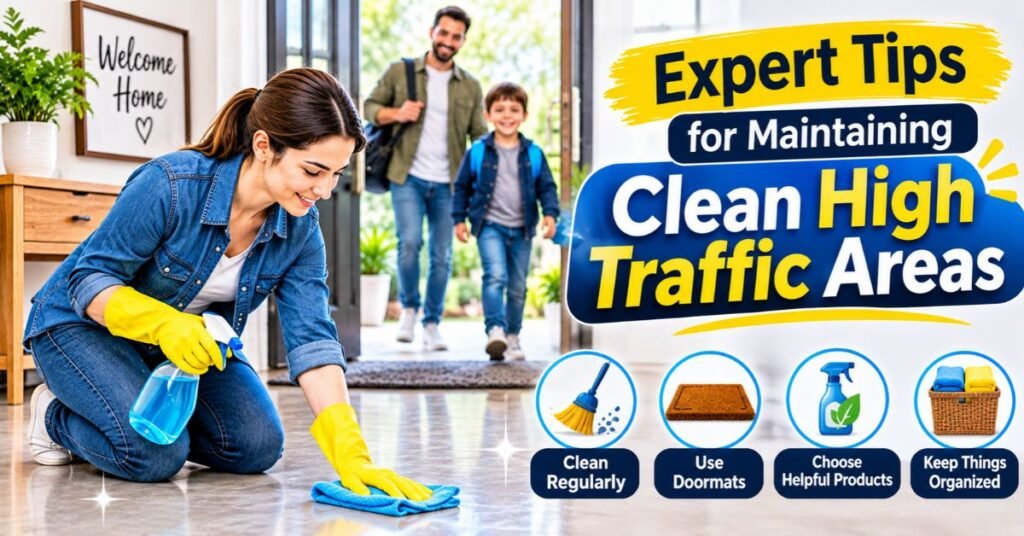
Prevention beats repair. A few habits stop most of the mess at the door. They take minutes each day. Over a year they save hours of scrubbing. They also stretch the time between deep cleans.
Build your household cleaning routines around real life. Tie each task to a habit you already have. Sweep while the kettle boils. Wipe handles after dinner. The table below shows a simple deep cleaning schedule you can adapt.
Read More: Bvostfus Python Explained Features, Safety Risks, Issues & Alternatives 2026
| Frequency | Task | Time Needed |
| Daily | Sweep or vacuum the entry, wipe spills, and shake out mats | About 10 minutes |
| Weekly | Mop hard floors, vacuum carpets and rugs, and wipe handles and switches | About 45 minutes |
| Monthly | Clean baseboards, vents, grout, and upholstery | One to two hours |
| Every 6 to 12 months | Deep clean carpets and grout, or book a pro | Half a day |
Establishing a Consistent Cleaning Schedule
Write your plan down. Post it near the door. Match your cleaning frequency to household size, pets, and weather. A rainy climate needs more mopping. A dusty region needs more wiping. Share tasks among family members. Kids can shake mats or wipe handles. A phone reminder keeps your deep cleaning schedule on track. Consistency beats intensity every time.
Using Entrance Mats to Reduce Dirt
Good mats work like a filter. Place a rough mat outside and an absorbent one inside. Together, entryway floor mats trap a large share of incoming soil. Pick mats that span the full door width. Shake them daily. Wash or vacuum them weekly. Replace worn ones. Add a shoe rack so people can swap footwear. Mats are among the cheapest forms of carpet fiber protection you can buy.
Cleaning Spills and Stains Immediately
Speed saves surfaces. Blot liquids with a clean cloth. Press and lift. Never rub. For solids, scoop first. Then treat the spot with the right cleaner. Keep a small spill kit near the entry. Pack a microfiber cloth, a spray bottle, and a soft brush. Act within minutes. Fresh spills rarely turn into stubborn floor stains.
Preventing Dirt From Spreading Throughout the Home
Stop dirt at the door. Adopt a shoes-off rule. Place a bench and rack nearby. Lay barrier runners along main paths. Keep pet towels by the back door. Wipe paws after walks. Clean stroller and bike wheels before they come inside. Use a vacuum with a sealed filter. These steps support household hygiene practices and cut your workload.
Read More: Connections Forbes Best Daily Hints, Clues & NYT Puzzle Guide 2026
How Much Does Deep Cleaning High-Traffic Areas Cost?
Costs vary by country, city, and home. Prices rise with area size, soil level, and surface type. Special treatments add fees. Most providers charge by room, hour, or square meter. That’s why cleaning cost estimates differ so much. Always ask for a written quote. Compare what each one includes.
DIY costs less upfront. You’ll buy supplies or rent machines. It also costs time and effort. Pros charge more but bring tested methods and speed. Think about value over a full year. One good clean can extend floor life. The table lists what shapes your bill.
| Cost Factor | How It Affects Price | Money-Saving Tip |
| Area size | More space means more time | Start with priority zones |
| Surface type | Natural stone and delicate rugs cost more | Share material details in advance |
| Soil level | Heavy stains need extra steps | Keep up daily upkeep |
| Location and travel | Local rates and distance vary | Book off-peak slots |
| Add-ons | Sealants, deodorizing, and upholstery | Bundle services together |
When Should You Hire Professional Deep Cleaning Services?
Some signs tell you it’s time. Odors linger after cleaning. Stains keep returning. Allergies flare up indoors. Carpets stay damp or look flat. Grout stays dark. You might also be moving in or out or hosting a big event. Residential deep cleaning services can reset the space fast. Deep cleaning services for homes also help busy families who lack time.
Choose with care. Check insurance, reviews, and methods. Ask which professional cleaning solutions the team uses. Ask about eco-friendly cleaning products too. Request a written quote with scope and timing. Good professional home sanitation follows clear residential sanitation standards. Compare two or three providers. A fair company explains its steps and answers questions openly. The same rule applies to any professional cleaning services you consider.
Read More: Tubehalote Explained Complete Guide to Features, Safety, Content & How It Works
FAQ’s
Why is deep cleaning important in high-traffic areas?
Busy zones collect soil faster than other spaces. Deep cleaning removes embedded grit, germs, and allergens that daily tidying leaves behind. It protects floors, supports fresher air, and keeps your home looking cared for.
How often should high-traffic areas be deep cleaned?
Many homes do well with a deep clean every three to six months in entry zones. Carpets often need extraction every 12 to 18 months. Homes with pets, kids, or muddy weather need cleaning more often.
What areas of a home need the most frequent deep cleaning?
Entryways, hallways, kitchen floors, and staircases top the list. Living room carpets and upholstered seating come next. Bathrooms and shared spaces also need steady attention.
What is the difference between regular cleaning and deep cleaning?
Regular cleaning handles surface dirt and daily mess. Deep cleaning reaches embedded soil, grout lines, carpet fibers, and hidden corners. Think of regular cleaning as maintenance and deep cleaning as a reset.
How can I prevent dirt from spreading through my home?
Use two mats at each door and set a shoes-off rule. Add a shoe rack and barrier runners. Wipe pet paws and wheels. Vacuum often with a sealed-filter machine.
What are the best cleaning products for high-traffic areas?
Pick pH-neutral cleaners made for your floor type. Choose eco-friendly options for daily use. Add microfiber cloths and a disinfectant for handles and switches. The EPA’s Safer Choice list is a helpful place to start.
Conclusion
Entry zones take the most abuse in any home. That’s why they deserve the most care. Cleaning care protects floors, lifts air quality, and cuts the spread of germs. It also gives you a calm, welcoming start every time you walk in. Small daily habits and a few deep cleans do most of the work.
Start simple this week. Add two good mats. Set a short daily routine. Book one deep clean for the areas that need it most. Then keep the rhythm going. Your floors will last longer and your home will feel fresher. That’s the real answer to why cleaning care matters for homes with high traffic entry areas.