
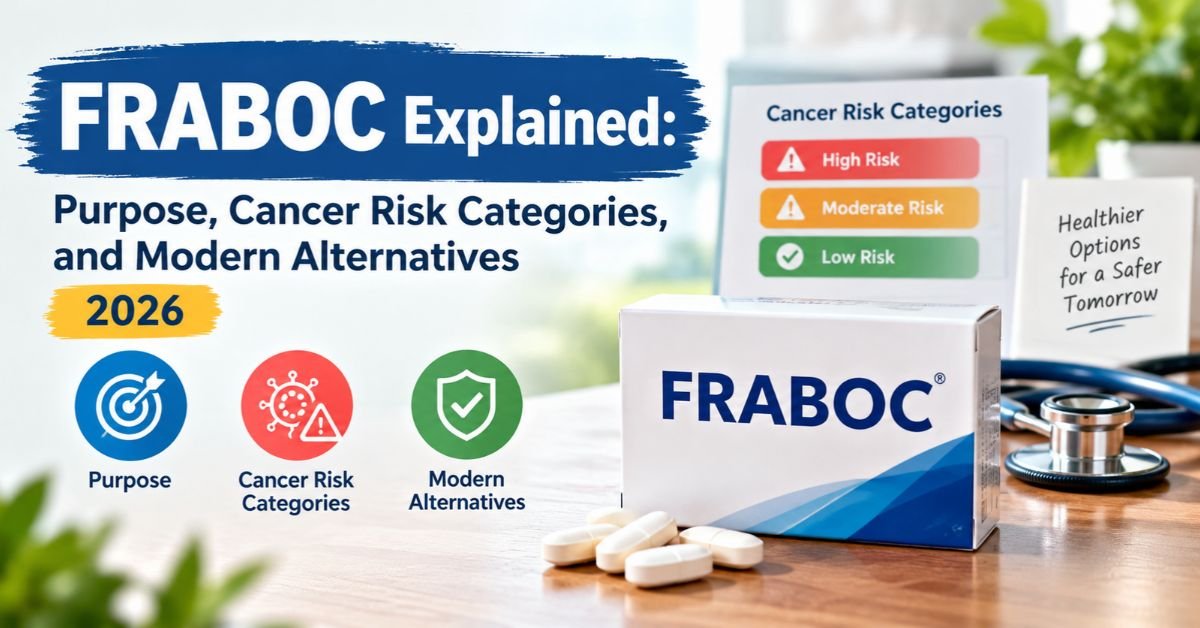
FRABOC Explained: Complete Guide to Cancer Risk & Alternatives 2026
You may have spotted FRABOC in an old referral letter and wondered what it means. You’re not alone. Many people meet this odd word in GP files, PDFs, or old cancer guides. FRABOC (also written FRA-BOC) was an Australian tool for family cancer risk assessment. It helped health professionals sort a family history of breast cancer and ovarian cancer into risk groups.
The tool is retired now, and it never tested your body or your genes. This guide explains the FRABOC assessment tool, its FRABOC risk categories, and the modern cancer risk assessment tools that took its place. FRABOC was built for Australia, and guidelines in your country may differ. Use this guide as background, not as personal medical advice.
What Is FRABOC?
Start with the basics. What does FRABOC stand for? It stands for Familial Risk Assessment – Breast and Ovarian Cancer. Cancer Australia offered it as an online tool for GPs, nurses, and other health professionals. They used it to check a patient’s chance of breast or ovarian cancer based on familial cancer history.
Think of FRABOC as a sorting hat for family trees. A clinician entered details about relatives, and the tool placed the patient in one of three groups. This FRABOC cancer risk assessment was never a test. It didn’t scan tissue, read DNA, or find disease. It only helped doctors decide what to do next.
What Was FRABOC Used For?
What was FRABOC used for? Mainly, it made messy family stories easier to read. One aunt with cancer doesn’t tell you much by itself. Doctors need to know how many relatives were affected, which cancers they had, and how old they were at diagnosis. The FRABOC family history assessment pulled these facts into one clear picture.
That picture guided the next step. A higher group could trigger a deeper review, genetic counseling for cancer, or a healthcare professional referral to a family cancer service. A higher result never meant you had cancer. It also never meant you would get it. It only showed that your family pattern deserved a closer look.
How Did FRABOC Assess Cancer Risk?
Here’s how FRABOC assessed breast cancer risk. A health professional gathered details about close relatives on both sides of your family. They noted each person’s cancer type and age at diagnosis. The tool then placed you into one of three groups. This worked like a paper family cancer history questionnaire, only online and faster.
The method had limits. It relied on what you and your relatives could remember. Family stories can be incomplete or out of date. A new diagnosis in a cousin can change everything. For this reason, clinical cancer risk assessment works best when you update your family details over time.
What Family History Information Did FRABOC Consider?
FRABOC looked at first-degree relatives with cancer. These are your parents, siblings, and children. It also looked at second-degree relatives, such as grandparents, aunts, uncles, nieces, and nephews. Doctors checked both sides of the family. The maternal family cancer history mattered. So did the paternal family cancer history. Ignoring dad’s side is a common mistake.
Certain patterns raised concern. Clinicians call these familial cancer risk factors. The table below shows the main ones and why they mattered. This kind of family pedigree analysis is still the heart of hereditary cancer risk assessment today.
| Family pattern | Why it matters |
| Several relatives with breast or ovarian cancer on one side | Suggests a shared inherited cause |
| Breast cancer at a young age | Early onset often points to genetic predisposition to cancer |
| Breast and ovarian cancer in the same family | Fits hereditary breast and ovarian cancer syndrome |
| Cancer in both breasts | Raises the chance of an inherited cancer susceptibility |
| Breast cancer in a male relative | Rare, so it stands out |
| A known gene change in the family | May change the whole assessment |
The Three FRABOC Breast Cancer Risk Categories
The FRABOC breast cancer risk categories were simple. Each one grouped women by family pattern. The figures below come from older Cancer Australia guidance. They are FRABOC historical risk figures. They show how the old tool worked. They don’t give your personal odds today. This early form of cancer risk stratification was broad by design.
| Category | Share of women (older guidance) | Estimated breast cancer risk to age 75 |
| At or slightly above average | More than 95% | About 1 in 11 to 1 in 8 |
| Moderately increased | Fewer than 4% | About 1 in 8 to 1 in 4 |
| Potentially high | Fewer than 1% | About 1 in 4 to 1 in 2 |
At or Slightly Above Average Risk
Most women landed here. This group included women with no confirmed family history of breast cancer. It also included women with one first-degree relative diagnosed at 50 or older. These women still had some breast cancer susceptibility, as every woman does. Their family pattern simply didn’t point to a strong inherited cause. Standard preventive breast screening usually applied.
Moderately Increased Risk
This middle group was small. A typical example was a woman whose mother or sister had breast cancer before age 50. Some families with two close relatives affected also fit here. Clinicians looked at the full story before choosing this label. A woman in this group might discuss earlier or more frequent checks with her doctor. That is part of breast cancer risk management.
Potentially High Risk
This was the smallest and most serious group. An Australian clinical document puts the risk to age 75 at about 1 in 4 to 1 in 2. Warning signs included several affected relatives on one side, breast cancer before 40, or cancer in both breasts. Breast and ovarian cancer in one woman also counted. Women here were usually sent for a referral to a genetic counselor or a family cancer clinic.
How FRABOC Assessed Ovarian Cancer Risk
FRABOC and ovarian cancer risk went together because the two cancers often run in the same families. The tool counted how many close relatives had ovarian cancer. It then asked how those cases fit with breast cancer in the family. Several cases, or ovarian plus early breast cancer, raised the level of concern. This gave a rough ovarian cancer risk assessment.
One case didn’t prove an inherited condition. Many women with ovarian cancer have no family link at all. Older guidance also noted the limits of ultrasound and CA125 blood tests for ovarian cancer susceptibility checks. If you worry about ovarian cancer today, ask your doctor for current advice. Don’t rely on old FRABOC notes.
FRABOC vs BRCA Genetic Testing Key Differences
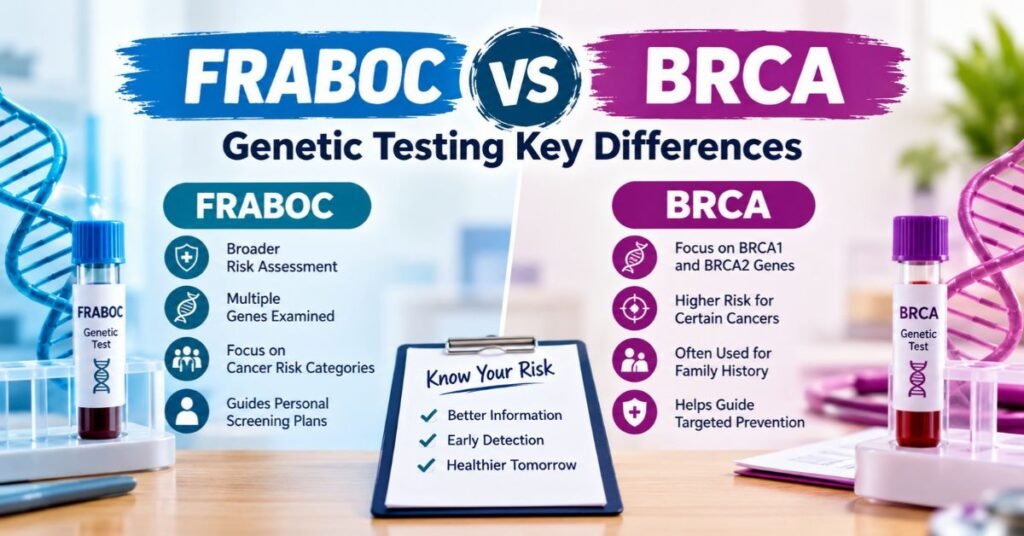
FRABOC vs BRCA testing is a common mix-up. The two do very different jobs. FRABOC studied your family tree. Genetic testing for BRCA1 and BRCA2 studies your DNA. A BRCA1 gene mutation or BRCA2 gene mutation can raise inherited cancer risk a lot. An Australian analysis of carriers reported lifetime breast cancer risk of 50 to 60 percent and ovarian risk of 20 to 40 percent.
This FRABOC vs BRCA genetic testing table shows the gap.
| Feature | FRABOC | BRCA genetic testing |
| What it checks | Family history | DNA from blood or saliva |
| Needs a lab | No | Yes |
| Can find a gene change | No | Yes |
| Gives a diagnosis | No | No, it shows risk only |
| Typical next step | Refer for deeper review | Counseling about results |
Most hereditary breast cancer risk comes from changes passed down by either parent. Many families have no known gene change at all. That is why a counselor weighs both tools of evidence, family pattern and test results, together.
What Happened After a Higher-Risk FRABOC Result?
A higher result opened a door. It did not mandate any treatment. The doctor might arrange a detailed assessment or a healthcare professional referral to a family cancer service. There, clinical genetics specialists reviewed the full pedigree. They might offer genetic counseling services, discuss testing, and explain high-risk breast cancer screening. Some women also talked about breast MRI screening, risk-reducing medication, or preventive surgery counseling.
Here’s an illustrative example, not a real patient. Imagine Sara, aged 36. Her mother had breast cancer at 44, and her aunt had ovarian cancer. Her GP used the family details to place her in a higher group. Sara then met a genetic counselor. They mapped her family tree, discussed testing, and planned cancer prevention and early detection steps. Sara left with a plan and not a diagnosis.
Was FRABOC a Cancer Diagnostic Test?
Can FRABOC diagnose cancer? No. It was a risk assessment tool, not a diagnostic test. It was no blood test, mammogram, scan, or biopsy. It couldn’t find a tumor or confirm one. If you have a lump, pain, or skin change in your breast, see a doctor. No risk tool can replace that visit.
Risk is also not fate. A higher group doesn’t mean cancer will arrive. A low group doesn’t give you a free pass. Tools only estimate chances across many people. They can’t predict one person’s future. Good breast cancer risk prediction supports sensible choices. It doesn’t promise outcomes.
Is FRABOC Still Available in 2026?
Is FRABOC still available? No. Cancer Australia has retired the tool. Its own page says:
Old PDFs and guides still mention FRABOC. Some may even look like a live calculator page. Treat these with care. The old tool can’t give you a safe, current answer in 2026. A clinician using updated clinical risk assessment methods can.
What Replaced FRABOC? Modern Cancer Risk Assessment Tools
What replaced FRABOC? Cancer Australia points to newer tools for assessing breast cancer risk. These modern cancer risk assessment tools use more detail than FRABOC did. They give numbers, not just three groups. Doctors use them as a breast cancer risk assessment tool within wider evidence-based cancer prevention care. Here are the main FRABOC alternatives.
iPrevent
iPrevent breast cancer risk assessment comes from the Peter MacCallum Cancer Centre in Melbourne. This iPrevent decision support tool picks between two validated models, IBIS or BOADICEA, based on what you enter. It suits women who’ve never had a breast cancer diagnosis. You can use it even without a family history. The report is best shared with your doctor.
CanRisk
The CanRisk cancer prediction tool is the web face of the BOADICEA model. The CanRisk prediction model looks at family history, genetic results, and other risk factors. It is designed for healthcare professionals and not for direct use by patients. Doctors and researchers can register for access. The tool also draws a family tree, which helps with complex histories.
IBIS (Tyrer-Cuzick)
The IBIS Tyrer-Cuzick risk model is another respected cancer risk prediction model. It uses family history plus personal factors. Clinicians run the Tyrer-Cuzick risk calculation to estimate absolute breast cancer risk over ten years and over life. Some guidelines refer to its results when deciding on extra imaging. A tool comparison sheet lists all three models side by side.
How Modern Cancer Risk Categories Are Determined
Modern tools turn your details into numbers. They estimate your lifetime breast cancer risk and often a ten-year risk too. This is personalized cancer risk prediction. Your doctor then compares the numbers with local breast cancer risk assessment guidelines. These set the lines for average, moderate, and high risk. The lines differ between countries, so your clinician must apply the rules that fit where you live.
Read More: TechTrendery Com USA Complete Guide to Features Topics Safety And Credibility 2026
FRABOC vs iPrevent Features and Key Differences
The FRABOC vs iPrevent comparison shows how far risk tools have come. FRABOC served health professionals and sorted women into broad groups. iPrevent serves women and doctors together. It also gives advice on next steps. The old tool is gone. The new one is current.
| Feature | FRABOC | iPrevent |
| Status | Retired | Current |
| Main purpose | Family risk of breast and ovarian cancer | Breast cancer risk and management |
| Method | Broad risk groups | Personal risk estimate |
| Uses family history | Yes | Yes |
| Uses other personal factors | Limited | Yes |
| Result | One of three categories | Individual risk estimate |
The FRABOC vs iPrevent gap matters most for your result. FRABOC gave a label. iPrevent gives an estimate shaped around you. That detail supports better cancer screening eligibility talks. Always review the output with a doctor.
Why FRABOC Still Appears in Search Results
FRABOC left a long paper trail. Australian guides, GP resources, and referral forms mentioned it for years. Many of those files still sit online. Search engines keep showing them. This explains why people still look for a FRABOC assessment tool or “FRABOC calculator” today.
An old mention doesn’t mean the tool still works. If you see FRABOC in your record, it likely marks a past assessment. Ask your doctor whether it needs a refresh. A new review with current tools will give you a better picture.
The Other Meaning of FRA-BOC: Frankfurt to Bocas del Toro Flight Route
Here’s a twist. FRA-BOC can also be a travel code. FRA is Frankfurt Airport in Germany. BOC is Bocas del Toro “Isla Colón” International Airport in Panama. Travel sites use “FRA-BOC” for that route. It has nothing to do with the cancer risk tool.
Planning that trip? One travel site reports no direct flights from Germany to Bocas del Toro. Travelers usually connect, often through Panama City. The journey can take more than a day, so check current schedules with airlines. If you came here for health answers, ignore this section.
Should You Rely on Historical FRABOC Risk Figures Today?

No, you shouldn’t. The FRABOC historical risk figures describe groups of women under an old system. They can’t tell you your own risk. Science has moved on, and today’s tools use more detail. Picking a category yourself from an old table can mislead you. You might feel falsely safe or needlessly scared.
A better path exists. Gather your family facts, then ask a professional to run a current family cancer risk assessment. Ask about breast cancer screening recommendations for your age and risk. Your doctor can explain mammography recommendations that fit you. Good advice always matches your own story.
Read More: 12+ GrammarVista Com USA Complete Guide to Grammar Writing and American English
How to Prepare for a Family Cancer Risk Assessment
Preparation saves time and improves accuracy. Start by talking with relatives. Ask kindly and gather what they’re willing to share. Bring written notes to your appointment. Also bring any genetic test reports. This effort makes consulting a doctor about cancer family history far more useful.
What Family Medical History Should You Gather?
Aim to collect the facts in the checklist below. Don’t worry if some details are missing. Share what you know and say what’s uncertain. Your clinician can still work with partial information.
| Detail to collect | Example |
| Which relatives had cancer | Mother, aunt, grandmother |
| Cancer type | Breast, ovarian, prostate, pancreatic |
| Age at diagnosis | 42, 55, 61 |
| Cancer in both breasts | Yes or no |
| More than one cancer in one person | Breast, then ovarian |
| Male breast cancer | Any male relative affected |
| Genetic testing done | Results or reports, if available |
Does Breast Cancer on Your Father’s Side Matter?
Yes, it matters a lot. Gene changes pass down from either parent. A father can carry a BRCA2 gene mutation and never develop breast cancer himself. His sisters, mother, or daughters may show the pattern instead. That is why clinicians always record the paternal family cancer history next to the maternal side.
When Should You Consult a Healthcare Professional?
Speak up if several relatives had breast or ovarian cancer. Do the same if a relative was diagnosed young or had cancer in both breasts. A known gene change in the family is another clear reason. Even steady worry is a fair reason to ask. Your doctor can start a hereditary cancer risk assessment or arrange a referral to a genetic counselor. See a doctor quickly for any new breast symptom.
Read More: Deshoptec Com Review 2026 What It Is Is It Safe and How It Works
Frequently Asked Questions
What Does FRABOC Stand For?
FRABOC stands for Familial Risk Assessment – Breast and Ovarian Cancer. Cancer Australia published it for health professionals. It estimated family-based risk of breast and ovarian cancer. People also write it as FRA-BOC.
What Was FRABOC Used For?
Doctors used it to read family cancer patterns more clearly. It helped them decide who needed a deeper review. That could mean genetic counseling services or a family cancer clinic referral. It never diagnosed any disease.
Is FRABOC Still Available?
No. Cancer Australia no longer offers it. Old documents may still mention it. For a new assessment, ask a clinician to use current tools and guidelines.
Was FRABOC a Genetic Test?
No. FRABOC looked at family history only. Genetic tests read your DNA in a lab. The two can work together, but they are separate steps.
Can FRABOC Diagnose Breast or Ovarian Cancer?
No. It estimated risk from family patterns. It couldn’t find or confirm cancer. Mammograms, scans, and biopsies do that work.
What Replaced FRABOC?
Newer tools now fill the gap. Examples include iPrevent, CanRisk, and the IBIS model. They use more factors and give more personal estimates. Your doctor will choose the one that fits your case.
What Is the Difference Between FRABOC and iPrevent?
FRABOC used broad groups and served health professionals. iPrevent gives a personal estimate and also guides next steps. FRABOC is retired, while iPrevent is current. Both started from family history.
Does Having Breast Cancer in the Family Mean You Are at High Risk?
Not always. Risk depends on how many relatives were affected, their ages, and the cancer types. One older relative often means only a small rise. Several early cases carry more weight. A professional can sort this out with you.
Can You Use iPrevent Without a Doctor?
Women who’ve never had breast cancer can use iPrevent online. It’s built to help you understand your risk. The results are still best reviewed with a doctor. They can explain the numbers and plan breast cancer screening recommendations with you.
What Is the FRA-BOC Flight Route?
It’s the travel route from Frankfurt (FRA) to Bocas del Toro (BOC) in Panama. It has no link to the cancer tool. Direct flights are not reported, so travelers usually connect.
Final Thoughts
FRABOC did one job well in its day. It turned a tangled family history of breast and ovarian cancer into three clear groups. It didn’t test you, diagnose you, or predict your future. Today it’s retired. Newer tools offer personalized cancer risk prediction with far more detail.
Your next step is simple. Collect your family facts and book a visit. Ask which tool your doctor uses and how it shapes your breast cancer screening recommendations. Early talks support cancer prevention and early detection. Good information today can protect your health tomorrow.