

Management Your Health: 7 Essential Tips for Better Wellness
Walk into any health store. You’ll see walls of bottles. Pills, powders, gummies, and drinks all fight for your attention. Yet many people still feel tired, stuck, or confused. Why? Buying more doesn’t mean getting more. Management Your Health That’s where supplement management steps in.
The TheSpoonAthletic supplement guide approach is simple. You set a goal, check your diet, pick a few products, and track what happens. Below, you’ll find nine powerful tips for better health. You’ll also learn about dietary supplement management, supplement safety, and supplement timing. Let’s dive in.
| Tip | What You Do | Why It Works |
| 1 | Set a clear health goal | Every product gets a purpose |
| 2 | Put food first | Whole foods bring fiber and nutrient synergy |
| 3 | Test, don’t guess | Labs confirm real gaps |
| 4 | Start with the basics | A few proven nutrients beat a crowded shelf |
| 5 | Time your doses smartly | Food and timing affect absorption |
| 6 | Check labels, doses, and interactions | You avoid doubles and risks |
| 7 | Choose quality-tested products | Testing protects what’s in the bottle |
| 8 | Track your results | Notes show what works |
| 9 | Review often and ask experts | Needs change over time |
What Is Supplement Management and Why Does It Matter?
Supplement management means planning, organizing, tracking, and adjusting what you take. Think of a toolbox. A good builder doesn’t grab every tool at once. They pick the right one for the job. Nutritional supplements work the same way. Each one should earn its place in your day.
Why does this matter now? Supplements are everywhere. Ads, influencers, and online shops push new products daily. Rules also differ by country. The US Food and Drug Administration (FDA) oversees them one way, while the European Food Safety Authority (EFSA) reviews health claims another way. Learn more at the FDA dietary supplements page and the NIH Office of Dietary Supplements. A clear plan keeps you safe, wherever you live. That’s how to manage dietary supplements safely.
Supplement Management vs. Simply Taking Supplements
Anyone can open a bottle. Managing is different. When you simply take supplements, you buy on impulse and skip days. You rarely check if anything works. With supplement management, you follow a plan and review it. The table below shows the gap. Small habits make a big difference over months. That’s one of the clearest supplement benefits of a planned approach.
| Simply Taking Supplements | Supplement Management |
| Random purchases | Goal-driven choices |
| Inconsistent use | A structured supplement routine |
| Little or no tracking | Regular supplement tracking |
| Trend-focused | Evidence-based nutrition |
| Short-term thinking | Long-term wellness and nutrition planning |
Who Can Benefit From a Supplement Management Plan?
Almost anyone who uses supplements can gain from a plan. Athletes want better athletic performance and faster muscle recovery. Busy professionals want steady energy. Vegetarians and vegans may need extra support for some nutrients. Management Your Health Older adults often need more vitamin D or B12. People with limited diets can also benefit. However, some groups need a healthcare professional first. That includes pregnant people, children, and anyone on medication. Your individual nutritional needs decide the plan.
Understanding the Different Types of Dietary Supplements
Dietary supplements come in many forms. You’ll find tablets, capsules, powders, liquids, and gummies. They can hold vitamins, minerals, herbs, amino acids, or other ingredients. The goal is to add to your diet. They don’t replace meals. Knowing the main types helps you shop with confidence. It also shows you how to choose the right supplements for your needs.
Most products fit into four groups. The first group is vitamin and mineral supplements. The second is sports nutrition supplements. The third supports focus and mood. The fourth covers general wellness. The challenge isn’t finding products. It’s knowing which ones deserve space in your daily supplement schedule. Each group is explained below.
Vitamins and Minerals
Vitamins and minerals keep your body running. They help with bones, blood, nerves, and immunity. Common examples include vitamin D, vitamin C, zinc, iron, calcium, and magnesium supplements. Most people get enough from food. Gaps can still appear, especially with restricted diets. Each nutrient has a recommended daily intake and a tolerable upper intake level. More isn’t better. Too much of some nutrients, like iron or zinc, can cause harm. Always check the numbers on the label.
Sports Nutrition and Protein Supplements
Sports nutrition supplements support training and recovery. Popular choices include protein supplements, creatine, electrolytes, and carbohydrate drinks. Creatine is one of the best-studied options. Research often points to about 3 to 5 grams daily. See the International Society of Sports Nutrition for position papers. Protein powder is simply convenient food. It helps you reach daily protein goals. These products fit health and fitness supplements plans, but they don’t replace training or sleep.
Cognitive Support Supplements
Some products aim to support focus and mental energy. Caffeine is the most common one. L-theanine and certain herbs also appear in these formulas. Effects vary from person to person. Caffeine deserves care. The FDA says up to about 400 mg a day is usually fine for healthy adults. Sensitivity differs, though. Late doses can hurt sleep. Poor sleep then hurts focus, which defeats the purpose. Start low and watch how you feel.
General Health and Wellness Supplements
This group covers probiotics, multivitamins, collagen, and fiber. They aim at overall health rather than one goal. Evidence varies a lot. A multivitamin may help fill small gaps when meals are limited. Probiotic results depend on the strain. Collagen research is still growing. Treat these products as optional extras. Build your nutritional health management on food, sleep, and movement first. Then add extras only if they serve a clear purpose.
How TheSpoonAthletic Approaches Supplement Management
TheSpoonAthletic supplement management leans on a practical idea. Every product needs a reason. Instead of chasing trends, you focus on individual nutritional needs and measurable results. That means fewer products and more clarity. It also means less waste. The approach treats supplement planning as a skill you can learn.
This style also values steady habits. Small actions repeated daily beat big, short bursts. You choose a goal, check your diet, and add only what’s needed. Then you review your progress. That’s one of the best practices for supplement management. It works for athletes and non-athletes alike.
Setting Health and Fitness Goals
Tip 1: Set a clear health goal. Goals give your plan direction. You might want more energy, better sleep, stronger muscles, or steady immune health. Write your goal in one sentence. Then link each supplement to that goal. If a product doesn’t match, drop it. Without a goal, supplement planning turns into guesswork. With one, your choices get easier and cheaper.
Prioritizing Health Over Performance
Elite results start with a healthy base. Before any advanced product, check the basics. Are you sleeping enough? Do you drink enough water? Do your meals include variety? These habits shape how your body uses nutrients. A powerful pre-workout can’t fix poor sleep. Put nutritional health management first. Then supplements can add real value on top.
Making Evidence-Based Supplement Decisions
Tip 6 starts here: question the claims. Marketing can sound convincing. Science matters more. Look for human studies, placebo controls, and peer review. Trusted sources include the NIH fact sheets and the Cochrane Library. This is evidence-based nutrition in action. It’s also how you find science-backed supplement recommendations rather than hype.
Key Benefits of Effective Supplement Management
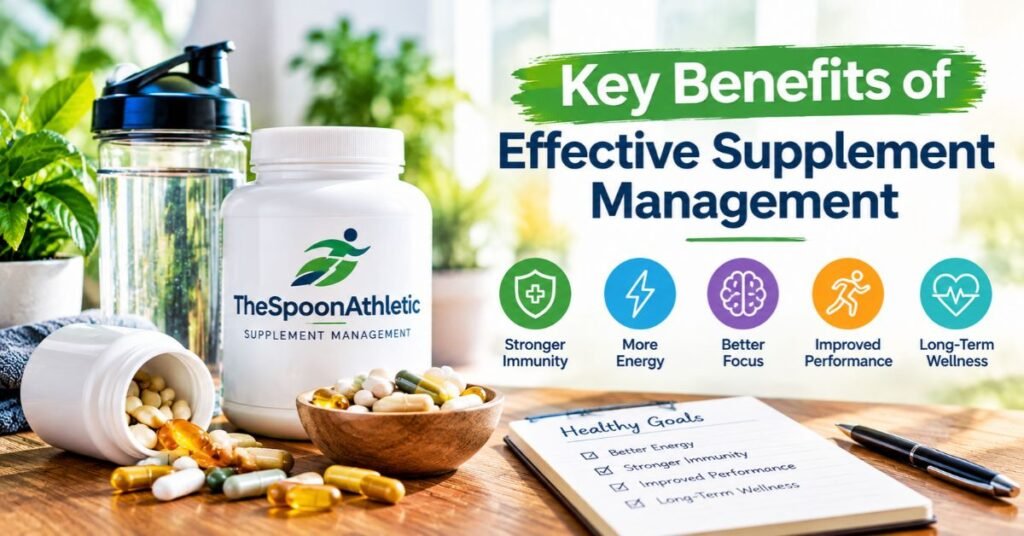
The main supplement benefits come from clarity. You spend less money. You avoid doubles. You also feel more in control. When you track what you take, you spot patterns. You learn what helps and what doesn’t. That’s the real value of benefits of managing supplements properly.
Results still vary. Supplements work best with good food, rest, and movement. They support healthy habits. They don’t replace them. With realistic expectations, you’ll avoid disappointment. Here are the four main areas where a plan can help.
Supporting Athletic Performance and Muscle Recovery
Smart plans can support athletic performance and muscle recovery. Protein helps repair tissue. Creatine may improve strength and power. Carbohydrates refill energy stores. Fluids and electrolytes replace what you lose in sweat. Management Your Health This is exercise nutrition at work. If you want supplements for muscle growth and recovery, start with total daily protein. Many active adults aim for roughly 1.4 to 2.0 grams per kilogram of body weight, according to sports nutrition research.
Maintaining Energy Levels and Reducing Fatigue
Low energy has many causes. Poor sleep, stress, and low iron can all play a part. A true shortfall in iron, B12, or vitamin D may cause tiredness. Fixing that gap can help. However, extra pills won’t boost energy if your levels are normal. That’s why testing matters. A registered dietitian or doctor can check for dietary deficiencies first. Then you treat the real cause.
Supporting Immune Function and Long-Term Health
Immune system support starts with food, sleep, and activity. Some nutrients matter most. Vitamin D, zinc, vitamin C, and selenium all play roles. Enough of each helps your body work normally. Extra amounts don’t make you invincible. Long-term, a balanced plan also supports bones, heart health, and healthy aging. That’s smart long-term health and wellness planning.
Improving Consistency and Nutritional Awareness
Planning builds habits. You start to read supplement ingredient labels. You notice gaps in your meals. You remember doses more easily. Many people say the biggest gain is awareness. You begin to eat with purpose. Management Your Health A simple weekly pill box or phone alarm can help. Management Your Health Consistency matters more than perfection. This is how to organize daily supplements in a way you’ll actually keep.
How to Create a Personalized Supplement Plan
A personalized supplement plan starts with you. No two bodies, diets, or goals are the same. Age, sex, health history, and training load all matter. A copy-and-paste plan from social media can miss your needs completely. Build your own instead.
The steps below show how to create a personalized supplement routine. They take time. They’re worth it. Follow them in order, and you’ll cut waste and risk. You’ll also give each product a clear job.
| Step | Action | Result |
| 1 | Define your goal | Clear direction |
| 2 | Review your diet | Spot gaps |
| 3 | Check for deficiencies | Confirm real needs |
| 4 | Pick products and doses | Targeted plan |
| 5 | Build a routine | Long-term success |
Identify Your Health and Fitness Goals
Ask yourself a few direct questions. Do you want more energy? Do you want to build muscle? Management Your Health Are you training for an event? Is weight management a priority? Your answers shape everything. Management Your Health Pick one main goal and maybe one backup. Too many goals lead to too many products. Keep it simple at first. You can add more later.
Evaluate Your Diet and Nutritional Needs
Next, look at what you eat. Track meals for three to seven days. Note your protein, fruit, vegetables, whole grains, and healthy fats. Be honest. Many gaps show up fast. For example, you may rarely eat fish. Management Your Health That points to omega-3 fatty acids. Or you may avoid dairy. Then calcium could need attention. This is the heart of a food-first nutrition strategy.
Identify Potential Nutrient Deficiencies
Tip 3: Test, don’t guess. Symptoms like tiredness or cramps have many causes. They don’t prove a deficiency. Only lab tests can confirm it. Ask a healthcare professional about blood tests. This is the safest way for how to determine nutritional deficiencies. The table below shows why people may fall short and how doctors check.
| Nutrient | Why People May Fall Short | How It’s Usually Checked |
| Vitamin D | Little sun, darker skin, northern latitudes | Blood test (25-hydroxyvitamin D) |
| Iron | Heavy periods, plant-based diets, endurance training | Ferritin and blood count |
| Vitamin B12 | Vegan diets, older age | Blood test |
| Magnesium | Low intake of nuts, seeds, greens | Diet review and clinical judgment |
| Omega-3 | Rarely eating oily fish | Diet review |
Choose Appropriate Supplements and Dosages
Start low. Match each product to a goal. Follow the label’s serving size. Compare it with the recommended daily intake and the tolerable upper intake level on the NIH fact sheets. These supplement dosage guidelines help you stay safe. Doses appear in mg, mcg, or IU. Check which unit your label uses. One mcg of vitamin D equals 40 IU. Management Your Health This simple step supports safe supplement dosage recommendations.
Build a Consistent and Sustainable Routine
Tip 5 begins with habit. Pair your pills with something you already do. Management Your Health Take them with breakfast or after brushing your teeth. Use a weekly organizer. Set a phone reminder if needed. Keep your daily supplement schedule short. A simple routine you follow every day beats a complex one you skip. Review it monthly, and adjust as needed.
Essential Nutrients to Consider in a Supplement Plan

Some nutrients show up in plans again and again. They have strong research behind them. Management Your Health They also fill common gaps. This is the “foundation first” idea. Master the basics before you try advanced products. Tip 4: Start with the basics.
Your needs depend on your diet, age, sun exposure, and activity. Management Your Health Not everyone needs all five nutrients below. Use the table as a starting point. Then confirm with a registered dietitian or doctor.
| Nutrient | Main Role | Common Food Sources |
| Protein | Builds and repairs muscle | Meat, fish, eggs, dairy, beans, tofu |
| Omega-3 | Supports heart and brain | Salmon, sardines, flaxseed, algae |
| Vitamin D | Supports bones and immunity | Sunlight, fortified foods, oily fish |
| Magnesium | Supports muscles and nerves | Nuts, seeds, leafy greens, whole grains |
| Electrolytes | Support fluid balance | Salt, fruit, vegetables, dairy |
Protein for Muscle Repair and Recovery
Protein supplements are food in powder form. They help you reach your daily target with ease. Protein supports muscle recovery after hard training. It also keeps you full. Still, whole foods come first. Eggs, fish, meat, beans, and dairy all work well. Use powder when meals fall short. Spread intake across the day. Aim for a protein-rich food at each meal.
Omega-3 Fatty Acids for Overall Health
Omega-3 fatty acids include EPA and DHA. They support heart and brain health. Management Your Health Oily fish like salmon and sardines are the best food sources. Vegans can choose algae-based products. Management Your Health If you eat fish twice a week, you may not need a supplement. Check supplement ingredient labels for the real EPA and DHA amounts. The total oil amount can mislead. Talk to your doctor if you take blood thinners.
Read More: 44+ Newstown CraigScott Capital Facts: Critical Risks & Ultimate Investor Guide 2026
Vitamin D for Bone and Immune Health
Vitamin D helps your body use calcium. It also supports muscles and immune system support. Your skin makes it from sunlight. Winter, darker skin, and indoor life can lower levels. The adult recommended daily intake is about 600 IU (15 mcg).Management Your Health The tolerable upper intake level is 4,000 IU (100 mcg) for most adults. Get a blood test first. Then choose a dose with a healthcare professional.
Magnesium for Normal Muscle and Nerve Function
Magnesium supports normal muscle and nerve function. It also plays a role in energy use. Management Your Health Nuts, seeds, beans, and greens are rich sources. Magnesium supplements come in many forms, such as citrate, glycinate, and oxide. For adults, the upper limit from supplements alone is 350 mg a day. Higher doses can cause loose stools. If you have kidney issues, ask your doctor first.
Electrolytes for Hydration and Exercise
Electrolytes include sodium, potassium, calcium, and magnesium. You lose them in sweat. They help control fluid balance and muscle action. Most people who exercise lightly get enough from food. Long, hot, or intense sessions are different. Management Your Health Then a sports drink or electrolyte mix may help. This is simple exercise nutrition. Match your intake to how much you sweat.
Supplement Timing When Should You Take Supplements?
Supplement timing can help. It rarely matters more than consistency, though. Taking a product daily at a reasonable time beats perfect timing once a week. Still, a few smart choices can improve comfort and absorption. Tip 5: Time your doses smartly.
Food plays a big role. Fat-soluble vitamins (A, D, E, and K) absorb better with a meal that has some fat. Management Your Health Iron absorbs better with vitamin C. It absorbs worse with coffee, tea, or calcium. Use the table below as a quick guide for when to take vitamins and minerals.
| Supplement | Suggested Timing | Helpful Note |
| Vitamin D, omega-3 | With a meal containing fat | Aids absorption |
| Iron | Empty stomach or with vitamin C if tolerated | Avoid with tea, coffee, or calcium |
| Magnesium | Often evening | Some people sleep better |
| Caffeine | Morning or early afternoon | Late doses can disrupt sleep |
| Protein | After training or with meals | Total daily intake matters most |
Pre-Workout Supplements and Exercise Performance
Pre-workout products often contain caffeine, carbohydrates, and electrolytes. People usually take them 30 to 60 minutes before exercise. Caffeine may boost athletic performance and focus. However, too much can cause jitters, a fast heartbeat, or poor sleep. Test new products on a light day. Check the caffeine amount on the label. Remember that coffee and energy drinks count too.
Post-Workout Nutrition and Recovery
After training, your body needs fuel and repair. Protein supports tissue repair. Carbohydrates refill energy stores. Fluids and electrolytes replace sweat losses. This is supplement timing for workout recovery. A simple meal can do the job. Management Your Health Chicken and rice works. So does a smoothie with milk, fruit, and protein powder. Aim to eat within a few hours.
Morning vs. Evening Supplement Timing
Many people take vitamin D, omega-3, and multivitamins in the morning with breakfast. Magnesium often fits the evening. Some people find it relaxing. Stimulants belong early in the day. Keep a simple daily supplement schedule you can follow. Management Your Health If a product upsets your stomach, take it with food. If it disturbs your sleep, move it earlier.
Common Supplement Timing Mistakes
Several mistakes crop up often. Some people take everything at once. That can cause stomach upset and poor absorption. Others ignore food needs. Many miss doses. Late-day caffeine is another trap. Calcium and iron can compete for absorption. Space them a few hours apart. Write your schedule down. That’s part of how to avoid supplement interactions too.
Read More: Hosted Event PBL Gamevent Essential Tips for Better Gaming Events in 2026
Supplement Safety, Side Effects, and Potential Management Your Health
Supplement safety comes first. “Natural” doesn’t mean risk-free. Even common vitamins can cause harm in high doses. Supplements can also affect medicines. Knowing the risks is key to safe supplement use. Tip 6: Check labels, doses, and interactions.
Rules vary around the world. In some countries, products face less review before sale. That’s why your own checks matter. The five points below cover how to avoid supplement interactions and other risks. For deeper reading, visit the FDA’s dietary supplement safety page and NIH fact sheets.
Avoiding Duplicate and Overlapping Ingredients
Many products share the same ingredients. A multivitamin, a sleep blend, and a recovery drink may all include magnesium. A pre-workout and a fat burner may both hold caffeine. Doses add up fast. Read every label and add the totals. Doubling up raises both risk and cost. A single list of everything you take makes this easy. This is a core part of how to manage dietary supplements safely.
Understanding Recommended Doses and Upper Intake Limits
Each nutrient has a recommended daily intake. It also has a tolerable upper intake level. That’s the highest daily amount unlikely to cause harm for most people. For example, adults should stay under 40 mg of zinc and 2,000 mg of vitamin C daily from all sources. Going over these limits can cause side effects. Supplement side effects include nausea, headaches, and diarrhea. Use trusted supplement dosage guidelines from NIH.
Reading Supplement Labels and Ingredient Lists
Supplement ingredient labels hold key facts. Look at the serving size first. Check the active ingredients and the amount of each. Watch for “proprietary blends.” They hide exact doses. Look for allergens like soy, milk, or shellfish. Check the expiry date as well. Clear labels often signal a more honest company. This habit also helps you judge supplement quality and effectiveness.
Understanding Medication and Supplement Interactions
Supplement-drug interactions can be serious. Vitamin K can reduce the effect of warfarin. St John’s wort can weaken many medicines, including some birth control pills. Calcium and iron can reduce the absorption of some thyroid medicine. Management Your Health High-dose fish oil may affect bleeding in some people. Always tell your doctor or pharmacist about everything you take. That’s the best way to avoid harmful mixes.
Choosing Quality-Tested Supplements
Third-party supplement testing checks that a product contains what the label says. It also checks for contaminants. Look for marks from groups like USP, NSF, or Informed Sport. Competitive athletes especially need this. Management Your Health Banned substances can hide in untested products. Availability of these seals varies by region. This is how to evaluate supplement quality in a practical way. Tip 7: Choose quality-tested products.
Common Supplement Management Mistakes to Avoid
Even smart people slip. Common mistakes quietly block progress. They waste money. Management Your Health Some can harm your health. Knowing them helps you steer clear. These are the common supplement management mistakes to watch for.
The good news? Each one has a simple fix. Make a short checklist and review it each month. Be honest about what you take and why. Small corrections add up. Here are the four biggest traps.
Taking Too Many Supplements at Once
A cabinet full of bottles doesn’t guarantee results. A few targeted products usually beat a dozen random ones. Take a runner named Maya. She took eleven products daily. She felt bloated and couldn’t tell what helped. Management Your Health After a review with a dietitian, she kept only vitamin D, omega-3, and protein powder. Her stomach settled and her costs dropped. Fewer products also made supplement tracking easy.
Using Supplements Instead of a Balanced Diet
Supplements supplement. They don’t replace meals. Food gives fiber, antioxidants, and nutrient teamwork. A pill can’t copy all of that. If your meals are poor, fix them first. Then add supplements to fill real gaps. This is the heart of a food-first nutrition strategy. It’s also the base of strong nutritional health management.
Following Trends Without Scientific Evidence
Social media loves new products. Today’s miracle ingredient is gone next month. Your health needs rarely follow viral trends. Before you buy, ask three questions. Is there human research? Is the dose realistic? Is the claim reasonable? If not, skip it. Beware of miracle claims about weight loss or quick muscle gain. Use evidence-based nutrition as your filter.
Ignoring Side Effects and Failing to Track Results
Your body sends signals. Management Your Health Stomach pain, headaches, poor sleep, or a racing heart deserve attention. Stop the product and talk to a professional if symptoms persist. Without notes, you can’t link cause and effect. Track what you take and how you feel. Good supplement tracking protects your health. It also shows whether a product earns its place.
The Role of Nutrition in Effective Supplement Management
Picture a house on a weak base. Cracks appear sooner or later. Supplements on top of poor nutrition work the same way. Healthy meals create the foundation. Nutrient-dense foods supply vitamins, minerals, fiber, and plant compounds all at once. Tip 2: Put food first.
A strong diet also changes what you need. When you eat well, you may need fewer products. That saves money and lowers risk. Use this section to shape your wellness and nutrition planning.
Simple rule to remember: Fix the plate first. Then fill the gaps.
Why a Food-First Approach Matters
Whole foods carry more than single nutrients. They bring fiber, antioxidants, and natural nutrient partners. For example, the vitamin C in an orange helps your body absorb iron from beans. Pills can’t always copy those effects. Management Your Health Research on whole diets often shows stronger links to health than research on single nutrients. A food-first nutrition strategy is also the best way to improve nutrient intake over the long run.
Building a Nutrient-Dense Daily Diet
Aim for color, variety, and balance. Fill half your plate with vegetables and fruit. Add a quarter of protein and a quarter of whole grains. Include healthy fats from nuts, seeds, olive oil, or fish. This pattern works across many cultures. Rice with lentils and greens fits it. So does fish with potatoes and salad. Nutrient-dense foods support your individual nutritional needs with less effort.
Combining Supplements With Healthy Lifestyle Habits
Supplements work best inside a healthy lifestyle. Sleep seven to nine hours when you can. Move daily. Manage stress. Drink water through the day. Consider Omar, an office worker who felt tired. He bought three energy products. Management Your Health Nothing changed. Then he fixed his sleep, ate breakfast, and added a short walk. His energy rose. Habits first, supplements second. That’s solid long-term health and wellness planning.
The Science Behind Supplement Effectiveness
Science helps separate facts from marketing. Not every ingredient works the same for every person. Form, dose, timing, and your own body all matter. Studies also differ in quality. Reading research with care protects you from empty claims. It also helps you choose science-backed supplement recommendations.
Three ideas explain most of the differences. They are absorption, personal variation, and research quality. Learn them, and you’ll judge products with more confidence. Each one shapes supplement effectiveness in real life.
Bioavailability and Nutrient Absorption
Supplement bioavailability describes how much of a nutrient your body actually uses. Nutrient absorption depends on the form, the dose, food, and gut health. For example, iron absorbs better with vitamin C. Calcium absorbs better in smaller doses. Fat-soluble vitamins need dietary fat. Some forms of magnesium absorb better than others. Check the form listed on the label. It affects supplement quality and effectiveness.
Why Individual Responses to Supplements Differ
Two people can take the same product and get different results. Genetics, age, diet, training, and health history all play a part. Starting levels matter most. Someone low in vitamin D may notice a change. Someone with normal levels may not. Management Your Health This is why personalized supplement plans work better than copied ones. Your individual nutritional needs drive the outcome.
Read More: 15 Amazing Highlights of Nummazaki Japan Travel Guide 2026
Evaluating Scientific Research and Health Claims
Not all studies are equal. Strong research uses human participants, placebo groups, large samples, and peer review. Be careful with studies in cells or animals. They don’t always apply to people. Search for studies on PubMed and read reviews in the Cochrane Library. Watch for claims that sound too good to be true. If a product promises miracles, it’s probably marketing.
How to Track and Optimize Your Supplement Routine
The best plan changes over time. Your goals, diet, and health will shift. A routine that worked last year may not fit now. Tip 8: Track your results. Tracking turns guesses into facts.
You don’t need fancy tools. A notebook, spreadsheet, or notes app works well. Write small, clear entries. Then review them each month. This is how to track supplement results in a way you’ll keep up. Good records also help your doctor or dietitian guide you.
Key Health, Nutrition, and Performance Metrics
Pick a few metrics that match your goal. Too many will overwhelm you. The table below offers a starter set. Rate subjective items on a simple one-to-ten scale. Compare week to week. Lab results from your doctor add hard numbers. Together, they show whether your supplement tracking system is working.
| Metric | Why It Matters | How to Measure |
| Energy | Shows daily function | 1–10 rating each day |
| Strength | Shows training progress | Weights lifted or reps |
| Recovery | Shows readiness to train | Soreness rating, sleep quality |
| Sleep | Affects every goal | Hours and quality notes |
| Body composition | Shows long-term change | Monthly measurements |
| Lab values | Confirms nutrient status | Blood tests from your doctor |
Keeping a Supplement Journal
A supplement journal is simple. Record the product name, dose, time, and anything unusual. Add notes on mood, sleep, and workouts. After a few weeks, patterns appear. You might notice that magnesium helps your sleep. You might see that a pre-workout ruins it. Share the journal at medical visits. It gives your healthcare professional a clear picture and supports safe supplement use.
When to Review or Adjust Your Supplement Plan
Tip 9: Review often and ask experts. Check your plan every three months. Review sooner if your goals, diet, or health change. Starting a new medicine, becoming pregnant, or changing your training load are all good triggers. Management Your Health Drop products that don’t help. Add new ones only for a clear reason. Regular reviews keep your supplement routine lean and effective.
When to Consult a Doctor or Registered Dietitian
Some questions are too personal for general advice. A doctor or registered dietitian can review your health history, diet, medicines, and lab results. They can then tailor your plan. This step prevents mistakes before they start. It’s also the answer to when to consult a nutrition professional.
Professional help can also save money. You’ll buy only what you need. You’ll avoid risky combinations. Think of it as a short investment for a long-term benefit. Below are the key moments to seek advice.
Recognizing Potential Deficiencies and Adverse Effects
Some signs call for medical attention. Persistent tiredness, hair loss, numbness, frequent illness, or unusual bruising can point to dietary deficiencies or other conditions. New symptoms after starting a product matter too. Examples include rash, swelling, chest pain, or severe stomach upset. Stop the product and seek care if serious symptoms appear. Don’t guess. Get the right tests.
Getting Professional Advice Before Starting Supplements
Talk to a healthcare professional before you start anything new. Bring a list of all products and medicines. Ask about blood tests, doses, and timing. Ask what to track. A pharmacist can also check for supplement-drug interactions. This habit supports safe supplement dosage recommendations and keeps your plan in line with your individual nutritional needs.
Special Considerations for Athletes and People Taking Medication
Athletes face extra rules. Anti-doping bodies hold athletes responsible for anything they take. Use products with third-party supplement testing, and check your sport’s rules. People on medication need extra care too. Heart, thyroid, diabetes, and blood-thinning drugs can all interact with supplements. Pregnant or breastfeeding people also need guidance. A professional can match your plan to your situation.
How TheSpoonAthletic Can Help Simplify Supplement Management
TheSpoonAthletic supplement management aims to cut the confusion. Management Your Health Too many choices make decisions hard. A clear framework helps. It guides you from goal to routine to review. You spend less time guessing. You also build steady habits that last.
The focus stays on education and long-term planning. The approach encourages realistic expectations. It also supports responsible choices. When you combine it with advice from a healthcare professional, you get the best of both worlds. Check the platform’s own materials for the exact tools it offers.
Organizing Supplement Information and Daily Routines
Clear organization removes stress. Keep one list of every product, dose, and time. Group items by meal. Use a weekly pill box. Add reminders. Store notes about reactions and results. This simple system supports supplement planning, supplement tracking, and a reliable daily supplement schedule. It also makes doctor visits easier.
Making Informed and Responsible Supplement Choices
Responsible choices start with questions. Does this product match my goal? Is it tested? Is the dose safe? Does it clash with anything I take? Use trusted sources to answer them. Avoid hype and pressure. This mindset improves supplement quality and effectiveness and protects your health. It’s the foundation of best practices for supplement management.
Frequently Asked Questions
How Many Supplements Should You Take Daily?
There’s no magic number. Most people do well with a small set that fills proven gaps. Often that means one to four products. Your diet, goals, and lab results decide the right count. More products raise the chance of overlap and side effects. Start with the basics, track your response, and add only what you need.
Can Supplements Replace a Healthy Diet?
No, they can’t. Nutritional supplements add to your diet. They don’t copy the full value of whole foods. Food supplies fiber, plant compounds, and nutrient teamwork. A pill can’t match that. Use supplements to fill specific gaps. Build your meals around nutrient-dense foods first.
How Long Does It Take for Supplements to Work?
It depends on the product and your starting levels. Caffeine acts within an hour. Creatine often needs a few weeks of daily use. Correcting vitamin D or iron deficiency can take months. Some products may show no noticeable effect at all. Track your results and review them after eight to twelve weeks. Retest labs if your doctor suggests it.
How to Live a Healthy Life?
Start with simple habits. Eat plenty of vegetables, fruit, whole grains, and protein. Move your body most days. Sleep seven to nine hours. Drink water. Manage stress. Avoid smoking and heavy drinking. Keep up with medical checkups. Supplements may help in small ways. Daily habits matter far more, and they’re the base of wellness and nutrition planning.
How Do I Improve My Life?
Pick one small change and stick with it for two weeks. Maybe it’s a daily walk, an earlier bedtime, or a healthier breakfast. Small wins build confidence. Then add another step. Connect with supportive people. Set clear goals. Improvement comes from steady progress, not sudden overhauls.
How to Start a Health Journey?
Begin with a clear goal and an honest check of where you are. Note your sleep, food, activity, and energy. Book a checkup. Choose one or two habits to change first. Track your progress weekly. Ask a registered dietitian or doctor for help if you feel unsure. Add supplements later, and only if a real gap shows up.
How to Overcome Health Issues?
Start by getting a clear diagnosis from a medical professional. Follow the treatment plan. Ask questions until you understand it. Support your care with good food, sleep, and movement. Check with your doctor before adding any supplement. Some products can clash with treatment. Reach out to friends, family, or support groups too. Healing is easier with help.
Final Thoughts
TheSpoonAthletic supplement management comes down to nine ideas. Set a clear goal. Put food first. Test, don’t guess. Start with the basics. Time your doses smartly. Check labels, doses, and interactions. Choose quality-tested products. Track your results. Review often and ask experts. Each tip supports safe supplement use and better supplement effectiveness.
You don’t need a cabinet full of bottles. You need clarity, patience, and a plan. Start small today. Write down your goal. Review your plate. Talk to a healthcare professional. Then build your personalized supplement plan one step at a time. Your future self will thank you.