

Meals Included on PaxTravelTweaks The Complete Travel Guide 2026
Few lines on a booking page cause more confusion than the food line. You read “meals included” and picture a full table. Then day three arrives. You’re paying for lunch out of your own pocket. This PaxTravelTweaks meal guide helps you avoid that surprise.
You’ll learn how meals included on PaxTravelTweaks bookings work and how to read the wording. You’ll also learn how to price the meals you pay for yourself. The advice suits travelers anywhere in the world. Prices in the examples are illustrative, so swap in your local currency and costs.
| Booking type | Most common inclusion | Most common exclusion |
| Guided tour | Breakfast and some lunches or dinners | Meals marked “on your own” |
| Cruise | Dining on board | Land-day meals and specialty restaurants |
| Flight | Water, coffee, tea | Full meals on short routes |
| Train | Meals in some first-class fares | Food on standard fares |
| Hotel stay | Breakfast | Lunch, dinner, premium drinks |
What Does Meals Included on PaxTravelTweaks Mean?
The phrase meals included on PaxTravelTweaks has no single fixed meaning. It depends on what you booked. A guided tour, a hotel bundle, a flight, a train ticket or a mix of these each follow different rules. Think of your PaxTravelTweaks travel booking as a set-price menu. The price covers certain dishes. Everything else costs extra. Most meals included in travel packages draw from three slots: breakfast, lunch, and dinner. Few packages fill all three. Breakfast is the one you’ll see most often across the travel industry.
Only one source settles the question. That source is the inclusions section and the travel itinerary attached to your own reservation. Rank your sources in this order. Your booking confirmation comes first. The product page as it read on the day you booked comes second. The provider’s own meal policy comes third. Written replies from support come fourth. Blog posts come last, this one included. Anyone asking “what meals are included in travel packages?” should start with PaxTravelTweaks meal inclusion details inside their own file. Understanding meal inclusions in travel itineraries begins there.
Why Meal Information Online Can Be Confusing
Search for travel meal inclusions and you’ll find pages that disagree. One page describes safari lunches and campfire dinners. Another describes airline tiers based on flight length. A third praises first-class train menus. Each writer describes one booking type. Then each presents it as the rule for everything. Most of these pages also skip screenshots and dates. Many repeat the same phrases. None of them can see your accommodation package. That’s why general claims need a second look before you trust them.
The table below shows common claims and why they fail. It also shows what you should check instead. Treat it like a quick lie detector for travel blogs.
| Claim you will see | Why it cannot be universal | What to check instead |
| “Breakfast is always included” | Room-only stays and many flights include none | The meal line in your itinerary |
| “All meals are covered” | Only full board and all-inclusive plans do that | The meal plan name |
| “Dietary needs are accommodated” | Each provider decides and usually needs notice | Written confirmation |
| “No hidden fees” | Drinks and gratuities are common extras | The package exclusions list |
Notice the pattern. Every claim hides a condition. Hidden charges in meal-inclusive packages usually live in that condition. You’ll find them in the small print about drinks, service charges, and specialty dining. A quick read of the booking terms and conditions exposes most of them.
What Meals Are Included by Travel Booking Type?
Meal coverage changes with the kind of trip you book. A tour spreads meals across days. A cruise folds dining into the ticket price. A flight offers a snack or a tray. A hotel attaches a plan label to your room. So the smart move is to ask what meals your specific booking type usually covers. Then check the real terms. These travel package dining options differ a lot even inside one category.
The table below sums up the usual pattern. Use it as a starting map. Then confirm the details in your own paperwork.
| Booking type | Usual inclusion | Watch out for |
| Guided tour | Breakfast plus selected meals | Open days with no meals |
| Cruise with land stay | Ship dining | Uncovered land meals |
| Flight | Drinks, snack or meal by route | Buy-on-board policies |
| Train | Meals in premium classes | High onboard prices |
| Hotel package | Breakfast or a meal plan | Drinks and room service |
Guided Tours and Group Travel
On tours, guided tour meal arrangements appear day by day. Operators such as TourRadar point you to a “What’s Included” section. A meals subsection names the breakfast, lunch, and dinner slots that the price covers. Uncovered slots are often deliberate. They give you room to explore local restaurants at your own pace. Guides usually suggest good spots. Some operators work differently. Backroads includes most meals and labels exceptions as “On Your Own” in its trip planner. Group dinners can happen too. You usually pay for those. River cruises tend to cover more meals than land tours. Always check the meal schedule and dining times with your travel provider.
Cruises and Tour Packages With Land Stays
Ships offer cruise dining packages built around onboard dining services. Main dining rooms and buffets come with the fare. Specialty restaurants usually add additional dining charges. The shock arrives on land. Holland America cruisetours in Alaska, for example, leave most land meals uncovered. A few named exceptions exist, such as lunches on certain motorcoach legs. Optional dining plans can fill the gaps. Treat each segment of a combined trip as its own meal-inclusive holiday. Read the meals line for the ship and for the land tour separately. Also check which alcoholic and non-alcoholic drinks the fare covers.
Flights and Airline Meal Services
Airline meal services depend on the carrier, the route and your fare. Many short domestic flights offer water and a small snack. Meals go on sale in the cabin. Longer international routes more often include a full tray. Some fares include nothing at all. So a claim about food on any flight works as a pointer. It never replaces the fare rules. Airline food and drink policies sit on the carrier’s website and in your ticket details. Check them before you fly. Pack snacks and refreshments for long gaps between services.
Train Journeys and Onboard Dining
Rail food varies more than any other category. Train meal services range from a free tray in first class to a vending machine in standard class. Train journey catering services often run on a meal schedule tied to departure times. Meals provided during long-distance travel usually appear only in higher classes or sleeper fares. Standard tickets rarely cover food. Station and onboard prices run higher than a packed lunch. Check your ticket class before boarding. Then decide whether to bring food from home.
Hotel Stays and Meal-Inclusive Packages
Hotels are the most standardized category. Your reservation carries a meal plan options label. That label shows where coverage stops. Hotel meal packages often bundle breakfast included in hotel booking terms with the room rate. A complimentary hotel breakfast may mean a buffet breakfast or a light continental spread. The difference matters. Hotel food and beverage services also include restaurants, bars and room service. Those usually bill separately. Hotel room-only versus breakfast packages can differ by a modest nightly amount. Read the hotel policies to see what the property offers.
Understanding Travel Meal Plans and Booking Terms
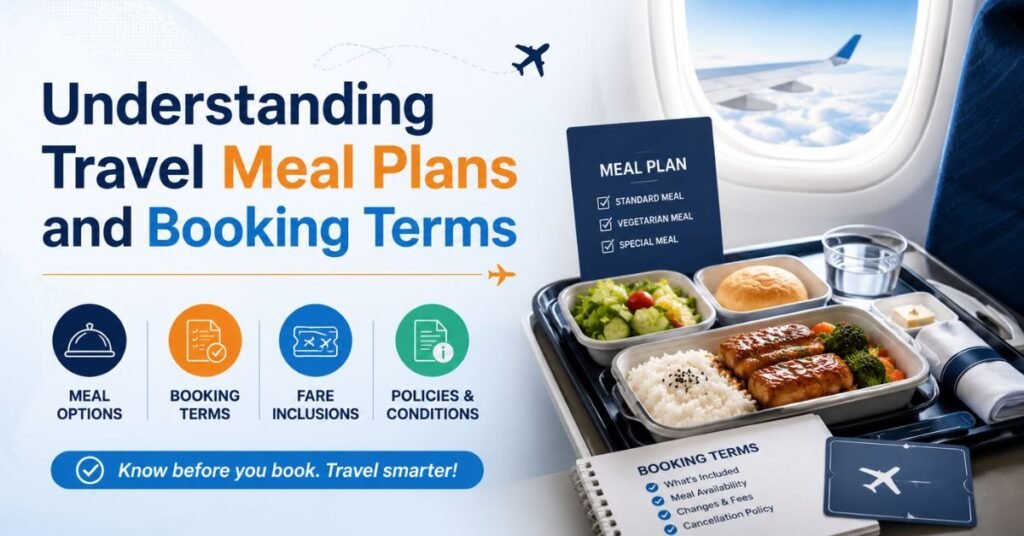
Hotels use short codes for their meal plan options. These codes appear on your hotel reservation details. Different regions use different names for the same plan. That’s why you might see “European Plan” in one place and “room only” in another. Learning the terms takes five minutes. It protects your wallet for the whole trip. How travel meal plans work becomes clear once you know the five basic types.
The table below decodes them. Keep it handy when you compare offers.
| Term | Also called | What is covered | Best for |
| Room only | European Plan | No meals | Travelers who want dining freedom |
| Bed and breakfast | Continental Plan | Breakfast only | Most city trips |
| Half board | Modified American Plan | Breakfast plus lunch or dinner | Resorts with limited dining nearby |
| Full board | American Plan | Breakfast, lunch and dinner | Remote areas and families |
| All-inclusive | None | Meals, snacks and usually drinks | Beach resorts and cruises |
Two cautions apply. First, all-inclusive often excludes premium alcohol and specialty restaurants. Second, half board rarely names which meal it covers. Ask before you book.
Bed and Breakfast (BB)
Bed and breakfast gives you a bed plus complimentary meals at the start of the day only. It’s breakfast-only hotel accommodation. It suits city trips well. You eat the morning meal at the hotel. Then you wander into local restaurants for lunch and dinner arrangements of your own. This approach keeps costs predictable. It also lets you sample neighborhood cooking. Check what the breakfast includes. Some hotels serve a full buffet breakfast. Others set out coffee and pastries. Confirm dining times too. Late sleepers sometimes miss the cutoff.
Half Board (HB)
Half-board hotel packages include breakfast plus one other meal. That meal is usually dinner. Many properties also run set-menu dining for half-board guests. You get fewer choices. You also get a lower price. The label rarely says which meal applies. So ask the hotel directly. Lunch and dinner can differ by $15 to $40 per person at the same property. Half board works well at resorts where few restaurants sit nearby. In a busy city it may limit your freedom. Think about where you’ll spend your days first.
Full Board (FB)
Full-board accommodation covers breakfast, lunch and dinner. It suits remote locations and families. Everyone eats on a known meal schedule. Nobody argues about where to go. Parents often like the fixed cost. Drinks usually cost extra. So do snacks outside the dining times. Many lodges in remote areas use this plan because no other restaurants exist nearby. Compare the price against what you’d spend on your own. Sometimes full board saves money. Sometimes it ties you to one dining room.
All-Inclusive and Room-Only Packages
All-inclusive travel deals bundle food and beverage inclusions into one price. You typically get all meals plus snacks and refreshments. Many also cover house drinks. Compare all-inclusive versus full-board holidays carefully. Full board covers three meals. All-inclusive stretches further. Still, it often excludes premium spirits and specialty dining. Room-only hotel booking sits at the other end. You get the room and nothing else. Room-only works for adventurous eaters. Many travelers pair it with local restaurants and street food. Read the package exclusions before buying either option.
How to Check Which Meals Your Travel Booking Includes
Checking takes a few quiet minutes with your paperwork. Open your travel booking confirmation. Find the section on inclusions. Then read it line by line. How to check meals included in a hotel booking comes down to this habit. Do it before you leave home. Fixing a misunderstanding in advance is far easier than fixing it at the front desk.
A sample itinerary shows what to look for. The details below are illustrative and not a real product. Notice that arrival and departure days carry the fewest meals. That’s normal.
| Day | Breakfast | Lunch | Dinner | What you pay |
| 1 | Not included | Not included | Group welcome dinner | Lunch |
| 2 | Included | On your own | On your own | Lunch, dinner |
| 3 | Included | Included | On your own | Dinner |
| 4 | Included | On your own | Included | Lunch |
| 5 | Included | Not included | Not included | Lunch, dinner |
Reading Your Booking Confirmation and Itinerary
Your booking confirmation is the main proof of what you bought. Look for the included meals in itinerary lines. Each day may list meal codes or plain words. Phrases like “Lunch: on your own” mean you pay. “Not included” means the same thing. Count every such line. Those lines form your real food budget. Also scan the hotel reservation details for the plan label. A missing label often means room only. Save a screenshot of the page as it reads today. Pages change. Your screenshot proves what you bought.
Checking Breakfast, Lunch, Dinner, Snacks, and Drinks
Go meal by meal. Check breakfast, lunch, and dinner for each day. Then look beyond the main meals. Ask about snacks and refreshments between meals. Ask about alcoholic and non-alcoholic drinks too. Water, coffee and tea are often free. Soft drinks and wine usually cost extra. Are drinks included with hotel meals? Sometimes only at breakfast. Sometimes only with set menus. Write down what each meal covers. A simple list prevents bill shock at checkout. Compare it with the meal schedule so you don’t miss a serving window.
Identifying Additional Charges and Exclusions
Exclusions hide in a short list at the bottom of the offer. Read it slowly. Common items include service charges and gratuities and tipping. Specialty dining, room service and minibars often sit there too. Some places also limit restaurant availability during peak season or maintenance. Included meals can still carry a service fee. Resort fees can appear separately. These additional dining charges add up fast. Add each one to your travel expenses plan. Ask the travel provider if any line looks unclear.
How to Confirm Included Meals Before Paying
Confirm before you pay. Once the card goes through, changes get harder. How to confirm meals before booking is a short routine. Open the offer. Read the meals section. Check each day. Identify the plan on the hotel portion. Check fare rules for any flight or train leg. Read the exclusions. Screenshot the page. Send any questions to support. That’s eight steps and about fifteen minutes.
Step seven matters more than most people expect. Pages change without notice. A dated screenshot shows what the travel provider promised on the day you booked. Step eight matters as well. A written reply carries more weight than a phone call. Keep both together in one folder. This way you can show them if a dispute arises. How to verify hotel dining arrangements always ends with a paper trail.
Review the Official Offer Description
Start with the official offer page. Look for “What’s Included” or a similar heading. Read the food and beverage inclusions line by line. Then read the exclusions. Pay attention to small words like “selected,” “most” and “some.” Those words signal limits. “Selected meals” doesn’t mean every meal. Check the booking terms and conditions for refund and change rules as well. Compare what you read with the PaxTravelTweaks travel booking page. Mismatches deserve a question. A clear offer should answer yours without guesswork.
See Also: SFM Compile The Ultimate Beginner’s Guide to Model Compilation 2026
Contact the Hotel or Travel Provider
When a line feels vague, ask. Contact the hotel or the travel provider directly. Keep questions short and specific. Which meal does half board include? Are drinks covered at dinner? Does the buffet breakfast run daily? What are the dining times? Ask about restaurant availability if you travel in a busy season. Mention your dietary restrictions early. Polite, clear questions get clear answers. Vague questions get vague answers. Always note the date and the name of the person who replied.
Get Meal Arrangements Confirmed in Writing
Spoken promises disappear. Written promises stay. Ask the provider to confirm meal arrangements by email. Request the exact meals covered and the dates. Ask them to add any special meal requests to your reservation. Save the reply with your travel booking confirmation. Print a copy if you travel to places with poor signal. Staff can then check your note on the spot. This small habit settles most meal disputes in seconds. It also gives you proof if plans change.
Dietary Requirements, Food Allergies, and Special Meal Requests
A meal line never covers your restrictions automatically. Providers decide what they can serve. They usually need notice. Special dietary meal requests work best when you make them early. State them at booking. Ask support to note them on the reservation. Reconfirm with the hotel or guide a few days before travel. How to request special dietary meals is simple. Ask early and get it in writing. Carry safe snacks and refreshments as a backup.
Different providers set different deadlines. Airlines often want requests a day or more before departure. Hotels and tour operators typically want them at booking. Travel dining arrangements on a tour depend on the guide and local kitchens. Cruise lines usually handle them through guest services. Included meals can only match what the underlying provider offers. So the confirmation must come from that provider. A blog or a booking site can’t promise it for them.
Vegetarian, Vegan, and Gluten-Free Options
Most providers offer vegetarian meal options. Many also provide vegan food options and gluten-free meals on request. Halal and kosher choices often exist too. Quality varies by region and kitchen. A large resort may offer a full menu. A small guesthouse may offer a simple plate. Ask for examples of dishes. That way you know what to expect. Confirm the request again when you arrive. Staff change shifts and notes get lost. Polite reminders help.
Informing Travel Providers About Food Allergies
Food allergies need extra care. Tell the provider at booking. Repeat the message in writing. Ask how the kitchen handles cross-contact. Request a named contact who can confirm your needs. Never rely on a kitchen’s best effort alone. For serious allergies, ask your doctor what precautions you need. Carry any prescribed medicine and safe snacks. Check hotel policies on outside food too. Clear communication protects your health. It also helps staff serve you well.
How to Budget for Meals Not Included in Your Booking
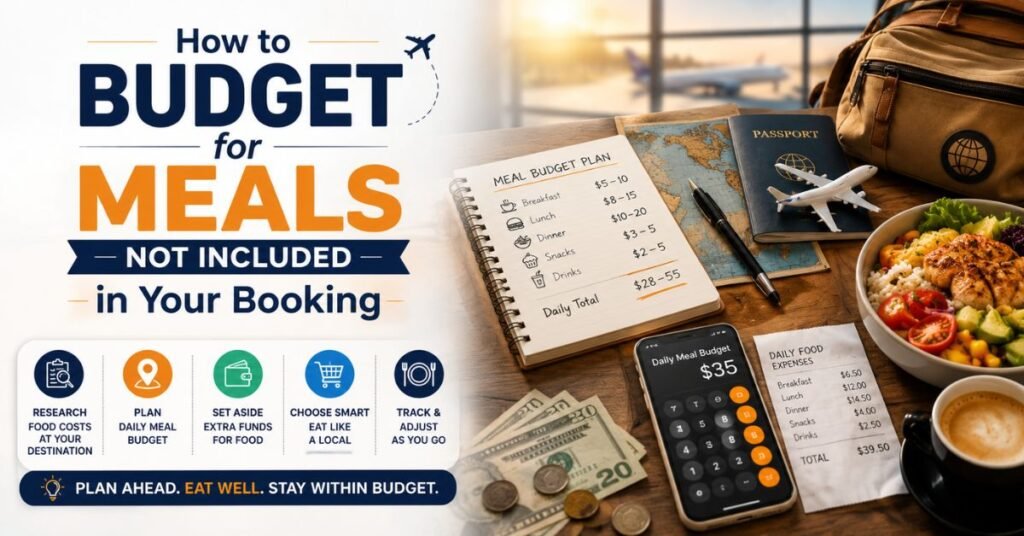
Budgeting for meals while traveling follows a simple method. Count the open meals. Multiply by a realistic average price. Add a buffer of about fifteen percent. That number becomes your daily food budget once you divide by trip days. It forms part of your overall travel expenses. Local prices vary widely. A street-food lunch in one country costs a fraction of a café lunch in another. Research typical costs before you go.
The table below shows a five-day example. The prices are illustrative.
See Also: Jerry Speyer and Robert De Niro What Historical Records Reveal About Their Connection
| Item | Count | Average cost | Subtotal |
| Breakfasts (included) | 5 | $0 | $0 |
| Lunches (on your own) | 5 | $16 | $80 |
| Dinners (on your own) | 4 | $32 | $128 |
| Drinks and snacks | 5 days | $8 | $40 |
| Buffer (15%) | $37 | ||
| Total meal budget | $285 |
Consider a short case study. Priya books a five-day city package with breakfast only. She assumes dinners are covered. Then she counts the open meals in her itinerary. She finds nine meals to pay for. She budgets $285 and stays calm all week. Now compare a half-board upgrade. Subtract the dinners it replaces. Then compare that saving with the upgrade price. Sometimes the upgrade costs less than the dinners. Sometimes it costs more.
Estimating Daily Food Expenses
Start with the number of open meals per day. Multiply by the typical price at local restaurants. Add a small amount for coffee and snacks. Then add the buffer. Travel days need extra care. Transfers fall between meal times. You may buy overpriced food at stations. Estimate higher for those days. Travel food costs and budgeting get easier after a few trips. Keep receipts for your first trip. They show your real average. Use that number next time.
Practical Ways to Save Money on Travel Meals
Eat your included breakfast fully. Take a piece of fruit or a roll for later. Make lunch your main restaurant meal. Lunch menus often cost less than dinner menus. Ask your guide or the hotel desk for neighborhood favorites. Skip restaurants beside major attractions. Carry a refillable bottle to avoid paying for water. Share large portions when you can. Check whether your plan includes complimentary meals you haven’t used. Small habits add up to real savings across a long trip.
Common Mistakes Travelers Make When Checking Meal Inclusions
Most meal problems come from small assumptions. Travelers see “breakfast included” and imagine a full hot spread. Some properties serve only a light continental breakfast. Others read “meals” as shorthand for “all meals.” It rarely means that. Some forget that included meals can still carry service charges. Others skip the exclusions list. Drinks and specialty dining hide there. Many treat a blog’s description of meals included on PaxTravelTweaks as a contract. A blog can’t bind a provider. Only your booking terms and conditions do.
Timing causes trouble too. Late bookers often find that special meal requests have closed. Travelers also forget arrival and departure days. Those days carry the fewest inclusions. Picture a traveler named Marco. He books a tour with “selected meals.” He lands at midnight and misses the welcome dinner. He pays for three meals he expected to be free. A five-minute check would have saved him. Read each line. Count the gaps. Ask early. Included meals versus optional dining is a real difference. Know which one you bought.
See Also: SFM Conpile The Complete Beginner’s Guide to Model Compilation 2026
Quick Pre-Trip Checklist for Confirming Included Meals
A checklist turns good intentions into action. Run through it a week before you travel. Run through it again the day before. It takes about ten minutes. Each task has a clear finish line. That way you know when you’re done. Tick every box and you’ll arrive with no meal surprises. Your travel itinerary will match your expectations.
| Task | Done when |
| Inclusions screenshot saved | Image sits on your phone and in your email |
| Meal plan identified | You can name it in one phrase |
| Open meals counted | You have a number and not a guess |
| Dietary request confirmed | You hold the reply in writing |
| Exclusions noted | Drinks, tips and specialty dining are listed |
| Budget set | It includes a 15 percent buffer |
| Snacks packed | You carry enough for one travel day |
Frequently Asked Questions
Are Meals Always Included in Travel Packages?
No. Meals included in travel packages vary by provider and by product. Some packages include every meal. Others include only breakfast. Some include none. Your itinerary and package exclusions tell the truth. Read both before you pay. If a line is unclear, ask the provider. A written answer gives you proof.
Is Breakfast Included in Every Hotel Booking?
No. Breakfast included in hotel booking terms depends on your rate and plan. Room-only rates include nothing. Bed and breakfast rates include the morning meal. Check the plan label on your hotel reservation details. Compare rates with and without breakfast. Sometimes the bundle saves money. Sometimes it doesn’t.
What Does Eating on Your Own Mean in a Travel Itinerary?
It means the meal isn’t covered. You choose where to eat. You also pay the bill. Many tours use this wording to give you freedom. What does meals on your own mean for your budget? It means you must count those meals. Your guide can usually suggest good local spots.
Are Drinks and Snacks Included With Hotel Meals?
Often not. Water, coffee and tea may be free at breakfast. Soft drinks, wine and snacks and refreshments usually cost extra. All-inclusive plans cover more. Even they may limit premium brands. Read the drinks line in your offer. Ask the hotel if it’s unclear.
What Is the Difference Between Half Board and Full Board?
Half board covers breakfast plus one other meal. Full board covers all three. The difference between half board and full board matters at remote resorts. Full board costs more. It also removes meal planning. Ask which meal half board includes. Hotels don’t always say.
Can I Request Vegetarian or Gluten-Free Meals?
Usually yes. You need to ask in advance. Ask at booking if you can. Then get the confirmation in writing. Vegetarian meal options and gluten-free meals are common. Quality varies by kitchen. Reconfirm a few days before travel to be safe.
Are Tips and Service Charges Included in Meal Packages?
Usually not. Gratuities and tipping are often separate. Service charges may apply even to included meals. Check the exclusions list. Customs differ by country. Ask your guide or the front desk what’s normal locally. Then budget a small amount for tips.
Where Can I Find Official Information About Included Meals?
Use the inclusions section of your booking page and your confirmation email. The provider’s own policy pages help too. Third-party articles can guide your questions. They can’t replace your terms. Save a screenshot of the page on the day you book.
What Should I Do If a Travel Blog and My Booking Confirmation Disagree?
Follow your booking confirmation. It reflects your actual terms. Blogs describe general patterns. They can’t see your reservation. If the confirmation seems unclear, email the provider. Ask for a written clarification. Keep that reply with your other documents.
Final Thought
The most useful fact about meals included on PaxTravelTweaks is simple. The answer lives in your own itinerary and not in any article. Breakfast is the likeliest inclusion. Lunch and dinner depend on the plan. Drinks are often separate. Read the inclusions first. Name your meal plan. Count the open meals. Then set a daily food budget with a buffer.
Good planning makes travel dining arrangements feel easy. Save your confirmation. Ask questions in writing. Check travel package dining options against your real needs. Think through your lunch and dinner arrangements before you leave. Treat every general claim online as a reason to check your own booking. This guide included. Then enjoy the trip. A well-fed traveler remembers the view and not the bill.