MataRecycler: Understanding Its Purpose, Recycling Solutions, Sustainability, and Environmental Benefits
Introduction
Environmental protection has become one of the most important topics in today’s world. With growing populations, increasing consumption, and expanding industries, waste management is becoming a major challenge for communities everywhere. Plastic pollution, electronic waste, overflowing landfills, and the unnecessary use of natural resources are creating serious environmental concerns. As a result, people are increasingly looking for practical ways to reduce waste and support a cleaner future. This is where MataRecycler becomes an interesting topic.
MataRecycler is a name associated with recycling awareness, responsible waste management, environmental education, and sustainable practices. The platform aims to make information about recycling easier to understand and more accessible to individuals, businesses, and communities. Its central message is simple: small changes in everyday habits can contribute to meaningful environmental improvements.
Understanding MataRecycler also means exploring the wider world of modern recycling. From separating household waste to discovering better ways to reuse valuable materials, recycling offers opportunities to protect natural resources and reduce environmental damage.
What Is MataRecycler?
MataRecycler is associated with an online informational platform that focuses on recycling, sustainability, and environmental awareness. Its website describes its purpose as helping people understand responsible recycling practices and discover practical ways to reduce waste.
The platform covers subjects such as recycling processes, waste management, material reuse, and environmentally friendly alternatives. Rather than making environmental information unnecessarily complicated, its stated approach focuses on presenting useful information in an accessible format.
This approach is important because many people want to recycle but do not always understand how different materials should be handled. Some products can be recycled through ordinary collection services, while others require specialized facilities.
encourages readers to become more informed about their environmental responsibilities. Its broader message is that sustainability does not always require expensive equipment or major lifestyle changes. Everyday decisions, including reducing unnecessary purchases and reusing household items, can make a difference.
It is worth distinguishing the informational platform from claims made elsewhere online about an AI-powered recycling machine. A specific commercial machine or automated system operating under the MataRecycler name has not been independently established.
The Importance of Recycling in Modern Society
Recycling plays an essential role in reducing the environmental impact of modern consumption. Every day, households, offices, factories, and commercial businesses produce large quantities of unwanted materials.
Without effective waste management, many of these materials end up in landfills or enter the natural environment. Some waste can remain in the environment for decades or even centuries.
Recycling provides an alternative by allowing suitable materials to be collected, processed, and transformed into useful products. Paper, cardboard, glass, metals, and certain plastics are common examples.
Another important benefit is resource conservation. Manufacturing products from recycled materials can reduce the need to extract and process new raw materials. This can help preserve forests, minerals, water resources, and other valuable natural assets.
Recycling also encourages people to think more carefully about consumption. Instead of viewing every unwanted item as rubbish, individuals can consider whether it can be repaired, reused, donated, or recycled.
How MataRecycler Connects With Sustainable Living
Sustainable living involves making decisions that reduce environmental harm while supporting responsible use of available resources. MataRecycler’s focus on environmental awareness connects naturally with this broader idea.
One of the easiest ways to practice sustainability is to reduce unnecessary waste. People can begin by purchasing only what they need, choosing reusable products, and avoiding excessive packaging whenever possible.
Another important habit is separating recyclable materials from general household rubbish. This makes it easier for waste collection services and recycling facilities to process suitable materials.
Reusing products is equally valuable. Glass containers, storage boxes, old furniture, and clothing may have additional uses instead of being discarded immediately.
Sustainable living also includes responsible electronic consumption. Old phones, computers, batteries, and other electronic products should be handled through appropriate collection programs because they may contain materials that require specialized treatment.
Through educational information and practical environmental guidance, MataRecycler supports the broader conversation about developing more responsible habits.
Different Types of Materials That Can Be Recycled
Understanding different recyclable materials is an important part of effective waste management.
1. Paper and Cardboard
Paper and cardboard are widely collected recyclable materials. Newspapers, office paper, cardboard packaging, and certain paper containers can often be processed into new paper products.
However, not every paper product belongs in the recycling bin. Heavily contaminated paper, greasy cardboard, and certain coated materials may require different disposal methods.
Keeping recyclable paper dry and relatively clean can improve its suitability for processing.
2. Plastic Materials
Plastic recycling is more complicated because different plastics have different chemical compositions and processing requirements.
Plastic bottles, containers, and packaging may be accepted by local recycling programs, depending on their material type and condition.
People should check recycling symbols and local collection instructions instead of assuming that every plastic product can be recycled.
Reducing single-use plastic consumption is another useful approach. Reusable shopping bags, water bottles, and food containers can help reduce the amount of plastic entering waste streams.
3. Glass Products
Glass bottles and jars are commonly recyclable materials. They can be collected, processed, and used to manufacture new glass products.
Nevertheless, recycling rules vary. Some facilities accept only particular types of glass, while items such as mirrors, ceramics, and heat-resistant glass may require separate disposal.
Proper separation helps prevent contamination and improves recycling efficiency.
4. Metal Waste
Aluminum and steel are valuable materials in recycling systems. Beverage cans, food containers, and certain household metal products can be processed into new materials.
Recovering metals can reduce the need for additional mining and raw material processing.
This is particularly important because metal production can require significant energy and natural resources.
5. Electronic Waste
Electronic waste, commonly known as e-waste, includes discarded computers, televisions, smartphones, batteries, and electronic accessories.
These products may contain valuable materials that can be recovered through specialized recycling processes.
However, they can also contain substances that may harm people and the environment if handled improperly. For this reason, electronic waste should be taken to appropriate collection facilities rather than mixed with ordinary household rubbish.
The Role of Technology in Modern Recycling
Technology is changing how recycling facilities collect, identify, and process unwanted materials.
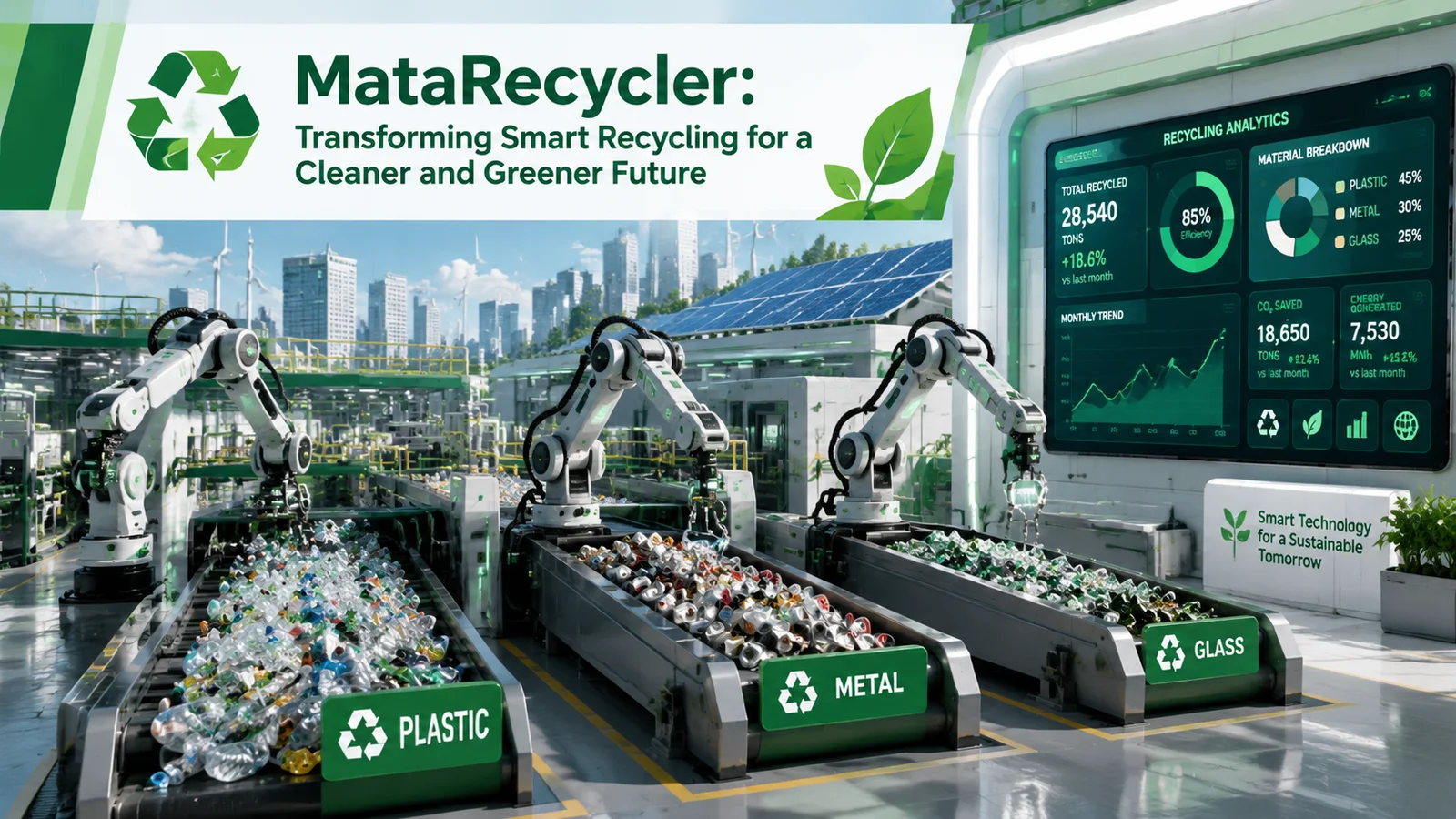
Modern recycling operations can use automated conveyor systems, optical sensors, computer vision, and robotic equipment to improve material separation.
Artificial intelligence can also help identify different types of waste through image recognition and data analysis. These technologies may allow recycling facilities to distinguish between materials more efficiently.
Smart waste bins and digital monitoring systems are another developing area. Depending on their design, these systems can monitor collection levels, identify certain materials, and help waste management organizations plan collection schedules.
It is important, however, not to confuse these established technological developments with unverified claims about a particular product. Although some online descriptions associate MataRecycler with artificial intelligence and automated sorting, there is insufficient independently verified information to establish that MataRecycler itself manufactures or operates such equipment.
The broader technology remains an important part of the future of sustainable waste management.
Benefits of Responsible Recycling
Recycling provides several environmental, economic, and social benefits.
Reducing Landfill Waste
One of the most recognizable benefits of recycling is reducing the amount of suitable waste sent to landfills.
When recyclable materials are collected and processed correctly, fewer reusable resources need to be discarded. This can help reduce pressure on existing waste disposal facilities.
Conserving Natural Resources
Manufacturing products from recycled materials can reduce demand for newly extracted resources.
For example, recovering metals can reduce the need for additional mining, while recycling paper can help lower demand for fresh wood pulp.
The exact environmental benefits depend on the material and recycling process involved.
Supporting Energy Efficiency
Some recycling processes require less energy than producing materials from newly extracted resources.
Aluminum recycling is a well-known example because producing aluminum from recycled material generally requires considerably less energy than producing it from raw bauxite.
Energy savings vary across different materials and facilities, but they demonstrate why material recovery can be valuable.
Creating Economic Opportunities
The recycling industry supports employment in collection, transportation, sorting, processing, equipment maintenance, and manufacturing.
It can also create opportunities for businesses that develop reusable products and sustainable packaging solutions.
As environmental awareness increases, responsible waste management may become an increasingly important part of local and international economic activity.
Encouraging Environmental Awareness
Perhaps one of the most valuable benefits of recycling education is its ability to influence everyday behavior.
When people understand what happens to discarded materials, they may become more careful about consumption, waste separation, and product reuse.
Educational platforms such as MataRecycler contribute to this wider discussion by making sustainability information easier to explore.
How Individuals Can Apply MataRecycler’s Environmental Message
People do not need to operate a recycling facility to support environmental protection. Many useful changes can begin at home.
First, create separate containers for recyclable and general waste. This makes it easier to identify useful materials before they become mixed with unsuitable rubbish.
Second, learn about local recycling services. Collection rules can differ between cities and municipalities, so understanding accepted materials is essential.
Third, reduce unnecessary packaging. Choosing products with less packaging and carrying reusable shopping bags can help prevent waste.
Fourth, repair and reuse items whenever practical. A damaged chair, old storage container, or piece of clothing may still have value.
Fifth, dispose of electronic products responsibly. Batteries and unwanted electronics should be taken to suitable collection points.
Finally, share reliable environmental information with family members, colleagues, and friends. Recycling becomes more effective when entire communities participate.
These habits reflect the general environmental principles associated with MataRecycler and demonstrate how sustainability can become part of ordinary life.
Challenges Facing the Recycling Industry
Despite its benefits, recycling is not without difficulties.
Contamination is one of the biggest challenges. When food, liquids, chemicals, or unsuitable materials enter recycling collections, they can reduce the quality of recovered materials and complicate processing.
Another challenge is the lack of consistent recycling infrastructure. Some communities have convenient collection programs, while others have limited access to suitable facilities.
Plastic recycling also presents technical difficulties. Different plastic types cannot always be processed together, and some products contain mixed materials that are difficult to separate.
Public awareness is another important issue. People may misunderstand recycling symbols or assume that every item placed in a recycling container will automatically be recycled.
Economic conditions can also influence recycling operations. Processing costs, transportation expenses, material prices, and demand for recycled products all affect whether certain recycling activities are financially practical.
Addressing these challenges requires cooperation between governments, businesses, waste management organizations, and ordinary consumers.
Is MataRecycler an Actual Recycling Machine or an Informational Platform?
This is an important question because different online articles describe MataRecycler in different ways.
The clearest available description comes from MataRecycler’s own website, which presents the platform as an educational resource focused on recycling information, sustainable practices, and environmental awareness.
Some third-party articles describe MataRecycler as an advanced recycling system involving artificial intelligence, sensors, smart bins, or automated sorting equipment.
However, these descriptions should be approached carefully. There is not enough independently verified technical documentation to confirm a specific commercial machine, manufacturer, or operating system under the MataRecycler name.
Therefore, the most responsible way to understand MataRecycler is as a recycling and sustainability-related informational platform rather than a confirmed manufacturer of advanced recycling machinery.
This distinction helps readers avoid confusing general developments in recycling technology with the capabilities of a particular website or product.
The Future of Recycling and Environmental Sustainability
The future of recycling will likely involve a combination of better technology, improved public education, stronger collection systems, and more responsible product design.
Automated sorting equipment may help facilities recover materials more effectively. Digital tracking systems could improve waste collection planning, while better product labeling could help consumers identify suitable recycling options.
Businesses may also continue exploring reusable packaging, recyclable manufacturing materials, and product designs that make repairs easier.
At the community level, environmental education will remain essential. Technology alone cannot solve waste management problems if people continue producing unnecessary waste or using recycling facilities incorrectly.
This is why platforms focused on recycling information have an important educational role. By making environmental subjects easier to understand, MataRecycler connects with a larger movement toward responsible resource management.
Long-term progress will depend on consistent participation from individuals, organizations, and governments.
Frequently Asked Questions About MataRecycler
1. What is MataRecycler?
MataRecycler is the name of an online platform associated with recycling education, sustainability, waste management, and environmental awareness. Its website provides information intended to help readers understand responsible recycling practices.
2. What is the main purpose of MataRecycler?
Its stated purpose is to promote responsible recycling, encourage sustainable habits, and make environmental information accessible to individuals, businesses, and communities.
3. Is MataRecycler an AI-powered recycling machine?
Some third-party websites describe it as an AI-powered recycling system. However, a specific commercial machine or operating technology under the MataRecycler name has not been independently verified.
4. What materials can be recycled?
Common recyclable materials include paper, cardboard, glass, aluminum, steel, and certain plastics. Electronic waste can also be recycled through specialized facilities.
5. How does recycling help the environment?
Recycling can reduce landfill waste, conserve natural resources, recover useful materials, and lower energy consumption for certain manufacturing processes.
6. Can households benefit from recycling information?
Yes. Educational information can help households separate waste correctly, reduce unnecessary purchases, reuse products, and understand local recycling requirements.
7. Why is recycling technology important?
Modern recycling technology can improve material identification, sorting, collection, and processing. Automated equipment and digital monitoring may also help facilities operate more efficiently.
Conclusion
MataRecycler represents an interesting topic within the wider discussion of recycling, environmental awareness, and sustainable living. Its online platform focuses on making recycling information accessible while encouraging individuals and organizations to adopt more responsible waste management practices.
Although some online articles associate the name with advanced artificial intelligence and automated recycling machinery, those specific product claims remain unverified. Understanding this distinction is important for anyone researching the topic.
The broader message behind MataRecycler is worth exploring: protecting the environment requires informed decisions, responsible consumption, and better management of valuable resources.
Whether someone starts by separating household rubbish, reusing everyday products, or learning about electronic waste disposal, every responsible action can contribute to a more sustainable future. Recycling may not solve every environmental problem, but when supported by effective infrastructure and public participation, it remains an important part of building cleaner and healthier communities.