
Zuhio Keyword Count Checker Complete Guide to 7 Useful SEO Features
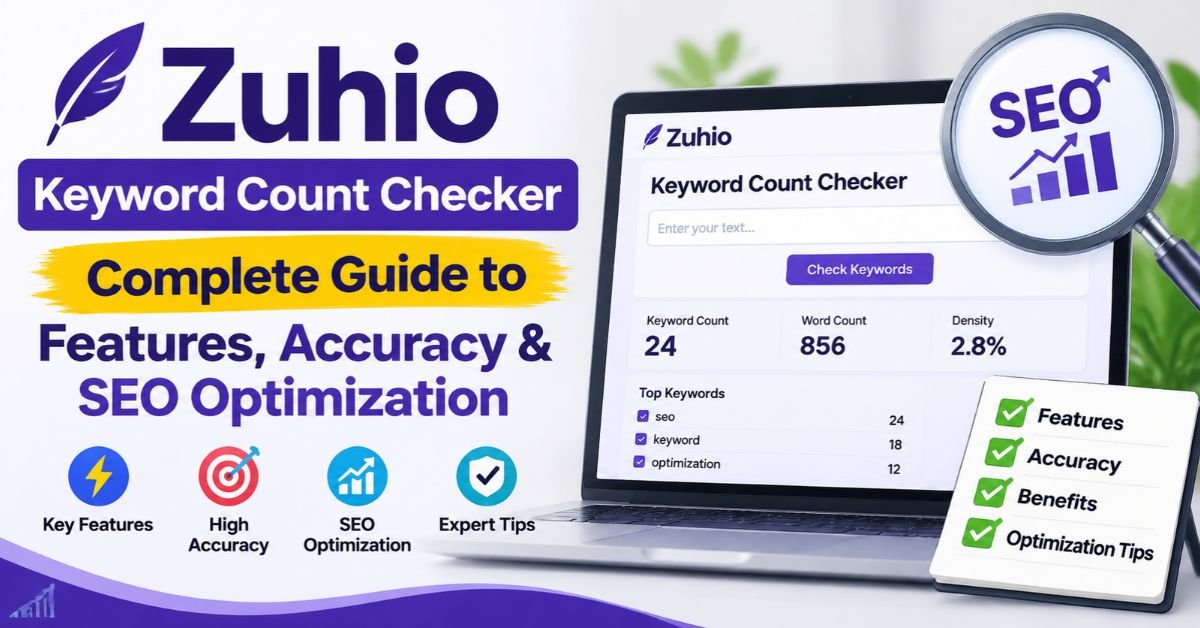
You write a great draft. Then a small doubt creeps in. Did you use your main phrase too little? Did you use it too often? That’s where the Zuhio Keyword Count Checker helps. It’s a simple online keyword counter that gives you a clear number in seconds.
This guide covers the whole picture. You’ll learn how the Zuhio Keyword Count Checker works and where it shines. You’ll also see its limits, and how to use keyword frequency without hurting your writing. Grab a coffee. Let’s get started.
What Is the Zuhio Keyword Count Checker?
The Zuhio Keyword Count Checker is a free keyword counter that runs in your browser. You paste your text and type a target keyword. The tool then shows how often that term appears. It also shows your keyword density percentage and your total word count. Think of it as a keyword frequency checker that works like a measuring cup for your content.
Zuhio built it as a single-purpose tool. It isn’t a full SEO content analyzer with dashboards and reports. That’s its strength. There’s nothing to install and nothing to learn. If you want a fast keyword count checker between drafting and publishing, this tool fits the job. Writers who work on tight deadlines often prefer this kind of online SEO checker.
Why Keyword Counting Matters for SEO
Search engine optimization starts with clear topic signals. Search engines read your page to learn what it’s about. Your primary keyword helps them make that link. If the term barely appears, the page may look off-topic. A keyword usage tracker shows you this gap fast. That’s why how to count keywords in an article is such a common question among new writers.
Too much repetition causes the opposite problem. Google treats keyword stuffing as spam. Readers hate it too. Modern ranking systems care about semantic relevance and search intent. So a count isn’t a magic formula. It’s a health check. Use keyword counting for blog posts the way a driver uses a dashboard gauge. Glance at it. Don’t stare at it.
| Problem | What It Looks Like | What the Count Shows |
| Underuse | Topic feels vague | Very low keyword frequency |
| Balanced use | Reads smoothly | Moderate, steady count |
| Overuse | Sounds robotic | Very high keyword density percentage |
How Does the Zuhio Keyword Count Checker Work?
The process is simple. You paste your text into the box. You type the word or phrase you want to track. The text keyword analyzer then scans every line. It counts each match and measures the full length of your text. Results appear almost instantly. This speed makes it a handy SEO writing tool at any stage of drafting.
The math behind it is easy too. Here’s the formula for how to calculate keyword density: divide the keyword count by the total word count. Then multiply by 100. Say your keyword appears 6 times in a 600-word post. Six divided by 600 is 0.01. That’s a 1% density. You can check any keyword density checker result by hand with this method.
| Step | What You Do | What the Tool Returns |
| Input | Paste text and enter a keyword | Nothing yet |
| Process | The tool scans for matches | Internal count |
| Output | You read the numbers | Count, density, word total |
Key Features of the Zuhio Keyword Count Checker
This tool keeps its feature list short on purpose. Each feature solves one clear problem. Together they make a lean keyword analysis tool for everyday use. You get counts, percentages and length data in one screen. No extra menus get in your way. That keeps your content editing smooth and quick.
A short feature list also means fewer mistakes. You won’t dig through tabs to find a number. You also won’t pay for tools you never open. Still, remember the scope. It handles keyword frequency analysis. It doesn’t do backlinks, audits or research. The six features below show exactly what you get.
Instant Keyword Counting and Frequency Analysis
The core feature is speed. Paste your draft and the keyword frequency checker returns an exact number right away. That beats eyeballing a long page. Manual scanning misses repeats hidden in the middle of paragraphs. A tool never gets tired. This makes keyword frequency easy to track across a full 3,000-word article.
Keyword Density Percentage Calculation
Raw counts can mislead you. Ten mentions in 200 words is heavy. Ten mentions in 2,000 words is light. The keyword density percentage fixes this by showing the share of your text. It’s the most useful number for keyword optimization. Many writers use it as a quick keyword repetition checker too. A sudden jump tells you a phrase is repeating too often.
Total Word Count Display
The tool also shows your total word count. This bonus matters more than it seems. Clients often set length rules. Editors want articles inside a fixed range. A built-in word count checker saves you a second tool. It also keeps your density math honest, since density depends on length.
Exact Phrase and Long-Tail Keyword Matching
Single words are easy. Phrases matter more today. Exact phrase matching lets you track terms like “free keyword counter for bloggers.” That makes the tool a handy long-tail keyword checker. Long-tail search queries are longer and more specific. They often show clearer intent. One note applies. Exact keyword matching may treat plurals and variations as separate terms. Test a short sample to see how it behaves.
Multiple Keyword Analysis
A strong article uses more than one term. You need a primary keyword and several secondary keywords. Run the check once for each term. This works like a keyword distribution checker across your whole piece. If the tool shows several fields on its page, even better. Either way you’ll see how your related search terms share the space.
Simple Interface With No Account Required
Friction kills good habits. Sign-up forms and downloads make people skip checks. Based on the tool’s public description, the Zuhio keyword checker needs no account. You open the page and start. That’s perfect for a content keyword counter you use daily. Always confirm the current terms on the live page.
How to Use the Zuhio Keyword Count Checker Step by Step
Good habits beat random checks. A fixed routine gives you the same quality every time. The steps below show how to use Zuhio Keyword Count Checker from start to finish. They take about two minutes. They also work for any SEO keyword counting tool you may try later. Follow them in order for the best results.
Picture the flow as six small boxes. Prepare, plan, enter, paste, run and review. Each box feeds the next one. Skip one and the result gets shaky. For example, a messy draft gives a messy count. Treat the routine like a recipe. Good inputs make good output.
Prepare Your Content
Start with a finished draft. Remove menu text, ad copy and anything else that isn’t part of the article. Stray text changes your total word count. That shifts your keyword density percentage too. A clean base gives clean numbers. Do a quick round of content editing first. Then you’ll check the version you actually plan to publish.
Identify Your Primary and Secondary Keywords
Pick one main focus term. That’s your primary keyword. Then choose two or three supporting terms. Those are your secondary keywords. This is the heart of any primary and secondary keyword strategy. Base your picks on keyword research and content planning. Think about what your reader would type into a search box.
Enter Your Target Keywords
Type each target keyword exactly as you plan to use it. A phrase like “keyword density checker” is not the same as “keyword density.” Spelling counts too. Start with your main term. Add the others one by one. This step controls keyword matching, so take your time.
Paste Your Article or Content
Paste the full text. Don’t paste only one section. A partial paste gives a false density. Include headings, intro and conclusion. This is the best way to check keyword density in an article. It also works for keyword count checker for long-form articles, even at several thousand words.
Run the Keyword Analysis
Click the button and wait a moment. The tool runs a quick content analysis and shows the results. Don’t be alarmed by the speed. The task is simple for a computer. If the number looks odd, check your spelling. A small typo in the keyword box is the most common cause of a zero count.
Step 6: Review and Interpret the Results
Read all three numbers together. Look at the count first. Then look at the density. Then check the length. Ask yourself one question. Does the text still sound natural? If not, edit by hand. Swap a repeat for a synonym. Re-run the check afterward. That’s how you analyze keyword usage before publishing.
Keyword Count vs Keyword Density Understanding the Difference
These two terms sound alike. They aren’t the same. Keyword count is the raw number of times a term appears. Keyword density is that number as a share of your text. One is a tally. The other is a ratio. Both come from keyword frequency analysis, but they answer different questions.
Why does the difference matter? Length changes everything. A count of 12 works in a long guide. The same count may be too much in a short post. Density adds context. That’s why most keyword density checker tools show both. Use the table below as a quick memory aid.
| Metric | What It Shows | Example |
| Keyword count | Total appearances | 12 mentions |
| Keyword density | Share of all words | 12 in 1,200 words = 1% |
| Total word count | Length of the text | 1,200 words |
What Is a Good Keyword Density for SEO?
Writers love asking this one. The honest answer is simple. No official number exists. Many guides suggest a range of roughly 1% to 2%. That’s a handy starting point. It isn’t a rule. Google’s helpful content guidance tells creators to write for people first. So the best keyword density for SEO is the one that reads naturally.
People also ask how many times should a keyword appear. The answer depends on length. A 500-word post might use a term three to five times. A 3,000-word guide might use it 20 to 30 times. Use these figures as soft guardrails. Let content readability make the final call. A page that flows well often earns more organic search traffic than a page tuned to a number.
Why Keyword Stuffing Can Harm Your Content
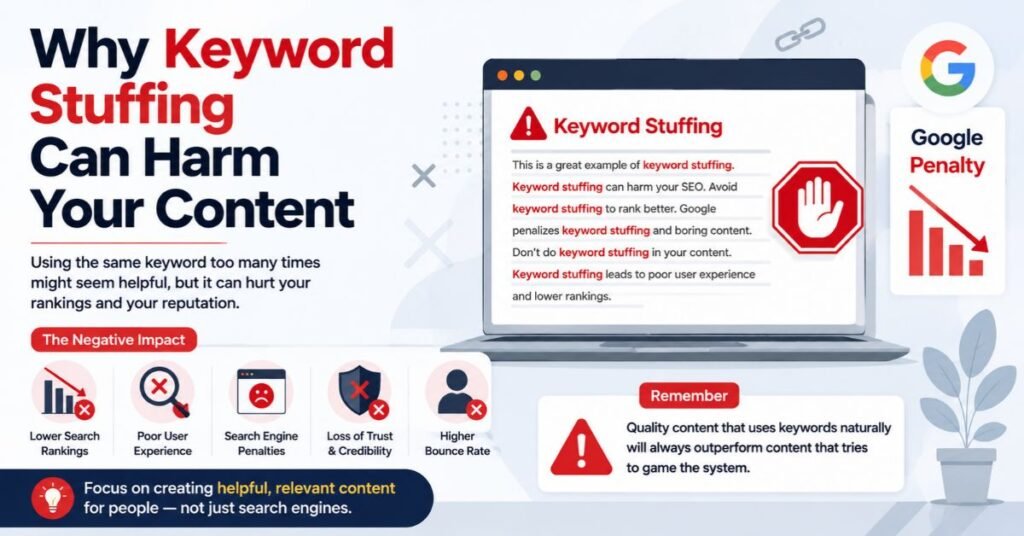
Keyword stuffing means packing a phrase into a page too many times. Here’s a quick example. A stuffed line reads: “Our keyword checker is the best keyword checker, so use our keyword checker today.” A natural line reads: “Our tool counts your terms fast, so you can edit with confidence.” The second line sounds human. The first one sounds like a broken record.
The damage goes beyond style. Readers lose trust and leave quickly. That hurts user experience and weakens content quality. Search systems may also treat the page as spam. That can drop your search engine rankings and reduce search visibility. If you wonder how to avoid keyword stuffing, the fix is easy. Use synonyms. Add related search terms. Run a keyword repetition checker before you publish.
Who Should Use the Zuhio Keyword Count Checker?
This tool suits a wide range of people. Anyone who writes for search can gain from it. That includes solo bloggers and busy agency teams. It’s an easy add-on to your set of SEO writing tools. Heavy technical work needs bigger platforms. For daily drafting, though, a simple content optimization tool is often enough.
Different users want different things. Some need speed. Others need low cost. A few need consistency across many writers. The groups below show how each type can use the Zuhio keyword checker in a practical way.
SEO Writers and Content Creators
SEO writers juggle deadlines and client rules. A quick keyword count checker helps them confirm each brief was followed. They can show a client the exact count and density. That builds trust. It also cuts revision rounds. One check during drafting beats three rewrites afterward.
Bloggers and Website Owners
Solo bloggers rarely have big budgets. A free keyword counter gives them a no-cost safety net. They can check each post before it goes live. Over time they build better instincts for natural keyword placement. That habit supports steady SEO performance without extra spending.
Digital Marketers and SEO Professionals
Experts already use large suites. They still need small, fast checks. This tool works as a quick sanity test next to advanced platforms. Marketers can spot-check landing pages in seconds. It’s a handy keyword analysis tool when a full report would be overkill.
Content Editors and Publishers
Editors review work from many writers. Each writer has a different style. A shared keyword distribution checker gives everyone the same yardstick. Editors can flag overuse without arguing about taste. That makes keyword tracking for content editors smooth and fair.
Students and Researchers
Students write essays and papers on set topics. They can use the tool to check term frequency. It also reveals accidental repetition. Researchers can compare drafts and see how focus shifts. It’s a simple text keyword analyzer for academic work, with no setup needed.
Benefits of Using the Zuhio Keyword Count Checker
The biggest benefit is clarity. You see your numbers instead of guessing. That alone saves stress. Add speed and zero cost, and the value is clear. This SEO content analyzer won’t write the article for you. It will make your on-page SEO checks faster and calmer.
Benefits also build up over time. Each check teaches you something. You learn how your writing style handles key terms. You spot patterns in your drafts. Soon you need the tool less for basic balance and more for final polish. The four benefits below show where the gains are biggest.
Saves Time During Content Optimization
Manual counting is slow and dull. Even Ctrl+F gets clumsy with long phrases. A keyword frequency checker does the job in seconds. That frees time for real keyword optimization work, such as improving headlines and examples. Many editors say a quick tool makes final checks less painful. Faster checks also mean you’ll actually do them.
Helps Maintain Natural Keyword Usage
Balance is hard to judge by feel. The tool turns a vague worry into a number. When the keyword density percentage looks high, you can trim. When it looks low, you can add. This keeps natural keyword placement on track. It also supports how to improve content readability, because fewer repeats mean smoother reading.
Improves Content Readability
Repeated phrases tire the reader’s eye. Spotting them early helps you vary your language. Swap in a pronoun. Use a synonym. Add a related search term. Each change makes the page lighter to read. Better content readability keeps people on the page longer. That’s a quiet but real win for SEO performance.
Supports Faster Editing and Draft Comparisons
Writers rarely publish the first draft. You might write version one and then revise. Run both through the same keyword usage tracker. Compare the counts side by side. You’ll see whether your edits improved balance. This kind of content analysis takes minutes, not hours.
What the Zuhio Keyword Count Checker Cannot Do
Every tool has limits. Knowing them saves you from false hopes. This one measures how often a term appears in text you provide. That’s all. It isn’t a full search engine optimization suite. Think of it as a ruler. A ruler measures length well. It can’t tell you whether the table is any good.
Honest limits build trust. They also guide smart tool choices. Use this tool for keyword frequency analysis. Use other tools for research, audits and links. The three limits below matter most. Keep them in mind each time you check a draft.
Does Not Guarantee Higher Search Rankings
Rankings depend on many signals. Links, speed, trust, freshness and search intent all play a part. A perfect density can’t fix weak content. No SEO keyword counting tool can promise page one. Be wary of any site that claims otherwise. Use the checker to avoid errors. Don’t use it to chase miracles.
Cannot Replace Complete SEO Analysis
The checker doesn’t show backlinks. It doesn’t test page speed or mobile layout. It gives no search volume or competitor data. Those jobs belong to larger platforms. A complete online SEO checker or suite covers them. Pair the two types for the best view of your SEO performance.
Does Not Fully Evaluate Search Intent or Content Quality
A tool can count words. It can’t judge whether your page answers the reader’s question. You can hit a perfect density and still miss the point. Content quality depends on depth, accuracy and clear writing. Always ask what the searcher really wants. Then check that your page delivers it.
How to Build an Effective SEO Keyword List
A count only helps when the targets are right. That’s why keyword research and content planning come first. A good list gives each article a clear focus. It also prevents two posts from fighting for the same term. Build your list before you write. Then use the checker to confirm you followed it.
Think of your list as a pyramid. One main term sits at the top. Supporting terms fill the middle. Specific phrases and questions form the base. This structure supports semantic SEO and related keywords. The table below shows how the layers fit together.
| Keyword Type | Purpose | Example |
| Primary | Main topic of the page | Zuhio Keyword Count Checker |
| Secondary | Adds topic coverage | keyword density checker |
| Long-tail | Targets specific needs | free keyword counter for bloggers |
| Question-based | Answers direct queries | is Zuhio Keyword Count Checker free |
Primary Keywords
Pick one primary keyword per article. It should match the main topic and the reader’s goal. Place it in the title, intro and at least one heading. Use it again in the conclusion. This is the core of primary and secondary keyword strategy. Keep the rest of the list in support of this one term.
Secondary and Related Keywords
Secondary keywords widen your coverage. They show search engines that you cover the whole topic. Terms like “word count checker” or “keyword analysis tool” fit here. They also support semantic relevance. Use them in headings and body text. Don’t force them. Let the sentence decide.
Long-Tail Keywords
Long-tail search queries are longer and more specific. People who type them often know what they need. Competition is usually lower too. A long-tail keyword checker helps you confirm these phrases appear where they should. Examples include “best way to check keyword density in an article.” Specific phrases like this can bring focused organic search traffic.
Question-Based Keywords
Many searchers type full questions. They ask “how,” “what” and “why.” These queries fit FAQ sections well. They also suit voice search and AI answers. Collect real questions from forums and search suggestions. Answer each one in a short, clear paragraph. This builds trust and boosts search visibility.
Best Practices for Using Keyword Counts Without Hurting Readability

Numbers should guide you. They shouldn’t boss you around. The best SEO writing best practices put the reader first. Use the checker after you write, not while you write. Draft freely. Then measure. Then polish. This order keeps your voice natural and your content optimization smart.
Pair the checker with a readability pass too. Read your draft out loud. Does it sound like a real person? If a phrase feels clunky, change it. Then re-run the keyword density checker. This two-step loop makes SEO content optimization techniques feel simple. The four habits below make it even easier.
See Also: Business RobTheCoins 12 Proven Tips and Growth Strategies for 2026
Focus on Natural Keyword Placement
Place each term where it fits the sentence. Don’t squeeze it in. Good spots include the first 100 words, a few headings and the final paragraph. This shows the importance of keyword placement without hurting flow. A keyword that fits feels invisible to the reader. A forced one sticks out like a sore thumb.
Use Related Terms and Semantic Keywords
Variety makes writing richer. Use synonyms and related search terms around your main phrase. For example, write “keyword counter,” “frequency tool” and “density calculator” in different spots. This builds semantic relevance and keeps keyword matching from feeling repetitive. It also helps with keyword analysis for long-form content, where repetition creeps in fast.
Check Keyword Usage in Important Sections
Not every part of a page carries equal weight. Titles, intros, subheadings and conclusions matter most. Use a keyword distribution checker mindset. Make sure your target keyword shows up across the full article. Don’t bunch it in one block. Even keyword distribution throughout an article helps both readers and search systems.
Review Your Final Draft After Editing
Edits change counts. Cut a paragraph and your density shifts. Add an example and it shifts again. Run one last check after your final edit. This is how you analyze keyword usage before publishing. It takes thirty seconds. It also catches last-minute slips, like a deleted heading.
Common Mistakes to Avoid When Using a Keyword Count Checker
Most mistakes come from trusting numbers too much. A tool gives data. You supply judgment. When writers swap one for the other, quality drops. The checker can’t tell you why a page feels dull. It can only show how often a word appears. Keep that role clear in your mind.
A quick checklist helps. Screenshot the five mistakes below and keep them near your desk. Each one is easy to fix once you spot it. Avoid them and your SEO performance will thank you.
Treating Keyword Density as a Ranking Formula
Some writers think a fixed percentage guarantees success. It doesn’t. Density is a signal, not a recipe. Search systems weigh hundreds of factors. Use the number as a rough guide only. A natural 0.8% can beat a forced 2%.
Repeating Keywords Unnecessarily
Repeating your exact phrase in every paragraph is a trap. It lowers content readability and risks keyword stuffing. Swap repeats for pronouns, synonyms or short descriptions. Run the keyword repetition checker step again after you edit. Aim for smooth, not stuffed.
Ignoring Search Intent
A page can use the right words and still miss the mark. Maybe the reader wanted a how-to and got a sales pitch. That mismatch hurts rankings and trust. Study the top results for your term. Note what format they use. Then match the intent with better detail.
Checking Only the Primary Keyword
Many writers stop at the main term. That leaves gaps. Check your secondary keywords too. They show how deep your topic coverage runs. A keyword analysis tool is most useful when you run it more than once per draft. Cover the whole list.
Optimizing for Numbers Instead of Readers
Readers decide if your page succeeds. They share it, link to it and return to it. A perfect count means little if the text bores them. Always edit for people first. Then use the Zuhio keyword checker as a final safety net.
Zuhio Keyword Count Checker vs. Other SEO Tools
Not all tools aim for the same job. Some are tiny and focused. Others are huge platforms with dozens of reports. The Zuhio Keyword Count Checker sits at the small end. Big suites like Ahrefs, Semrush and Yoast SEO cover far more ground. They also cost more and take longer to learn. Neither type is better. They simply serve different needs.
Smart writers often use both. They run quick checks with a small content optimization tool. They run deeper research with a full suite. The table below shows the main differences. Use it to pick the right tool for each task.
| Tool Type | Best For | Limits | Cost |
| Zuhio-style keyword counter | Quick frequency and density checks | No research or audits | Free |
| WordPress SEO plugin | Live checks inside the editor | Tied to one platform | Free and paid tiers |
| Full SEO suite | Research, backlinks, audits | Learning curve | Paid |
Keyword Counting vs. Manual Search
Ctrl+F works for short pages. It gets clumsy fast on long drafts. You must count highlights by eye. Multi-word phrases make it worse. Debates around manual keyword counting vs online tools usually end the same way. Tools win on speed and accuracy. A keyword frequency checker also gives you density, which Ctrl+F can’t.
Keyword Counters vs. Complete SEO Platforms
A counter does one thing well. A platform does many things at once. Counters are free and fast. Platforms are deep and costly. If you only need a count, a platform is overkill. If you need research and audits, a counter won’t be enough. Match the tool to the task.
When Should You Use a Dedicated Keyword Analysis Tool?
Move to a dedicated suite when you need search volume or difficulty scores. You’ll also want one for competitor comparisons and rank tracking. Those details guide strategy. A simple counter can’t supply them. Many teams start with a free SEO writing tool and upgrade as projects grow.
See Also: Tech Almawadahit Com Complete Guide, Features, Trends & Insights 2026
Is the Zuhio Keyword Count Checker Accurate and Reliable?
For its narrow task the tool is generally reliable. It counts matches in the text you paste. The math is straightforward. If you submit the right text, the numbers should be right. Accuracy depends on your inputs. A typo in the keyword box gives a wrong count. A messy paste changes the total word count. Clean inputs lead to clean outputs.
Here’s a quick self-test. Write a short paragraph with a keyword you know appears four times. Paste it in and run the check. If the tool reports four, you can trust it for similar text. Also test plurals and capital letters. This shows how exact phrase matching behaves. It takes one minute and removes all doubt about whether Zuhio Keyword Count Checker is accurate.
Is the Zuhio Keyword Count Checker Free to Use?
Based on its public description, the tool is free and browser-based. You don’t need to pay to check keyword frequency or density. It also appears to need no account. That makes it a true free online keyword counting tool for SEO writers. Still, tools can change their terms. Check the live page for current details before you rely on it for client work.
Free tools raise fair questions about privacy and limits. Avoid pasting private drafts, client secrets or unpublished data into any online tool. Read the site’s privacy page if you’re unsure. Some free tools also cap text length. Test with a long article to see how yours behaves. Good habits keep a free keyword counter both useful and safe.
See Also: 62+ Robthecoins Investing Essential Strategies, Risks & Smart Beginner Tips
Can Keyword Counting Help With AI Search and Modern SEO?
Search is changing fast. AI-driven results now summarize answers at the top of the page. These systems favor clear topic coverage, strong entities and direct answers. They care less about raw repetition. So content optimization for AI search means writing clearly, defining terms and answering questions fully. That’s a shift from the old keyword-heavy style.
Counting still has a role. It makes sure your core terms are present and in balance. Then you can spend your energy on depth and clarity. Use the Zuhio keyword checker to protect against thin or stuffed text. Use your own expertise to add examples, data and fresh insight. That mix supports how to optimize articles for Google and for AI answers. It’s also a solid route to better search engine rankings over time.
Counts keep you balanced. Quality keeps you ranked.
Illustrative case study: Imagine a travel blogger with a 1,500-word post. Her main phrase appears 38 times. That’s about 2.5% density, and the draft sounds stiff. She runs the keyword count checker and spots the problem. She replaces 15 repeats with synonyms and short descriptions. Density falls to about 1.5%. The post now reads smoothly. This is a hypothetical example, but it shows how a small edit improves content quality.
Frequently Asked Questions
What Is the Zuhio Keyword Count Checker?
It’s a free, browser-based SEO keyword counting tool. It shows how often a word or phrase appears in your text. It also shows keyword density percentage and total word count. Writers use it to check balance before publishing.
Can I Use Zuhio Keyword Count Checker for Multiple Keywords?
Yes. You can check one term at a time and repeat the process for each secondary keyword. This lets you see how every term is spread through the article. It’s a simple way to do keyword analysis for long-form content. If the page shows several fields, you can enter more than one at once.
Is Zuhio Keyword Count Checker Free?
Based on its public description, yes. It’s a free tool that runs in your browser. Always confirm the current terms on the official page. Free access can change over time.
Do I Need an Account to Use the Tool?
It doesn’t appear to require one. You open the page and paste your text. That keeps the workflow fast. Check the live site to confirm for your region and device.
Can It Analyze Long-Tail Keywords?
Yes. You can enter full phrases, not just single words. Exact phrase matching works best when you type the phrase exactly as it appears in your text. Test plurals and variations to see how the tool treats them.
What Is the Ideal Keyword Density for an Article?
No official number exists. Many guides suggest about 1% to 2% as a loose range. Let natural keyword placement and readability decide. A smooth page beats a perfect percentage.
Can Keyword Counting Guarantee Better Google Rankings?
No. Rankings depend on many factors, including links, speed, trust and search intent. Counting only helps you avoid under- or overuse. It’s one small part of search engine optimization.
Should I Check Keyword Density Before Publishing an Article?
Yes. A quick check takes seconds and can catch obvious problems. Run it after your final edit. It’s a smart last step in any routine for how to analyze keyword usage before publishing.
Final Thoughts
The Zuhio Keyword Count Checker does one job and does it well. It shows your keyword frequency, keyword density percentage and total word count in seconds. For bloggers, editors and marketers, that’s a handy safety net. It saves time and supports cleaner on-page SEO.
Remember the big picture. Count for balance. Write for people. Pair the tool with research, audits and strong content quality. Then your SEO performance can grow on solid ground. Try it on your next draft. Run the check, edit with care, and hit publish with confidence.