
Startup Booted: Meaning, Benefits, Challenges, and How to Build a Successful Business
Starting a business is an exciting journey, but turning an idea into a successful company requires more than enthusiasm. Entrepreneurs need a clear vision, financial planning, determination, and the ability to make smart decisions. The term startup booted is becoming an interesting topic for people who want to understand startup development, business independence, and the challenges of building a company from the ground up.
Whether someone is preparing to launch a new business, exploring entrepreneurship, or learning about startup culture, understanding the concept of startup booted can provide useful insights. It highlights the importance of taking action, developing practical solutions, and creating a business that can grow over time.
In this article, we explore what startup booted means, how the concept relates to modern entrepreneurship, its potential advantages, common challenges, and the strategies entrepreneurs can use to build sustainable businesses.
What Does Startup Booted Mean?
The phrase startup booted can be understood in different ways depending on the context. In technology, booting generally refers to starting or launching a computer system or software environment. In business discussions, however, the phrase may describe a startup that has been launched and is beginning its journey toward becoming an established company.
It can also be associated with the concept of bootstrapping. Bootstrapping means building a business primarily through personal savings, early customer revenue, and carefully managed resources rather than depending heavily on outside investors.
A booted startup may therefore represent a business that has moved beyond the planning stage and started operating. The founders begin testing their ideas, attracting customers, improving products, and identifying opportunities for growth.
Understanding this distinction is important because launching a business and building a financially independent startup are related but different achievements.
The Importance of Startup Booted in Modern Entrepreneurship
The startup environment has changed significantly over the years. Entrepreneurs no longer need enormous offices, large teams, or expensive equipment to introduce a new product. Digital tools and online platforms have made it easier to establish businesses with limited resources.
The startup booted concept reflects the importance of getting started and turning an idea into something practical. Many entrepreneurs spend months discussing business opportunities without taking meaningful action. However, progress often begins when they create a basic product, test customer interest, and learn from real experiences.
A startup becomes more promising when its founders understand the market and respond to actual customer needs. Instead of focusing entirely on ambitious plans, successful entrepreneurs concentrate on achievable goals.
This approach encourages innovation, responsibility, and continuous improvement.
How a Startup Gets Booted
Launching a startup involves several important steps. Although every business has its own requirements, most successful startups follow a similar process.
1. Developing a Business Idea
Every startup begins with an idea. However, not every idea becomes a successful business. Entrepreneurs must identify a problem that people genuinely want to solve.
For example, a founder might notice that small businesses struggle to manage customer appointments. This observation could inspire the development of an affordable scheduling application.
The best business ideas often come from everyday problems. Entrepreneurs should pay attention to customer frustrations, changing market demands, and opportunities to improve existing services.
Before investing significant money, founders should research their ideas and determine whether there is enough demand to support a business.
2. Conducting Market Research
Market research helps entrepreneurs understand their potential customers and competitors. It provides information about customer preferences, purchasing behavior, industry trends, and market opportunities.
A startup should identify its target audience before developing a product. Understanding the intended customers makes it easier to create appropriate features, pricing strategies, and marketing campaigns.
Competitor research is equally important. Founders should examine existing businesses and identify what they do well and where improvements are possible.
This process helps a startup establish a clear position in the marketplace.
3. Creating a Business Plan
A business plan provides direction and helps founders organize their goals. It explains what the company intends to offer, who its customers will be, and how it plans to generate revenue.
A practical business plan should include:
- Business objectives and long-term vision.
- Target customers and market research.
- Products or services offered.
- Marketing and promotional strategies.
- Startup costs and financial estimates.
- Revenue expectations and growth opportunities.
- Potential risks and solutions.
A business plan does not need to be unnecessarily complicated. Its primary purpose is to help entrepreneurs understand their priorities and make informed decisions.
4. Building the First Product
After developing an idea and preparing a plan, entrepreneurs can begin creating their first product or service.
Many startups use a minimum viable product, commonly known as an MVP. An MVP is a basic version of a product that includes enough functionality to solve an important customer problem.
Instead of spending months developing every possible feature, founders release a simpler version and collect feedback.
This strategy reduces unnecessary expenses and helps businesses understand what customers actually value.
5. Launching the Business
The launch stage is when a startup officially begins offering its product or service to customers.
A successful launch requires preparation. Entrepreneurs should ensure that their products work properly, customer support is available, and pricing is understandable.
They should also prepare a marketing strategy to introduce the business to potential customers.
Launching does not guarantee immediate success. It simply marks the beginning of a new phase in which the company must prove its value.
Benefits of the Startup Booted Approach
The startup booted concept offers several potential advantages, particularly for entrepreneurs who want to build businesses with limited resources.
Greater Financial Control
One important advantage of building a startup independently is financial control. Founders who rely on personal savings and business revenue can make decisions without immediately answering to external investors.
They can choose how much money to spend, which products to develop, and when to expand operations.
However, financial independence also creates responsibility. Entrepreneurs must carefully monitor expenses and avoid unnecessary investments.
Freedom to Make Decisions
Independent founders generally have more flexibility when making business decisions.
They can change product features, experiment with marketing strategies, and explore different customer segments without seeking approval from multiple investors.
This flexibility can be especially valuable during the early stages of a startup when market conditions are still uncertain.
Stronger Customer Relationships
Startups that operate with limited resources often depend heavily on their first customers.
This encourages founders to communicate directly with buyers, understand their experiences, and respond to complaints.
Customer relationships can become an important competitive advantage. People are more likely to support businesses that listen to their needs and provide reliable solutions.
Encouragement of Innovation
Limited resources can encourage entrepreneurs to find creative solutions.
Instead of purchasing expensive software or hiring large teams, founders may discover affordable tools and efficient working methods.
This does not mean every financial limitation is beneficial. However, working within a realistic budget can help entrepreneurs develop stronger decision-making skills.
Common Challenges Faced by Booted Startups
Although starting a business can be rewarding, entrepreneurs should understand that the journey involves several difficulties.
Limited Financial Resources
Money is one of the biggest challenges for new businesses. A startup needs funding for product development, marketing, equipment, employees, and daily operations.
When founders depend mainly on personal savings, their financial flexibility may be limited.
Unexpected expenses can create additional pressure. For this reason, entrepreneurs should prepare realistic budgets and maintain emergency funds whenever possible.
They should also prioritize essential expenses rather than spending money on unnecessary services.
Building Brand Awareness
New companies often struggle to attract attention because customers are already familiar with established brands.
A startup must communicate why its product or service deserves consideration.
Consistent branding, useful content, customer reviews, and social media engagement can help improve visibility.
However, building a recognizable brand takes time. Entrepreneurs should focus on delivering a consistent customer experience rather than expecting immediate popularity.
Finding the Right Customers
A product may be technically impressive but still fail if it does not solve a meaningful customer problem.
Identifying the right audience is therefore essential.
Startups should test different marketing approaches and study customer responses. They may discover that a smaller, more specific audience is more interested in their product than a broad market.
Understanding customer needs helps businesses improve their offerings and develop stronger relationships.
Managing Time and Responsibilities
Startup founders frequently handle multiple responsibilities.
They may work on product development, marketing, customer service, financial management, and business planning at the same time.
This workload can become overwhelming, especially when a company has a small team.
Entrepreneurs should establish priorities, use productivity tools, and delegate responsibilities when financially possible.
Good time management helps founders remain focused on important business objectives.
How Technology Supports Startup Booted Businesses
Technology has become an essential part of modern entrepreneurship. It allows small businesses to compete more effectively and manage operations without requiring large investments.
Cloud-Based Software
Cloud-based applications help startups store information, manage projects, and collaborate with team members.
Employees can access important documents from different locations, making remote work more practical.
These tools also reduce the need for expensive physical infrastructure.
Artificial Intelligence
Artificial intelligence is creating new opportunities for startups across different industries.
Businesses can use AI-powered tools to organize information, support customer service, analyze data, and generate initial content ideas.
For example, a small online store might use automated customer support to answer common questions.
However, entrepreneurs should review automated outputs carefully and ensure that technology supports genuine customer needs.
Digital Marketing
Digital marketing allows startups to reach potential customers through search engines, social media, email campaigns, and online advertising.
Search engine optimization is particularly valuable because it helps businesses improve their visibility when people search for relevant products or services.
A well-planned content strategy can attract visitors and establish credibility.
Startups should select marketing channels based on their target audience rather than trying to use every available platform.
E-Commerce Platforms
Online selling platforms make it easier for entrepreneurs to introduce products without opening physical stores.
Businesses can display products, accept payments, manage orders, and communicate with customers through digital systems.
This approach can reduce initial operating costs and provide access to customers in different locations.
Strategies for Building a Successful Startup
A startup needs more than a good idea to achieve sustainable growth. Founders must develop practical strategies and remain adaptable.
Focus on Solving Real Problems
The strongest startups provide solutions that customers genuinely need.
Entrepreneurs should avoid creating products simply because a particular technology is popular.
Instead, they should investigate customer problems and determine whether their proposed solution offers meaningful value.
A business that consistently solves customer problems has a stronger foundation for long-term growth.
Start Small and Expand Gradually
Expanding too quickly can create financial and operational difficulties.
A better strategy is to begin with a manageable product range, a focused audience, and realistic objectives.
Once the company develops stable demand, it can introduce additional products or enter new markets.
Gradual expansion allows founders to learn from experience and reduce unnecessary risks.
Build a Reliable Team
People play an important role in startup development.
Even when a business begins with one founder, it may eventually require employees or professional partners with different skills.
A reliable team can improve productivity, introduce new ideas, and help manage daily operations.
Founders should prioritize communication, responsibility, and shared business goals when building their teams.
Listen to Customer Feedback
Customer feedback provides valuable information about product quality and business performance.
Entrepreneurs should encourage customers to share their experiences through reviews, surveys, and direct communication.
They should also pay attention to repeated complaints because these may reveal problems that require immediate attention.
Using customer feedback to improve products can increase satisfaction and encourage repeat purchases.
Monitor Financial Performance
Financial management is essential for every startup.
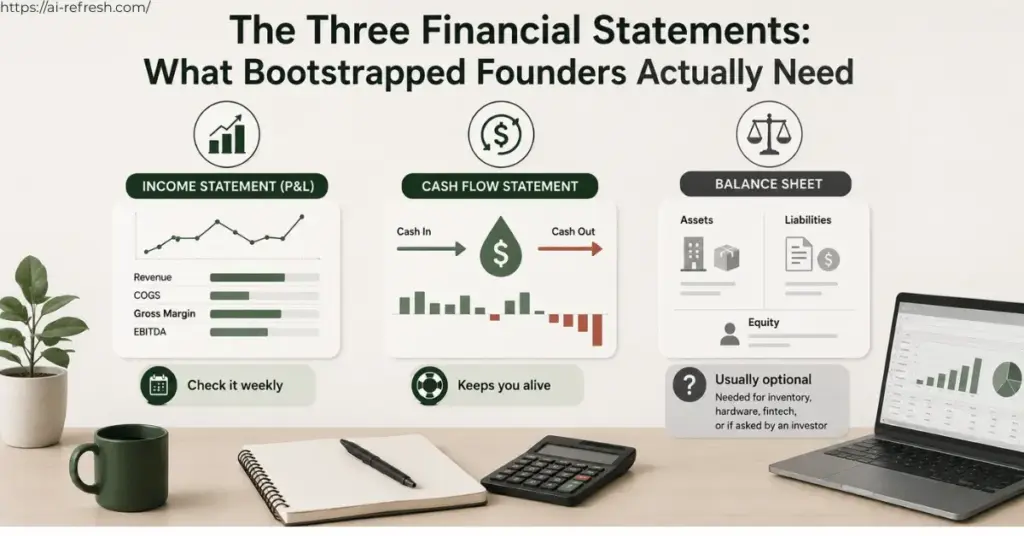
Founders should regularly review revenue, operating expenses, cash flow, and profit margins.
They should understand the difference between generating sales and making a profit.
A business can attract many customers but still experience financial problems if its operating expenses are too high.
Regular financial reviews help entrepreneurs identify problems before they become serious.
The Difference Between Bootstrapping and Traditional Startup Funding
The term startup booted is often discussed alongside bootstrapping, making it useful to understand how independent business financing differs from traditional startup funding.
| Feature | Bootstrapped Startup | Investor-Funded Startup |
|---|---|---|
| Main funding | Personal savings and business revenue | External investment |
| Ownership | Founders generally retain greater ownership | Investors may receive equity |
| Decision-making | Greater founder independence | May involve investor expectations |
| Growth strategy | Often gradual and revenue-focused | Can support faster expansion |
| Financial pressure | Strong focus on available cash | Pressure to meet investment goals |
Neither approach is automatically better.
Bootstrapping may suit entrepreneurs who want greater independence and have a business model that can generate revenue relatively early.
External funding may be more appropriate for businesses that require significant capital, such as advanced technology companies or businesses entering highly competitive markets.
The right decision depends on the company’s objectives, financial requirements, and growth opportunities.
The Future of Startup Booted Businesses
The future of entrepreneurship is likely to provide even more opportunities for small and independent businesses.
Artificial intelligence, automation, cloud computing, and digital payment systems are changing how companies operate.
Entrepreneurs can now access tools that previously required substantial financial investment. These developments make it easier to test business ideas and reach customers.
Remote working is also creating opportunities for founders to build teams without maintaining traditional office spaces.
At the same time, competition is increasing. More businesses are entering digital markets, making product quality, customer service, and brand credibility increasingly important.
Future startups will need to combine technological innovation with practical business management.
The companies that understand their customers, manage resources responsibly, and adapt to changing market conditions will have better opportunities to establish sustainable operations.
Mistakes Entrepreneurs Should Avoid
Starting a business involves experimentation, but certain mistakes can make the journey unnecessarily difficult.
One common mistake is spending too much money before confirming customer demand. Entrepreneurs should validate their ideas before making major investments.
Another problem is ignoring competitors. Even a unique business idea exists within a larger market, and founders need to understand the alternatives available to customers.
Poor financial planning can also create serious difficulties. Businesses should monitor cash flow and avoid taking on expenses they cannot comfortably manage.
Finally, some entrepreneurs become discouraged when results take longer than expected. Building a successful company requires patience, consistency, and the willingness to learn from setbacks.
Avoiding these mistakes does not guarantee success, but it can help founders make more informed decisions.
Frequently Asked Questions About Startup Booted
1. What is startup booted?
Startup booted can describe a startup that has been launched and has started operating. Depending on the context, it may also be associated with bootstrapping, which involves building a business using personal resources and generated revenue.
2. Is startup booted the same as bootstrapping?
Not exactly. Bootstrapping is a specific business financing approach in which founders rely primarily on their own resources and business income. Startup booted is a broader phrase that may refer to launching or starting a business.
3. Can someone start a startup without investors?
Yes. Many entrepreneurs begin with personal savings, small investments, and revenue generated from early customers. However, the amount of funding required depends on the business model and industry.
4. Why are small startups important?
Small startups encourage innovation, create employment opportunities, introduce new products, and provide solutions to customer problems. They can also increase competition and contribute to economic development.
5. What is the biggest challenge for a new startup?
Financial management is one of the most common challenges. However, attracting customers, building brand awareness, finding reliable employees, and competing with established businesses can also be difficult.
6. How can technology help a startup grow?
Technology can improve communication, automate repetitive tasks, support marketing, organize financial information, and help businesses understand customer behavior.
Conclusion
Startup booted represents an interesting topic within the wider world of entrepreneurship and business development. Whether the phrase describes launching a new company or relates to the principles of bootstrapping, its central theme is taking an idea and turning it into a functioning business.
Building a startup requires careful planning, financial discipline, customer understanding, and consistent effort. Entrepreneurs must be willing to test their ideas, accept feedback, and make improvements as their businesses develop.
Technology has made starting a company more accessible, but long-term success still depends on providing genuine value to customers. A strong business does not necessarily need a large investment or an enormous team at the beginning. It needs a clear purpose, a practical strategy, and the determination to keep improving.
Ultimately, the journey of a startup is about progress rather than perfection. Entrepreneurs who start with realistic goals, manage their resources wisely, and remain open to new opportunities can build a solid foundation for sustainable business growth.