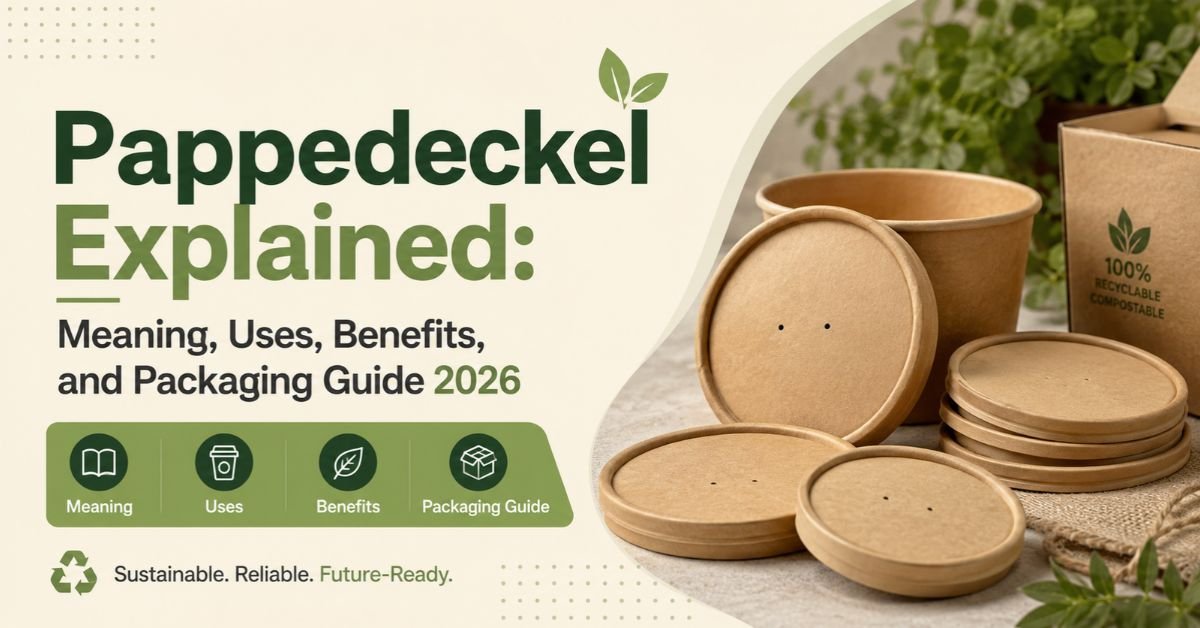
Pappedeckel The Ultimate Guide to Meaning, Uses, and Benefits 2026
Picture a cold glass sweating on a wooden table. A flat cardboard disc soaks up every drop. That small disc shows Pappedeckel at work. The word looks strange to English readers. The idea behind it is simple. It describes a cardboard lid, cover, or flat board piece that protects, separates, or tops something.
You’ll learn the Pappedeckel meaning, its everyday uses, and its biggest benefits. You’ll also see how makers produce it and how to pick the right one. The guide covers limits, costs, and sustainability too. Here’s a quick snapshot before you dive in.
| Term | Language | Literal meaning | Typical use |
| Pappedeckel | German | Cardboard lid or cover | Coasters, box covers, dividers |
| Pappe | German | Cardboard or paperboard | Base material |
| Deckel | German | Lid or cover | Closing or topping an item |
What Is Pappedeckel? Meaning and Definition
German builds long words by gluing short ones together. Pappedeckel follows that habit. It joins Pappe (cardboard) with Deckel (lid). The result is a tidy label for a flat cardboard cover.
That label covers many items. A thin disc under a mug qualifies. A thick board on top of a storage box qualifies too. The sections below clear up the meaning of the German word Pappedeckel step by step.
What Does Pappedeckel Mean in English?
The translation of Pappedeckel into English is “cardboard lid” or “cardboard cover.” That is the core Pappedeckel definition. Germans also use related words for specific items. Bierdeckel, for example, means a beer coaster. In daily speech, Pappedeckel in English can describe a coaster, a tray cover, or a flat divider. No single standard fixes its size or grade. A coaster might be one millimeter thick. A box lid might be three times that. The word names a job and a material. It doesn’t name an exact product. So always check the photo and the specs before you buy.
Understanding the Difference Between Cardboard and Paperboard
People swap these two words all the time. Cardboard and paperboard differences still matter in a factory. Paperboard is a thick, stiff, paper-based sheet. It is often sold by weight per square meter. Makers produce it from virgin paper fibers, recycled paper fibers, or a blend. Corrugated board adds a wavy middle layer between two flat liners. That fluted layer adds cushioning and structural strength of cardboard. Most small covers use solid paperboard covers instead. The flat surface cuts cleanly and prints well. Read the table below for a fast comparison.
| Material | Structure | Strength | Best use |
| Solid paperboard | Flat, single or multi-layer | Medium | Coasters, lids, dividers |
| Corrugated board | Fluted layer between liners | High | Shipping cartons, heavy covers |
| Thin card stock | Single light layer | Low | Crafts, inserts, labels |
Why Context Matters When Interpreting Pappedeckel
The same word can point to very different goods. A café owner searching it wants cardboard coasters. A warehouse manager wants a sturdy cover for a crate. A hobbyist wants thin sheets to cut and glue. Context decides which one is right. Read the full product page for clues. Look at the dimensions, thickness, coating, and stated use. A translation tool alone won’t settle it. Photos and packaging material specifications will. Think of the word like “cover” in English. It means little until you know what it covers.
Common Uses of Pappedeckel in Everyday Life
Flat board pieces hide in plain sight. You find them under drinks, inside parcels, and on top of storage boxes. Many people use them daily without a second thought.
Their charm lies in flexibility. Makers can cut them to nearly any shape. That range explains the many Pappedeckel applications in daily life. Here are the five biggest areas.
Food and Beverage Packaging
Cardboard covers for food and beverages appear in cafés, bakeries, and takeaway shops. A disc may sit under a cup or between two pastries. A board lid may top a tray. These items count as paper-based packaging products. Still, not every board suits direct contact with food. Food contact safety depends on the fibers, coatings, inks, and glues. Reputable makers test their food packaging materials against local rules. In the United States, the FDA rules for paper and paperboard components apply. In the European Union, Regulation 1935/2004 sets the base. Always ask a supplier for proof.
Product Packaging and Protection
Inside a parcel, a flat board does quiet but vital work. It separates items, stops rattling, and keeps contents tidy. That is cardboard product protection in its simplest form. Good protective packaging design pairs the board with the right outer box. A thin cover won’t save a fragile glass jar on its own. Add cushioning and reinforced corners for delicate goods. For dry, sturdy items, a flat cover often does the job. It also gives you a clean surface for printed instructions.
Household Storage and Organization
At home, board covers help tame clutter. They shield stored photos from dust. They keep documents flat inside a box. They also make stacking easier. These are classic cardboard storage solutions. Dry, indoor rooms suit them best. Damp basements and garages don’t. Moisture softens the fibers and can ruin the contents. For priceless papers, choose acid-free board and a sealed container. Treat basic board as a short-term helper. It works well for seasonal items or closet sorting. It’s a poor guard against floods.
Arts, Crafts, and DIY Projects
Crafters love board for good reason. It cuts easily, takes paint well, and costs little. Cardboard craft materials turn into ornaments, model houses, photo frames, and school projects. Designers use cardboard sheets to test shapes before they invest in costly materials. Thin board suits hand scissors. Thick board needs a sharp knife and a steady hand. Recycled cardboard for crafts also gives old boxes a second life. Clean, dry pieces work best. Skip anything greasy. Grease blocks glue and paint from sticking.
Commercial and Industrial Applications
Businesses use board covers in huge numbers. They back retail packs, divide small parts, and sit between stacked flat goods. These are commercial packaging applications with clear rules. Every piece must match in size and thickness. Industrial packaging requirements often add moisture limits and tight cutting tolerances. A tiny error can jam a packing line. That is why buyers of industrial cardboard products check cardboard product quality before they sign. They test samples. They write specs down. The unit price matters. Reliability matters more.
Key Benefits of Pappedeckel for Packaging
Why do so many firms still pick board? Because it solves real problems at a fair price. It’s light, flexible, and easy to print on.
Every benefit comes with a catch. Grade, design, and use change the outcome. The table below gives you the big picture before the details.
| Benefit | Why it helps | Watch out for |
| Light weight | Cuts shipping load | Thin boards bend |
| Low cost | Fits tight budgets | Cheap grades fail early |
| Custom shapes | Better fit | Setup fees for tools |
| Printability | Builds your brand | Coatings change colors |
| Recyclability | Supports waste goals | Laminates block recycling |
Lightweight and Easy to Handle
Board weighs far less than glass, metal, or thick plastic. A light cover is simple to carry, stack, and ship. Over thousands of parcels, small savings add up. Lower weight can trim freight bills. It also eases the strain on packing staff. These are clear benefits of cardboard packaging. Be fair with comparisons though. A reinforced board may outweigh a thin plastic film. Judge each option by equal performance needs. Weight alone never tells the whole story.
Cost-Effective Manufacturing
Simple board parts are cheap to make in volume. That makes cost-effective packaging production possible for small shops and big brands alike. Standard shapes need no new tools. Custom shapes need a cutting die. That die costs money up front. The price per piece then drops with volume. Savvy buyers look past the unit price. They count rejects, storage, handling, and disposal. A weak cover that tears in transit costs more than a sturdy one. Real cardboard packaging cost factors include quality, not only price.
Custom Sizes, Shapes, and Designs
Board bends to your plans. A maker can cut circles, squares, hexagons, or odd outlines. Good custom packaging dimensions reduce movement inside a box. A snug fit looks neater and protects better. Custom cardboard covers also speed up assembly. Workers don’t fiddle with loose, ill-fitting parts. Digital cutters suit small test runs. Steel-rule dies suit large orders. Share exact measurements early. Add tolerances too. Clear numbers prevent costly redo rounds. This is the heart of cardboard packaging design and customization.
Printing and Branding Opportunities
A flat board makes a great canvas. You can print a logo, a menu, or handling tips. Custom printing and branding turn a plain cover into a small ad. Surface finish shapes the result. Smooth coated board gives sharp images. Uncoated recycled board gives a natural, earthy look. Inks and varnishes shift the final color. So always approve a physical proof. Screens lie about shade. A printed sample doesn’t.
Environmental Benefits and Limitations
Paper-based goods can lower your footprint. They often contain recycled cardboard and break down faster than plastic. Many count as eco-friendly cardboard and even biodegradable packaging materials when left uncoated. Yet “paper” doesn’t equal “green” by default. Plastic films, foil layers, and heavy glues hurt recovery. Energy use and transport also count. Look at the whole life of the product. Seek environmentally friendly packaging options with proof behind the claims.
Pappedeckel Materials and Manufacturing Process

Two covers can look the same and act very differently. Fiber type, thickness, and finish make the gap. A little factory knowledge helps you spot quality.
Cardboard manufacturing moves from pulp to finished piece in clear steps. Below you’ll see how packaging production methods shape the final product.
Virgin Fibers vs. Recycled Paper Fibers
Virgin paper fibers come fresh from wood pulp. They are long and strong. They give clean color and even surfaces. Recycled paper fibers come from used paper. Each recycling round shortens them a little. The board may feel rougher or look grayer. Neither type wins every time. Food-grade needs often favor virgin or carefully screened blends. Shipping dividers often work fine with recycled content. The choice supports sustainable material sourcing when you pair it with certified supply chains such as FSC. Use the table for a fast view.
| Fiber type | Strength | Look | Best fit |
| Virgin | High, consistent | Bright, smooth | Food service, premium print |
| Recycled | Medium, varies | Natural, textured | Dividers, crafts, shipping |
| Blend | Balanced | Mixed | General packaging |
Thickness, Strength, and Stiffness
Thicker doesn’t always mean stronger. Cardboard thickness and strength depend on fiber quality, density, layers, and grain direction. Material thickness and stiffness also shift with humidity. Makers measure thickness in micrometers or points. One point equals one thousandth of an inch. Tests check bending, bursting, and compression. For cardboard thickness and load capacity, test the real design under real weight. A wide, thin lid sags faster than a small, thick one. Good packaging durability comes from the right grade. Raw thickness alone won’t deliver it.
Cutting, Shaping, and Finishing Techniques
Cardboard cutting and finishing decide how clean the final piece looks. Die cutting stamps out shapes at speed. Digital cutters trace shapes from a file with no tooling. Creasing adds fold lines. Embossing adds raised patterns. Lamination adds a protective skin. Each step affects cost and recycling. Rough edges and loose fibers signal poor work. They can also jam automated lines. Ask for samples with crisp edges. Check that every piece matches the next. Consistent finishing is a mark of strong cardboard product quality.
Moisture Resistance and Protective Coatings
Water is board’s top enemy. Moisture-resistant coatings slow absorption. Options include polyethylene film, wax, and water-based barrier layers. Each trades off cost, feel, and recyclability. Moisture-resistant cardboard handles drips and humidity better. It still isn’t waterproof. Brief contact is fine. Long soaking isn’t. Many makers cite a Cobb test to show water uptake. Ask for those numbers. Learning how to protect cardboard from moisture also means smart storage. Keep stock dry and off the floor.
How to Choose the Right Pappedeckel Product
Picking well saves money and headaches. A few simple checks do most of the work. Follow six steps in order.
Think of it like buying shoes. Fit, purpose, and quality all count. The steps below cover choosing the right cardboard material from start to finish.
Identify Your Packaging Requirements
Start with the job. Does the piece cover, separate, protect, absorb, or display? A coaster needs absorbency. A divider needs stiffness. A lid needs a tight fit. Write the main goal in one line. Then add secondary needs such as printing or stacking. Clear needs make supplier talks quick. They also stop you from overpaying for features you won’t use. Good packaging material specifications begin with a plain statement of purpose.
Choose the Correct Size and Dimensions
Measure twice. Record length, width or diameter, and thickness. For lids, measure the inside space of the container. Outside size misleads. Add a tolerance based on your process. Hand-packed items forgive small gaps. Automated lines don’t. Round pieces need an exact diameter. Rectangles need two sizes and corner details. Accurate custom packaging dimensions prevent wobble, waste, and slow assembly. Send drawings if you can.
Compare Material Grades and Durability
Grades differ in stiffness, surface, and moisture behavior. Light décor needs only a thin grade. Protective packaging needs a firmer one. Consider pressure, friction, repeated handling, and damp air. Then compare cardboard packaging durability across samples. A bend test, a stack test, and a water-drop test reveal a lot. Spec sheets help. Hands-on trials help more. Choose the lowest grade that passes your tests. Anything higher wastes money and material.
Consider Food Safety and Hygiene Standards
If food or drink touches the board, confirm approval first. Ask about fibers, coatings, inks, and adhesives. Request written compliance papers. Clean looks prove nothing. Food contact safety rests on testing and documents. Check rules in your target market. The EU and the US set different standards. Suppliers who serve global buyers usually hold paperwork for both. Skip any maker who dodges the question. Hygiene isn’t a place to gamble.
Evaluate Sustainability and Recycling Options
Check the recycled content share. Ask how coatings affect cardboard recycling. Confirm that local collection accepts the final product. Rules vary by city and country. The EPA recycling guidance offers a helpful starting point in the US. Choose recyclable packaging solutions with simple, single-material builds when possible. Request clear data. Vague claims like “green” or “natural” prove little. Real sustainable packaging materials come with certificates and numbers.
Request Samples Before Placing an Order
Samples cost little and reveal a lot. Order from two or three makers. Compare thickness, stiffness, cut quality, color, and fit. Test them in real conditions. Pour water on one. Stack weight on another. Ship a few in a trial parcel. Note delivery speed and minimum order size. Smart packaging supplier selection always includes a sample round. One afternoon of testing can prevent a costly bad batch.
Common Pappedeckel Challenges and Limitations
Board has weak spots. Knowing them early keeps surprises away. The issues below show up most often.
None of these problems should scare you off. They simply call for smart choices. A good match between product and task solves most of them.
Water and Moisture Sensitivity
Water softens fibers fast. A wet cover can warp, swell, or collapse. Humid air can also shift its shape over time. In damp spots, choose coated board or switch to plastic or metal. Store stock in a dry room. Seal outdoor loads. This is the main item in any list of advantages and disadvantages of cardboard. Treat moisture as the first risk to check. Everything else comes second.
Weight Capacity and Structural Strength
A flat cover handles light pressure. It can fail under a point load. No single safe rating fits every product. Span, support, grade, and thickness all play a part. The structural strength of cardboard also drops when it gets damp. If a cover will hold weight, test the exact design. Corrugated layers or ribs may help. Don’t assume that thick means safe. Real tests beat guesses every time.
Wear and Tear During Repeated Use
Single-use board isn’t built for daily abuse. Edges fray. Surfaces scuff. Folds weaken. A café coaster may last one service. A storage lid may last years if handled gently. Compare lifespans with washable alternatives before you choose. Some jobs call for reusable packaging materials such as molded plastic or metal. Others suit throwaway board perfectly. Match the lifespan to the task. That way you avoid both waste and failure.
Quality Differences Between Suppliers
Two vendors can sell what looks like the same product. Fiber mix, density, cutting accuracy, and finish may still differ. These gaps hurt consistency. They also hurt your packing line. Written specs and approved samples protect you. Audit a few batches when you start a new deal. Keep a reference piece on file for comparison. Reliable makers welcome such checks. Careless ones resist them.
Recycling and Disposal Challenges
A paper look doesn’t guarantee easy recycling. Plastic laminates, foil, glitter, and grease create trouble. Food residue ruins whole batches at the mill. Local rules differ too. Some plants accept coated board. Others don’t. Check your area’s guidance before you toss anything in the bin. Simple, clean, uncoated pieces have the best odds. Design for cardboard recycling from the start. It’s easier than fixing disposal problems later.
Practical Examples of Pappedeckel Applications
Real scenes teach faster than theory. Four short cases show how choices play out. Each one ties back to the buying steps above.
The table below sums up the key need and main risk in each case. Read the stories for the full picture.
| Scenario | Key need | Main risk |
| Café coasters | Absorbency, branding | Soggy, fast-failing discs |
| Online store inserts | Fit, stability | Fragile goods crushed |
| Craft projects | Easy cutting | Greasy or coated scraps |
| Commercial covers | Exact tolerances | Wrong size at scale |
How Cafes Use Cardboard Beverage Coasters
Cafés love printed cardboard coasters. They protect tables, show off the logo, and cost pennies. Picture a small coffee shop that orders 5,000 discs. The owner runs a one-week trial first. Thin discs turn soggy by noon. A thicker, more absorbent grade survives a full day. The final choice balances price, print, and performance. Many shops pick recycled cardboard to match a green image. A quick trial saved this owner from a messy surprise. Trials are cheap insurance.
How Online Stores Protect Small Products
An online shop sells candles and small ceramics. Items shift and clink in transit. The owner adds flat board dividers between each piece. Breakage drops. The dividers don’t solve everything though. Fragile goods still need soft cushioning around them. This is cardboard packaging for online stores at its practical best. The whole parcel works as a system. Outer box, cushioning, and dividers each play a role. A strong divider can’t fix a weak outer carton. Test the full package, not just one part. Many cardboard packaging solutions shine only in combination.
Using Recycled Board for Creative Projects
A teacher collects clean cereal boxes for a class project. Students cut them into house models and masks. The board is free and safe to handle. Cutting stays easy with blunt-tip scissors. Paint and glue stick well to the plain side. Painted or glittered pieces may need different disposal later. Reuse extends the life of the material. It also teaches kids about waste. Recycled cardboard for crafts proves that good ideas don’t need pricey supplies. Ask students to keep scraps clean and dry for the next round.
Custom Cardboard Covers for Commercial Products
A small electronics maker needs 20,000 identical covers for retail packs. The buyer defines size, grade, finish, and tolerance in writing. The supplier sends a pre-production sample. The buyer fits it on the line and checks speed and accuracy. One small change to the corner radius fixes a jam. Then the full order ships. This is paperboard packaging for commercial products done right. Clear specs, early samples, and open talks prevent costly reruns. Skipping any step invites trouble.
Is Pappedeckel Eco Friendly Sustainability Explained
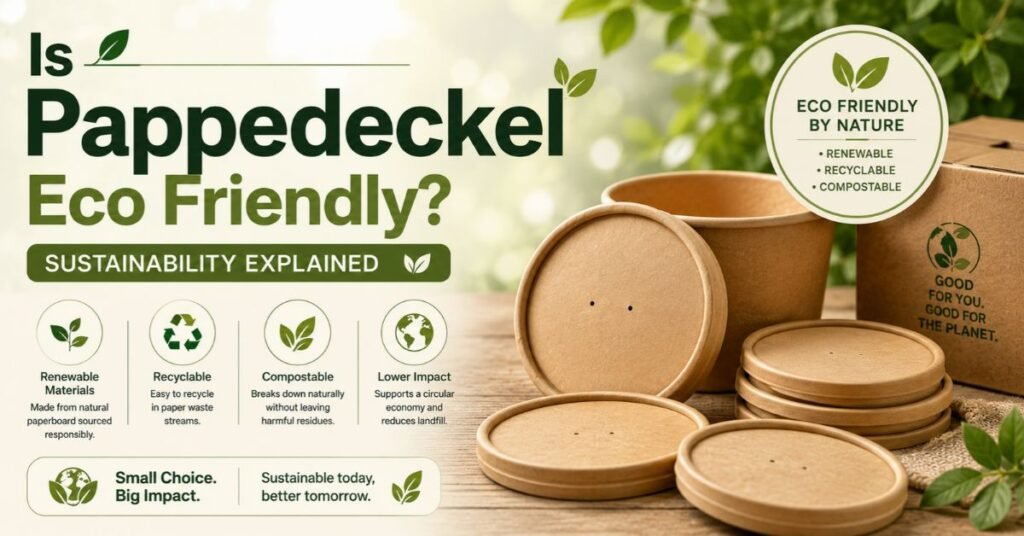
Many buyers ask this question first. The honest answer is “often, but not always.” Material, design, and disposal all matter.
Good sustainability looks at the full life of a product. That means sourcing, making, shipping, using, and ending it. The sections below break down each piece.
Read More: 11+ MagFuseHub Com Complete Guide to Its Content Features and Benefits
Recycled Content and Responsible Material Sourcing
Recycled fibers cut demand for fresh wood. Certified forests protect wildlife and water. Together they support sustainable material sourcing. Look for FSC or PEFC marks on the product. Ask for chain-of-custody records. Vague slogans don’t count. Recycled content also isn’t the whole story. Energy and transport add to the footprint. Smart sustainable packaging for businesses weighs every step. Ask suppliers for numbers. Pick partners who share them openly.
Factors That Affect Cardboard Recyclability
How to recycle cardboard products depends on what’s on them. Clean, dry, uncoated board recycles best. Grease, food, tape, and plastic film cause problems. Wax and heavy laminates make mills reject loads. Paper fibers can be recycled several times. Each cycle shortens them though. Eventually they leave the loop. Flatten pieces and keep them dry before drop-off. Check local rules for coated items. Good design keeps recyclable packaging solutions truly recyclable.
Reusable vs. Single-Use Packaging Materials
Reuse beats single use when the item stays clean and sturdy. Storage lids and internal factory dividers can serve for years. Food-contact pieces usually can’t return to use. Hygiene comes first. Single-use board still makes sense for coasters and light parcels. It’s cheap, light, and recyclable. Match the choice to the job. A needless switch to heavy reusable gear can raise total waste. Run a simple count of uses before you decide.
How to Reduce Packaging Waste
Packaging waste reduction starts with right-sizing. Don’t buy a thicker board than the job needs. Skip oversized covers. Pick single-material builds that recycle easily. Reuse clean pieces inside your shop. Share returns data with your supplier. Small fixes add up over thousands of units. Compost uncoated scraps where local services allow it. Uncoated paper can act as biodegradable packaging materials in the right setting. Always check what’s printed or glued on first.
Read More: 12+ GrammarVista Com USA Complete Guide to Grammar Writing and American English
Pappedeckel Buying Guide: What to Check Before Ordering
You’ve learned the basics. Now it’s time to shop. A short checklist keeps you safe.
Written terms protect both sides. Ask for specs, samples, and timelines in black and white. The table below gives you a fast pre-order scan.
| Check | What to ask | Red flag |
| Quality | Sample and test data | No samples offered |
| Reliability | Lead times, references | Vague delivery dates |
| Customization | Tooling cost, print options | Hidden fees |
| Pricing | Volume breaks | Unclear totals |
| Compliance | Food and fiber certificates | Missing paperwork |
Material Quality and Supplier Reliability
Strong packaging supplier selection starts with proof. Ask for samples, references, and past batch data. Check how the maker handles defects. Good firms replace bad lots quickly. Learn their capacity too. Can they handle a sudden spike in orders? How to select a packaging supplier boils down to three words: test, verify, repeat. Visit the plant if you can. If not, request photos or a video call. Trust grows from evidence.
Customization, Printing, and Minimum Order Quantities
Custom work adds options and costs. Tooling, plates, and setup fees come first. Minimum order quantities then set your entry point. Digital printing suits short runs. Offset printing suits big ones. Ask about color matching and proof steps. Weigh custom cardboard packaging solutions against stock sizes. Stock items ship faster and cost less. Custom items fit better and build your brand. Choose by your volume and goals.
Pricing Factors and Bulk Ordering
Price depends on size, grade, print, coating, and volume. Larger runs cut the cost per piece. Rush orders raise it. Shipping and storage also count. Ask for a full quote with every fee listed. Compare quotes line by line. The cheapest total may hide weaker board. Pay attention to payment terms and return policies too. Bulk deals save money only if you can store stock dry. Plan space first.
Certifications and Product Specifications
Paperwork proves claims. Look for FSC or PEFC for fiber sourcing. Look for food-contact compliance letters for edible goods. Quality system marks such as ISO 9001 show steady processes. Ask for a technical data sheet with thickness, weight, tolerance, and moisture data. Keep copies on file. They help during audits and disputes. A supplier who shares documents freely usually runs a tidy shop.
Read More: FRABOC Explained: Complete Guide to Cancer Risk & Alternatives 2026
Frequently Asked Questions
What Does Pappedeckel Mean in English?
It means “cardboard lid” or “cardboard cover.” The Pappedeckel meaning combines Pappe (cardboard) and Deckel (lid). It can also refer to flat board pieces such as coasters. Always check context.
What Is Pappedeckel Commonly Used For?
People use it for coasters, box covers, dividers, and craft projects. Businesses use it as backing and separators in packaging. What is Pappedeckel used for? In short, it covers, protects, and separates.
Is Pappedeckel the Same as Cardboard?
Not exactly. It’s a product made from cardboard or paperboard. The word names a lid or cover. The material can be solid paperboard or thicker board. Corrugated versions exist too.
Is Pappedeckel Recyclable?
Often yes. Clean, dry, uncoated board recycles well. Plastic coatings, foil, and food stains cause problems. Check your local rules before disposal.
Can Pappedeckel Be Used for Food Packaging?
Yes when it’s made and approved for food contact. General-purpose board isn’t automatically safe. Ask for compliance papers covering fibers, inks, coatings, and glues.
Is Pappedeckel Waterproof?
No. Plain board absorbs water. Coated types resist moisture better. Even those can fail under long exposure. Water-resistant doesn’t mean waterproof.
How Do I Choose the Right Pappedeckel Product?
Define the job first. Measure the size. Pick a suitable grade. Check food safety and recycling needs. Then test samples from a few suppliers before you order in bulk.
Conclusion
Pappedeckel names a humble but useful group of cardboard covers. These pieces protect goods, serve drinks, organize homes, and feed creative work. Their strengths are clear. They’re light, flexible, printable, and affordable. Their limits are clear too. Water, heavy loads, and tricky coatings can cause trouble.
The best choice isn’t the thickest or the cheapest board. It’s the one that fits your task. Define the job, measure with care, and test real samples. Ask suppliers for proof on food safety and sustainability. Do that and you’ll get dependable packaging with less waste. Now go and put your new knowledge to work.